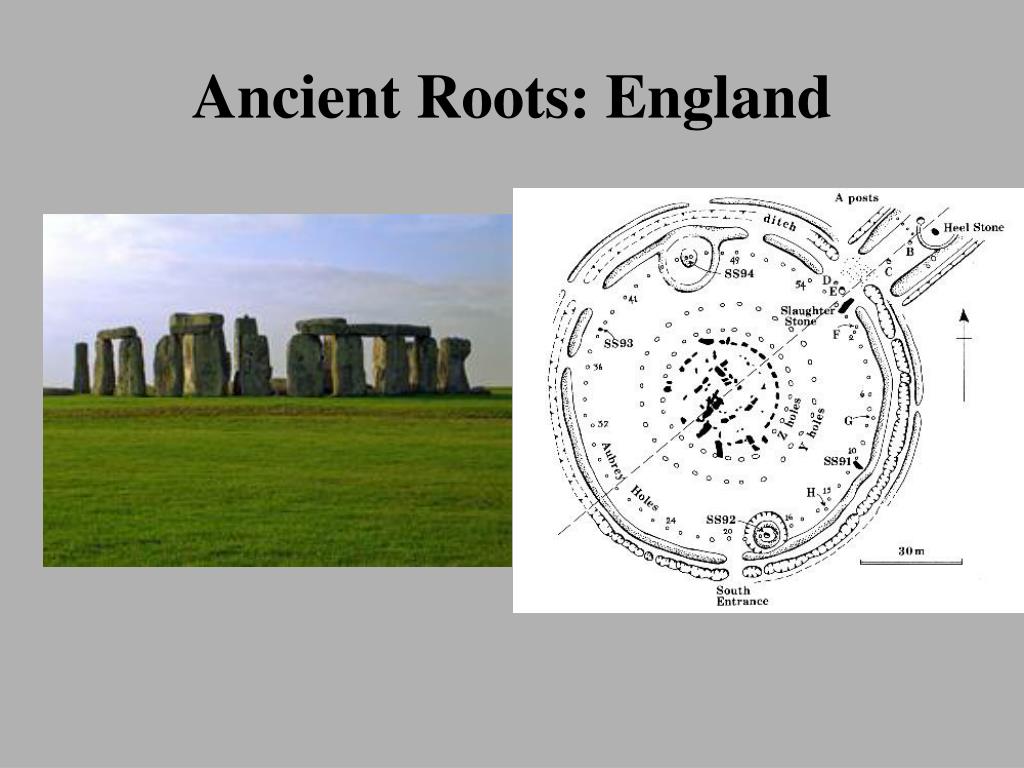
England’s history is marked by a transition from prehistoric tribal settlements to a centralized Roman province, with human presence dating back 780,000 years. Permanent settlements emerged only within the last 6,000 years, establishing a foundation for the cultural and political structures that eventually formed the United Kingdom.
From Early Human Presence to Neolithic Migration
The earliest evidence of human presence in England is attributed to Homo antecessor, dating to approximately 780,000 years ago. While proto-human bones discovered in the region date back 500,000 years, the landscape underwent significant environmental shifts following the last ice age. Roughly 11,000 years ago, as ice sheets receded, humans repopulated the area, with genetic research indicating these groups migrated from the northern part of the Iberian Peninsula.

Geographic isolation occurred gradually as sea levels rose. Britain was once connected to Ireland and Eurasia by a land bridge; it separated from Ireland 10,000 years ago and from Eurasia two millennia later. Neolithic farmers from the Iberian Peninsula arrived around 4100 BC, followed by the Beaker culture around 2,500 BC. The Beaker culture introduced significant technological advancements, including clay vessels for food and drink and reduction pots used to smelt copper ores. By combining tin and copper, these populations produced bronze, later advancing to iron smelting, which facilitated the development of more effective agricultural tools and weapons.
Roman Conquest and the Britannia Province
By the Iron Age, Celtic culture—derived from the Hallstatt and La Tène cultures—had arrived from Central Europe. Ptolemy’s Geographia documented a tribal society consisting of approximately 20 tribes. While Britain maintained long-standing trade links with the Roman Republic, Julius Caesar’s two attempted invasions in 55 BC were largely unsuccessful, though he did establish a client king from the Trinovantes.
A full-scale invasion occurred in 43 AD during the reign of Emperor Claudius, leading to the incorporation of the region into the Roman Empire as the Britannia province. Resistance was led by figures such as Caratacus of the Catuvellauni and later by Queen Boudica of the Iceni, whose uprising concluded with her suicide following defeat at the Battle of Watling Street. One study of Roman Britain suggests that between 43 AD and 84 AD, the Roman military killed between 100,000 and 250,000 people from a total population estimated at 2,000,000.
Formation of the United Kingdom
Following the departure of the Romans between 383 and 410 AD, Anglo-Saxon settlement began around 450 AD. The political landscape shifted again in 1066 with the Norman conquest of England. Centuries later, the role of the British monarchy was curtailed by the English Civil War, leading to the eventual unification of the Kingdom of England and the Kingdom of Scotland under the 1707 Treaty of Union, which created the Kingdom of Great Britain.

The Acts of Union 1800 incorporated the Kingdom of Ireland, forming the United Kingdom of Great Britain and Ireland in 1801. Most of Ireland seceded in 1922, and the Royal and Parliamentary Titles Act 1927 established the contemporary United Kingdom. Today, the UK comprises England, Scotland, Wales, and Northern Ireland, with a population exceeding 69 million as of 2024.


