
Chicago Federal Reserve Bank President Austan Goolsbee visited Snap-on’s Kenosha, Wisconsin headquarters this week to study the company’s manufacturing model. By focusing on specialized tools for professional mechanics and maintaining a robust domestic supply chain, the firm has sustained profitability and growth despite broader challenges facing the U.S. manufacturing sector.
CEO Nick Pinchuk Identifies Sticky Tasks to Justify Premium Pricing
The Economics of the Sticky Task

At the center of Snap-on’s business model is a philosophy built on direct observation. CEO Nick Pinchuk describes the company’s focus as identifying “sticky tasks”—those difficult, time-consuming operations that professional mechanics face daily. By watching technicians work, the company designs tools specifically intended to streamline those processes. Our philosophy is to be at the point of work, observing it, and figuring out what are the most sticky tasks,
Pinchuk says. And then using those insights to create a tool which will make it easier. People will pay for this.
This specialization allows the company to justify a premium price point. Because these tools are engineered to save time and help mechanics complete more repairs, they provide a tangible return on investment. The company currently produces 85,000 different tools, a range so specific it includes 74 varieties of 10 mm sockets alone. These tools are designed for those fixing cars, airplanes, or even rocket ships.
Snap-on Deploys 3,400 Mobile Showrooms to Build Technician Loyalty
Franchise Networks and Direct Sales

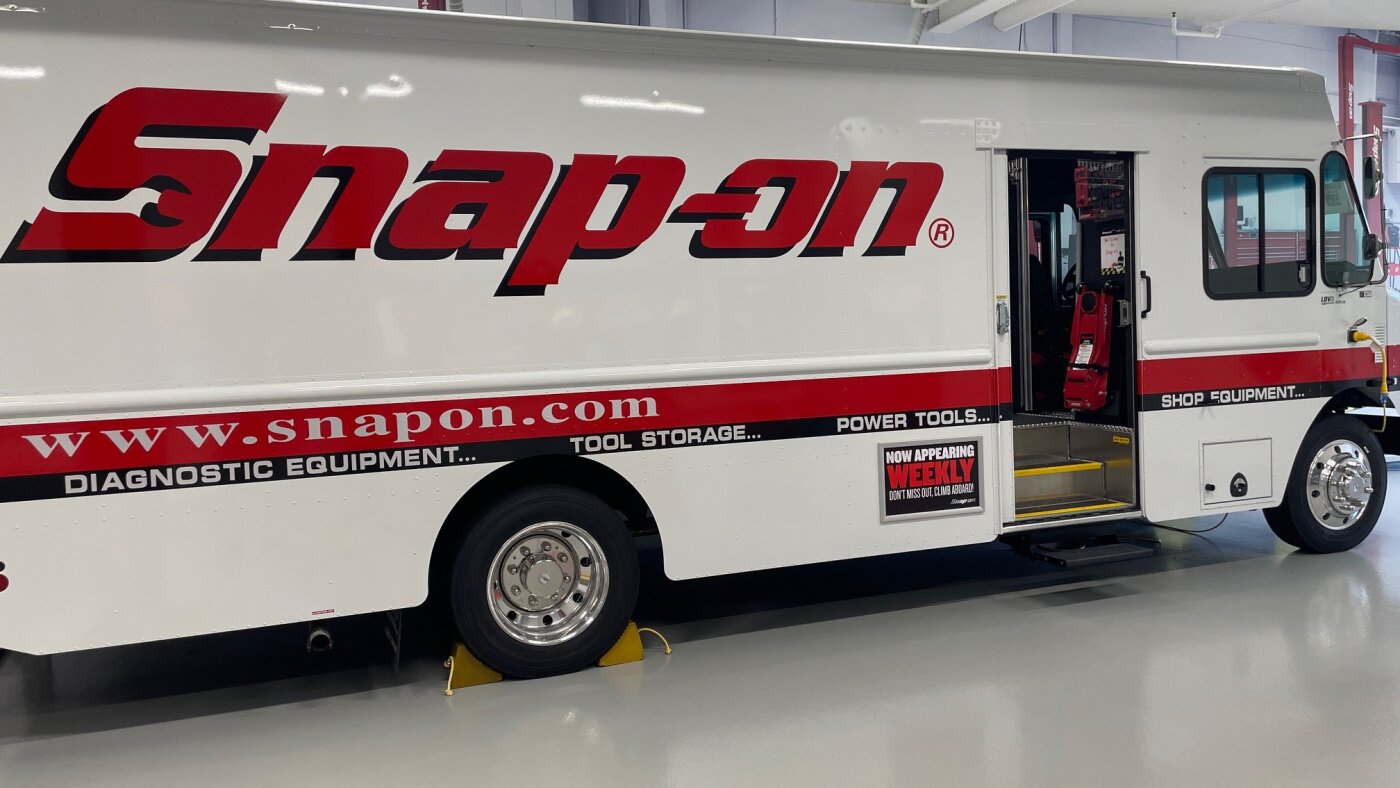
Snap-on’s reach into the industry relies on a massive distribution network. The company operates 3,400 mobile showrooms, which are custom vans that bring products directly to the customer. These franchisees make weekly visits to nearly a million neighborhood mechanics, creating a feedback loop that informs new product development. By closely watching mechanics at work, franchisees can identify new tools that might be needed.
Beyond sales, this model provides essential financial infrastructure. The company provides credit for mechanics to purchase its equipment, further cementing the relationship between the brand and the technician. This high-touch approach has fostered intense loyalty, with many mechanics introduced to the brand during their apprenticeships or technical schooling—a connection some carry for their entire careers. The brand loyalty is so ingrained that, as noted in company observations, some mechanics even have their ashes stored in miniature Snap-on toolboxes.
Snap-on Maintains 15 Domestic Facilities to Insulate Against Tariffs
Manufacturing Strategy in an Uncertain Climate
In an era where many U.S. manufacturers have moved production overseas to lower costs, Snap-on maintains a significant domestic footprint. The company manufactures 80% of the tools it sells in the United States domestically, a strategy that offers relative insulation from the volatility of international tariffs.
This domestic production requires a highly flexible factory floor. Operating 15 U.S. facilities, the company often pivots its manufacturing lines multiple times per day to accommodate its vast, varied product catalog. While other companies do a much bigger volume of business with a much narrower product line, CEO Nick Pinchuk maintains that specialization is what makes Snap-on so profitable.
Austan Goolsbee Evaluates Kenosha Operations for Federal Reserve Productivity Research
Brand Exclusivity and the Professional Standard
Snap-on maintains a strict internal policy regarding its customer base. The company deliberately eschews the general retail market, focusing on professionals.
“If there’s a rule in Snap-on that’s irrevocable, it’s that Thou Shalt Not Sell to Do-It-Yourself people. Because it undermines the cachet of the brand. People use Snap-on tools to declare to the world they’re doing something special.” — Nick Pinchuk, CEO of Snap-on
This exclusivity is a deliberate brand management strategy. By keeping its products in the hands of professionals, the company reinforces its reputation as a high-end tool provider.
Federal Reserve Interest in Regional Productivity
For Chicago Federal Reserve Bank President Austan Goolsbee, the visit to Kenosha served as a case study for the Upper Midwest, a region that holds the highest concentration of manufacturing in the United States. Goolsbee is evaluating how domestic firms can maintain growth despite the complexities of the current economic environment.
It's interesting to see,
Goolsbee says. Customization is why they get paid a premium and how they still manufacture in America.
As the Federal Reserve monitors productivity trends, Snap-on’s performance in the automotive repair sector—a segment currently bolstered by owners holding onto their vehicles longer—offers a lesson in how niche dominance can insulate a firm. They scratch a very, very specific itch,
Goolsbee adds. It's fun to see. This is where productivity growth comes from.
According to the company, the business remains strong as garages are humming,
with CEO Nick Pinchuk noting that vehicle repair remains one of the great businesses because everybody's got to get their vehicles repaired.


