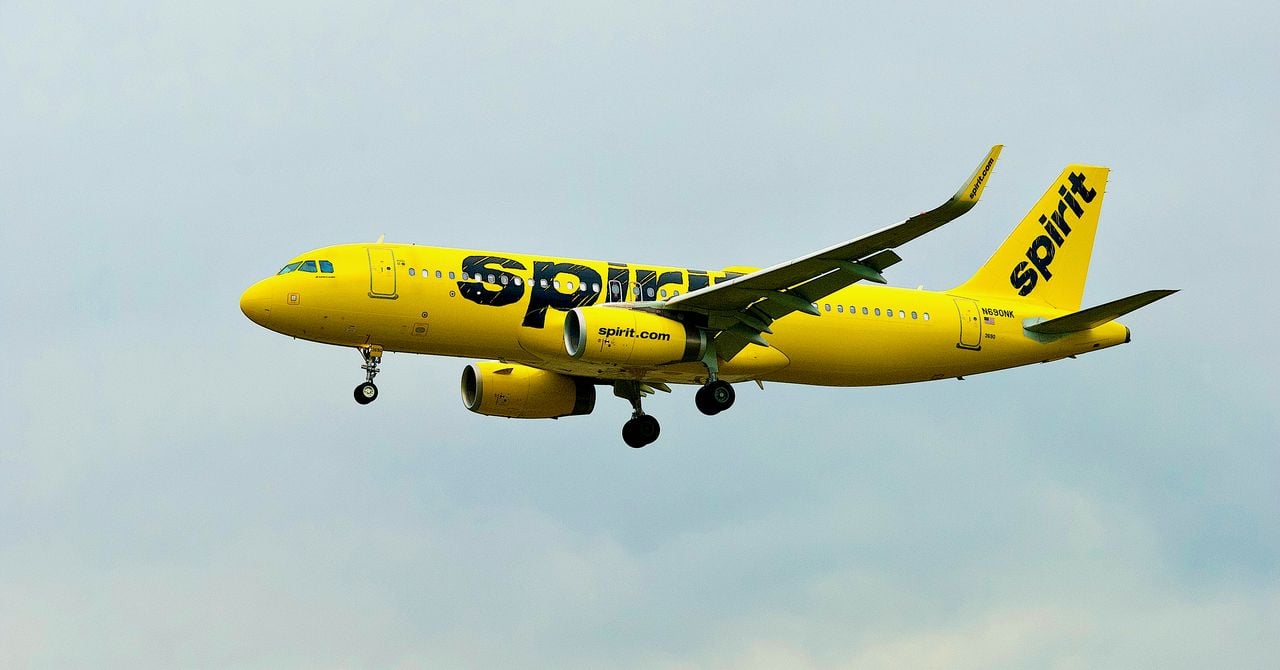
Google reached a deal with aviation labor unions to solve privacy issues over its $10 million purchase of internal business data from the bankrupt Spirit Airlines.
The transaction covers an extensive digital footprint.
The proposed sale drew resistance from employee representatives and lawmakers over fears that sensitive personal details could be exposed or used to train artificial intelligence systems.
The 55,000-member Association of Flight Attendants-CWA, alongside other aviation unions, objected to the transaction in bankruptcy court. They argued that Google’s initial de-identification plans were inadequate to prevent individual people from being identified.
The union’s objection was joined by several other labour organisations, including the Air Line Pilots Association, the International Association of Machinists and Aerospace Workers, and the Transport Workers Union of America Local 570.
In October, a group of 121 members of Congress, led by Senator Elizabeth Warren and Representative Steven Horsford, sounded the alarm regarding the scale of the employee records involved.
Court proceedings concerning the sale were delayed as these privacy concerns were examined.
Under the revised out-of-court settlement reached with Google, 20 specific categories of sensitive employee information will be entirely excluded from the data transfer.

Protected records include employee medical and disability history, drug and alcohol testing results, disciplinary files, payroll records, bank details, identification documents, and confidential labor-related investigations.
The exclusions cover aviation safety and operational documents such as flight crew fatigue reports, Aviation Safety Action Program materials, Line Operations Safety Audit data, and Flight Operations Quality Assurance information.
The exclusions also cover audio and visual recordings of flight attendants and biometric data.
For the remaining enterprise data, the agreement mandates a more rigorous de-identification process under ISO 27559, an international standard for privacy-enhancing data scrubbing.
Tonic AI, an independent third-party data de-identification company, will handle the process to ensure records cannot be relinked to specific people.
Google is prohibited from attempting to re-identify the data, must process it in a secure environment, and is required to treat it as confidential.

Following the agreement, the coalition of labor unions withdrew their objections, clearing the final major obstacle before a scheduled bankruptcy court hearing.
“an historic win for worker privacy protections,” the Association of Flight Attendants said.
Worker data privacy in the age of AI has become a whole new worker’s rights issue. Without our union, there would have been no one to speak for workers in this fire sale of their private information. We fought and we won brand new protections.
Sara Nelson, international president of the Association of Flight Attendants-CWA
“Now we will take this issue to all of our employers to secure contractual protections, and demand lawmakers protect workers everywhere through federal and state law,” Sara Nelson, international president of the AFA-CWA, said.
“We are pleased to have reached a resolution with our valued labor unions for the sale of deidentified data, as we continue our efforts to maximize value for Spirit's creditors,” a Spirit Airlines spokesperson said.
Will a U.S. bankruptcy judge give formal authorization to the transaction?