
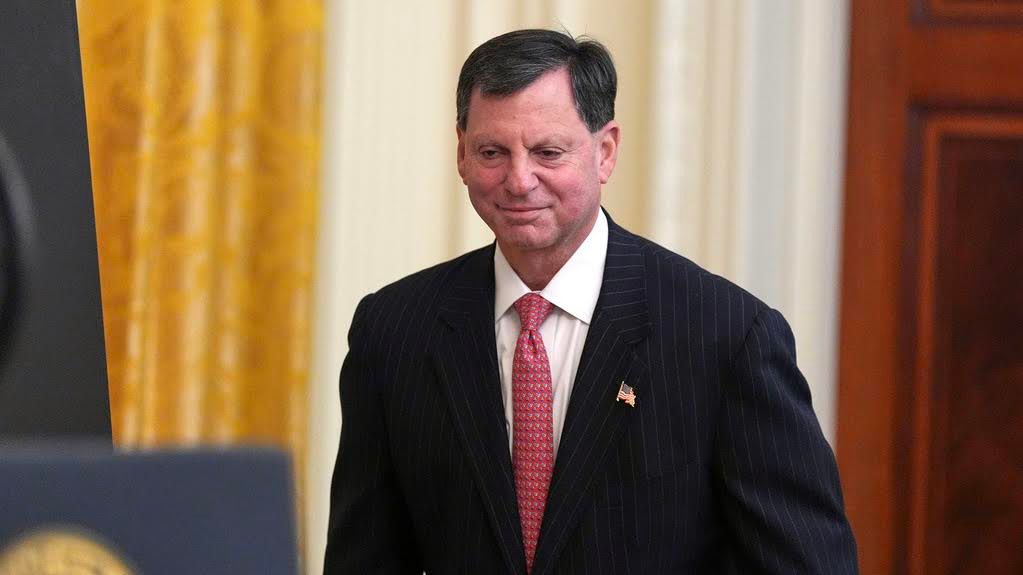
Social Security Administration Commissioner Frank Bisignano declared this week that the federal entitlement program will remain operational for another 90 years. Despite his optimism, official 2026 trustee reports warn that the program’s primary trust fund faces depletion by late 2032, triggering a potential 22 percent cut to scheduled benefits.
Commissioner Bisignano’s 90-Year Outlook
Speaking on CNBC’s Squawk Box
this past Monday, Social Security Administration (SSA) Commissioner Frank Bisignano dismissed concerns regarding the long-term viability of the agency’s programs. Addressing the entitlement system’s future, Bisignano emphasized his commitment to President Donald Trump’s directive to protect and preserve the program.
“This is a long journey. It’s 90 years old, and it’ll be around for another 90 years. The president has promised ‘protect and preserve,’ and that’s what we’re doing.”
Frank Bisignano, SSA Commissioner
Bisignano, who also serves as the IRS CEO, attributed his confidence to internal operational improvements. He stated that the agency has successfully cleaned up over 30 million records that were previously incorrect or outdated, describing the process as a necessary step to fix the agency’s operations and better understand its financial outcomes.

Bisignano spoke just a few days after the Social Security Administration’s 2026 Trustees Report indicated that the Old-Age and Survivors Insurance Trust Fund, responsible for survivor and retirement benefits, will be capable of paying full scheduled benefits only until the fourth quarter of 2032. The report further calculated a long-range actuarial deficit of 4.42 percent of taxable payroll, an increase from the 3.82 percent cited in the report from the previous year.
Demographic Shifts and Legislation Reduce Trust Fund Revenue
The financial pressure stems from a combination of demographic shifts and lower revenue. The administration also cited lower fertility rates, reduced immigration, and the financial impact of the One Big Beautiful Bill Act, signed last summer, as factors contributing to lower revenue for the trust funds.
In 2025, the combined Social Security trust funds saw a decrease of $160 billion, closing the year with reserves totaling $2.56 trillion. If the program’s finances remain unchanged, the Trustees projected that the Old-Age and Survivors Insurance Trust Fund would be depleted by late 2032, leaving the program to pay only 78 percent of scheduled benefits. This would result in an estimated 22 percent reduction in payments, equivalent to roughly $550 per month.
The Trustees also highlighted the broader fiscal challenges facing the program. The 2026 report noted that the combined reserves of the Old-Age and Survivors Insurance Trust Fund (OASI) and the Disability Insurance Trust Fund (DI) would be depleted by 2034, with the OASI fund alone projected to run out by 2032. The DI Trust Fund, however, is expected to remain solvent through 2100.
Trump Suggests Investing Trust Funds in Stock Market
President Trump recently suggested that the Social Security trust funds should be invested in the stock market, claiming that such a move would have made the program the richest entity anywhere in the world.
However, critics have flagged this approach as risky. Michael Ryan, a finance expert and founder of MichaelRyanMoney.com, compared the program’s financial challenges to a restaurant that must raise prices and shrink portions to survive, warning that Social Security could face higher payroll taxes, longer working years, or smaller checks.
Economists and policy experts have proposed alternative solutions, including increasing the retirement age, raising the payroll tax, or expanding the taxable wage base.

Bisignano refrained from discussing specific legislative reforms during his interview, stating that such decisions rest with Congress and the White House. Ultimately, it will be the White House and Congress and the trustees,
he said. The Social Security Trustee Board, which includes Treasury Secretary Scott Bessent, Labor Secretary Keith Sonderling, and Health and Human Services Secretary Robert F. Kennedy Jr., is tasked with overseeing the program’s finances.
The 2027 Cost-of-Living Adjustment Announcement
The 2027 COLA is expected to be 3.5 percent, according to the Senior Citizens League, which advocates for retirees. Critics of the current inflation adjustment mechanism, including the Senior Citizens League and the National Committee to Preserve Social Security and Medicare, argue that the Consumer Price Index for Urban Wage Earners and Clerical Workers (CPI-W) does not accurately reflect the spending habits of retirees, who allocate a larger share of their income to healthcare than working individuals.
The Social Security Administration’s 2027 COLA announcement will occur alongside the release of the September 2026 inflation data, which the Bureau of Labor Statistics will publish on October 14. The agency’s 2026 Trustees Report also projected that the combined trust funds would be depleted by 2034, meaning reforms are needed soon to ensure the program’s long-term viability.


