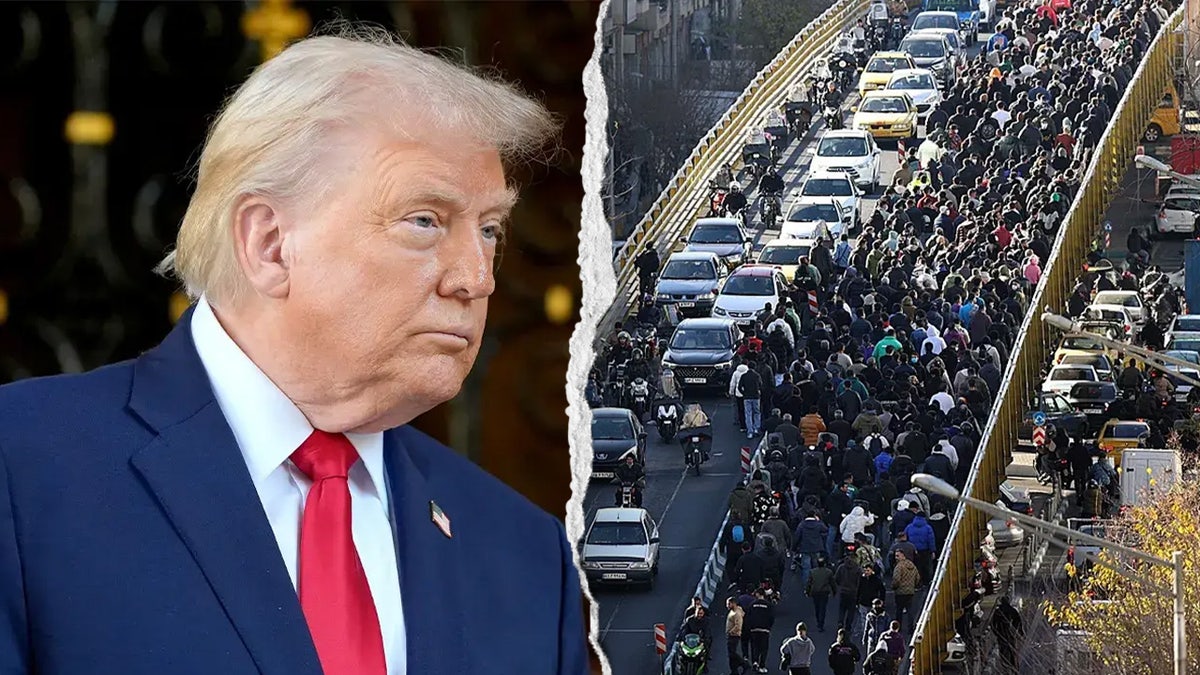
Trump Threatens Infrastructure Strikes Amid Escalating Conflict
President Donald Trump has threatened to target Iranian bridges and power plants with airstrikes if Tehran does not return to the negotiating table. In an interview with Fox News that aired Tuesday night, the President stated, “Next week it gets really bad for them,” adding, “We’re going to knock out all their power plants. We’re going to knock out all their bridges unless they get to the table and negotiate.”
These comments follow a series of renewed hostilities between the United States and Iran, marked by four consecutive days of exchanged fire. The President also suggested that while he may order these strikes, he would not rule out a ground campaign, noting that the U.S. has “other people that will do the ground campaign for us.”

Strait of Hormuz and Naval Blockade
The military escalation is centered on the Strait of Hormuz, a critical waterway for global oil shipments. Following a period where an interim agreement had briefly eased tensions, the U.S. has resumed a naval blockade of Iranian ports. U.S. Central Command (Centcom) stated that its forces have been conducting strikes to “degrade Iranian capabilities used to attack commercial shipping” in the region.
Earlier this week, President Trump declared the U.S. the “guardian” of the Strait and initially proposed a 20% fee on all cargo passing through the waterway. However, he subsequently reversed this decision, stating on Truth Social that he would replace the fee with “massive” trade and investment deals with Gulf states.
The situation remains volatile, with shipping data showing that traffic through the Strait has slowed dramatically. Iran’s Revolutionary Guard has warned that if the blockade continues, oil and gas exports from the region will be impacted for everyone.

Military Engagements and Regional Impact
The conflict has expanded beyond the immediate vicinity of the Strait. On Tuesday, Iran reported targeting U.S. military facilities in Bahrain and Jordan. By early Wednesday, Kuwaiti forces reported intercepting hostile attack drones, while Bahrain activated air raid sirens. The U.S. military confirmed it hit nearly 20 Iranian targets, including air defenses, ground control stations, and radar sites, in a move described as a “proportional response” to the downing of a U.S. Apache helicopter.
The human cost of the regional instability has been significant. Admiral Brad Cooper of Centcom stated that Iranian attacks on seven commercial ships have resulted in nearly a dozen civilian crew members killed, missing, or injured. The United Arab Emirates reported that Iranian cruise missiles struck two national tankers, resulting in one Indian crew member killed and eight others wounded.
Diplomatic Status and International Concern
Despite the intensifying military rhetoric, diplomatic efforts to end the conflict remain active. A delegation from Qatar, which has served as a mediator between Washington and Tehran, arrived in Tehran on Wednesday to hold talks.
However, the path to a resolution remains fraught with difficulty. President Trump has criticized Iran for being “all talk and no action,” stating on social media that the country has taken too long to negotiate and will now “have to pay the price.” Conversely, Iranian officials have indicated they may reassess diplomatic engagement, citing what they describe as repeated ceasefire violations by the U.S.
The threat to target civilian infrastructure, such as power plants and bridges, has previously drawn condemnation from international observers. Earlier this year, UN human rights chief Volker Türk warned that deliberately attacking civilian infrastructure is considered a war crime under international law and the 1949 Geneva Conventions. As of Wednesday, the ceasefire that began in early April is widely considered to be unraveled, leaving the future of peace talks in doubt.

Find more reporting in our Business section.


