More than 120 climate scientists urged Congress to vote against the Bipartisan American Affordability and Jobs Act, warning that the sweeping infrastructure legislation weakens environmental protections and delivers only minor emissions cuts.
Senate Passes Permitting Reform
The Senate passed the Bipartisan American Affordability and Jobs Act in a 62-33 vote, splitting Democrats just weeks after midterm elections.
“that the Bipartisan American Affordability and Jobs Act (or Baaja) weakens environmental laws, locks in new fossil fuel projects without recourse and delivers only minor cuts to planet-heating emissions,” the collection of Earth and social sciences researchers wrote in an open letter to members of the House of Representatives.
The legislation overhauls electrical transmission regulations and speeds up environmental reviews for energy projects. Unusually for a major piece of legislation spanning nearly 500 pages, the package advanced through the Senate without ever facing a single committee hearing. Senators Shelley Moore Capito of West Virginia, Mike Lee of Utah, Martin Heinrich of New Mexico, and Sheldon Whitehouse of Rhode Island spearheaded the effort to move the text.
The best arguments against #BAAJA are detailed, often technical, legal objections to the bill’s drafting that get lost amid all the overheated rhetoric. I spent time digging into them carefully, and came away concluding that they merit fixing if possible but the bill should be…
Among lawmakers voting on the measure, only two Republicans joined the opposition: Sens. Mike Rounds of South Dakota and Josh Hawley of Missouri.
Supporters argue that the legislation brings down consumer electricity prices and build much-needed critical infrastructure across the United States. The American Petroleum Institute endorsed the package, describing the outcome as a breakthrough on permitting reforms that will deliver more affordable energy for consumers.
The Center for Climate and Energy Solutions estimated that natural gas generation would adjust to about thirty-six percent under the provisions. Wind and solar could supply up to forty percent of electricity by 2035 alongside billions of dollars in residential utility bill reductions.
Democratic Caucus Divides on Tribal Pushback
The bill sharply divided Democratic lawmakers, with 15 Democratic-aligned senators voting in favor while two-thirds opposed it.
The Senate just passed a permitting reform bill 62 to 33. CEI's @darenbakst says it sneaks in a costly green energy giveaway. https://t.co/IjTVkHSh9s
Senators Jon Ossoff and Raphael Warnock of Georgia voted against the package, whereas Senators Elissa Slotkin of Michigan and Ruben Gallego of Arizona supported it. Progressive lawmakers argued that the legislation undermines landmark environmental protections established under the National Environmental Policy Act and the Clean Water Act.
Erich Pica, president of Friends of the Earth US, said that senators who voted for the bill should be ashamed. David Watkins, director of federal government relations for climate and energy programs at the Union of Concerned Scientists, said that the measure identified the wrong problems and arrived at the wrong solutions.
A Senate Democrat is objecting to a largely Dem amendment that would have improved the bill significantly in the hopes that bill is so unpopular that it will die in the house. #dirty https://t.co/fx9kZAOTTj
National tribal rights organizations criticized the measure for weakening federal oversight and threatening sacred sites. Sen. Lisa Murkowski attempted to introduce changes to address tribal concerns, but amendments were blocked when Senators Ron Wyden and Jeff Merkley prevented amendments from reaching a vote.
Wesley Furlong, a staff attorney at the Native American Rights Fund, described the modifications as a wholesale change to review processes affecting all future federal undertakings. In the House of Representatives, lawmakers including Jared Huffman, who is the likely chair of the House Natural Resources Committee, opposed the tribal provisions, while the National Congress of American Indians formally urged Congress to reject the entire measure.

This bill is very out of sync with this last election.
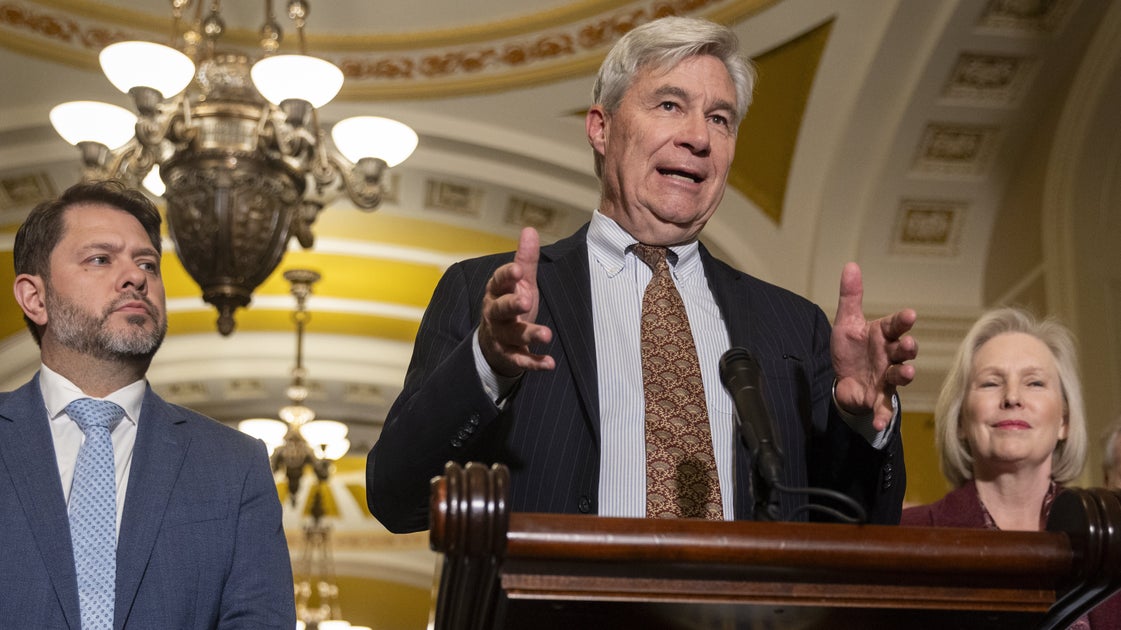
Sen. Sheldon Whitehouse, D-R.I.
Clean Energy, Fossil Fuels, and Data Centers
The legislation expands grid capacity and eases constraints on transmission lines. Economic research from the Rhodium Group estimates the bill could enable between 17 and 249 gigawatts of clean energy by 2040 while also accelerating natural gas projects and nuclear energy licensing.
Climate scientists who signed the open letter contended that legal protections intended to shield solar and wind installations could simultaneously assist fossil fuel companies. Supporters defended the legislation by pointing to modeling projections indicating gigaton-scale emissions reductions and household electricity savings.
Against my better judgment, I’m weighing in here, on the dumbest policy discussion platform in the world, to talk about permitting reform. As background, I was Chief of Staff and Deputy Chief of Staff at the Energy Department in the Obama Administration; I worked for seven years…
The measure establishes new rules requiring artificial intelligence data centers to bear a greater share of the costs for their power demands. Proponents maintain that these provisions provide a crucial safeguard for ratepayers rather than passing upgrade costs on to families.
Representatives Mike Levin of California and Sean Casten of Illinois voiced opposition to the legislative trajectory. Levin said that tribal nations deserved a far bigger voice, and Casten said that the country struggles to construct cleaner energy sources rather than data centers and gas pipelines.

Nuclear Provisions Face Criticism
Four nuclear regulation amendments added to the Bipartisan American Affordability and Jobs Act focus on permitting changes. They let uranium enrichment facilities start construction while their permit is still under review rather than waiting for final approval.
Analysts note this represents a change from considering just one or two reactor applications annually to potentially handling dozens each year as small modular reactors develop. Foreign Policy reported that critics worry a broad reading of the exception for actions taken under applicable laws could render permit protections meaningless because nearly every agency action invokes some legal authority.
NEWS in AM from @SiegelScribe Rep. Mike Levin (D-Calif.), a closely watched clean energy advocate and climate leader, will oppose the Senate-passed energy permitting reform bill, he told us exclusively.https://t.co/OX3nQ4Uu4D
Writing on The Crucial Years | Bill McKibben, observers said that the momentum behind the legislation stems largely from the YIMBY movement and the book Abundance by Ezra Klein and Derek Thompson. Additional analysis from the Times, noted on the same platform, indicated that the carbon emissions of America’s big data centers collectively surpass those of a large nation like Kenya.
Climate scientists who signed the open letter argued that the bill’s provisions would supercharge pipelines, mines, and power plants faster than ever before while the war on wind and solar continued.
If you're interested in the idea of a big push for federally funded social housing, passing BAAJA is an absolutely necessary precondition or everything you do will be killed by bad faith NEPA litigation. https://t.co/bQ66N3M0EU pic.twitter.com/ljzlAXbeLP
House Considers the Legislation
Following its passage in the upper chamber, the legislation advanced directly to the House of Representatives amid a crowded lame-duck legislative calendar.
Lawmakers faced simultaneous pressures regarding potential federal funding lapses and the risk of a government shutdown while debating their official response to the Senate bill. California representatives expressed contrasting views on whether to advance the measure immediately or wait for the incoming congressional session.

Advancing the Bipartisan American Affordability and Jobs Act through the Senate, senior United States senator from West Virginia Shelley Moore Capito spearheaded the permitting reform effort. Serving as chair of the Environment and Public Works Committee since 2025, Capito has a legislative record involving industrial energy infrastructure, including previously founding the Congressional Coal Caucus following the Upper Big Branch Mine Disaster.
Scott Peters said that compromises remain necessary to address accelerating climate emergencies. Jared Huffman and other regional leaders maintained that the chamber should reject the current proposal and craft a separate package after taking control of both legislative chambers.
We don't have to swallow this terrible permitting bill. Big Oil said it themselves, just listen for yourself. Democrats can and will produce a better deal that lowers costs, builds transmission, and puts Americans' interests ahead of billionaires and the well-connected. pic.twitter.com/4lBym21zzp