
The Federal Communications Commission voted unanimously in Washington on Thursday to allow state prisons across the United States to jam signals from contraband cellphones, dismantling a rule in place since 1934 that restricted the technology to federal facilities.
State and local correctional authorities spent years pushing for the authorization to block contraband phone signals. Inmates use smuggled devices to coordinate riots, run drug networks, and order acts of violence.
The agency’s decision follows years of advocacy from law enforcement officials nationwide. Leaders in South Carolina led this push, as state prisons long served as a testing ground for interdiction technology.
In 2008, the FCC permitted a one-time test of a jamming system at a maximum-security prison in South Carolina. A second collaboration between federal and state officials followed at another prison in 2019, coming a year after seven inmates died in the deadliest U.S. prison riot in 25 years—an event authorities linked to gang communications coordinated via contraband phones.
Ten years ago, I met Captain Johnson here in Columbia, South Carolina. Six years before that, when he worked as a prison officer, someone kicked down his door at 5:30 in the morning and shot him six times in the chest. It was a hit called in by an inmate using a contraband… pic.twitter.com/d7dQY8wulZ
Smugglers continue to move devices past security checkpoints using hollowed-out footballs, corrupt employees, and drones filled with phones over prison fences. Officials estimate that roughly 25,000 contraband phones are seized annually across the nation’s state and local correctional facilities.
“People really don’t understand the threat that these pose.”
Carr said that the new authorization provides law enforcement with a vital tool. He said that the technology is not a standalone fix.
Violent attacks orchestrated from behind bars created intense urgency for jamming technology. Former South Carolina Department of Corrections Captain Robert Johnson survived an assassination attempt at his home in 2010.
“They paid a guy $6,000 to kill me.”
Inmates targeted Johnson over his crackdown on cellphones at Lee Correctional Institution. He was shot six times at close range, has undergone nearly three dozen surgeries, and lives with chronic daily pain.
ADOPTED ✅ No bars behind bars. The FCC voted today to allow state and local prisons to jam contraband cellphones for the first time ever. These devices are being used by inmates to order hits, run drug operations, traffic women and children, and unleash mayhem on our… pic.twitter.com/BzNAwCNXyW
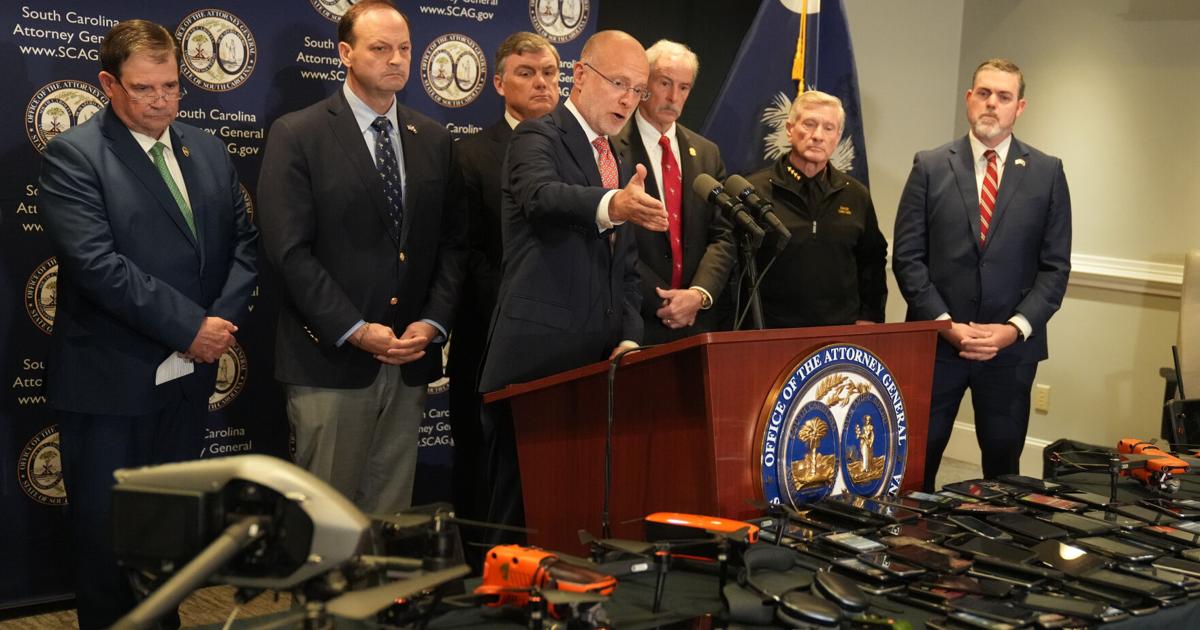
State and federal leaders gathered in Columbia ahead of the FCC vote to display hundreds of confiscated phones alongside the drones used to deliver them. South Carolina Attorney General Alan Wilson said that devices are regularly used to facilitate both drug trafficking and contract killings.
Under the newly adopted framework, state and local facilities are not required to adopt jamming technology. Prisons that choose to install the systems must conduct rigorous testing to ensure that signals outside facility perimeters remain uninterrupted.
Commissioner Anna Gomez, the lone Democrat on the panel, voted in favor of the measure. She voiced concerns regarding potential unintended consequences if jamming zones are miscalibrated.
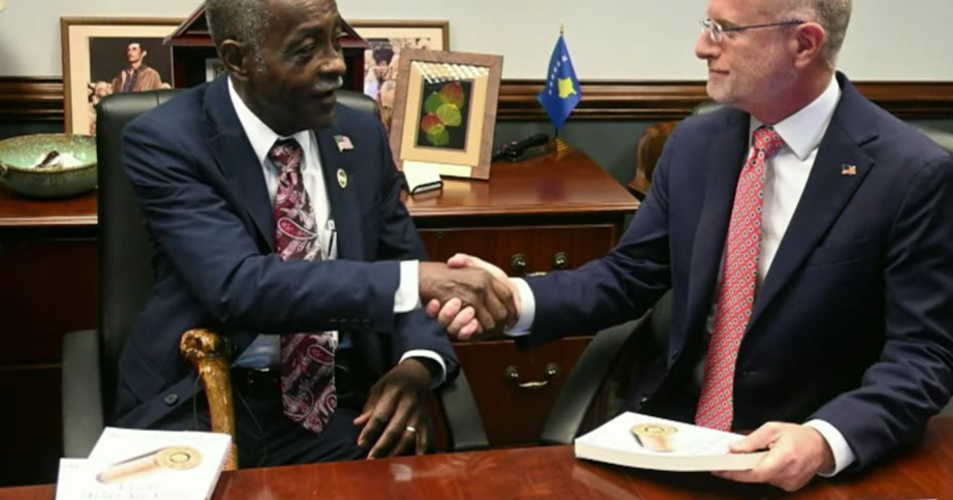
Lobbying from the telecommunications industry blocked efforts by state prosecutors and prison directors to alter the 1934 restrictions for years. Carr said that industry opposition receded substantially as modern technology advanced to allow highly localized targeting.
Modern jamming devices can focus transmission disruption to specific housing units or living areas within a facility. State prison director Joel Anderson said that inmates routinely pay between $5,000 and $8,000 for a contraband phone depending on the model.
The Federal Communications Commission, created by the Communications Act of 1934 to replace the Federal Radio Commission, has long held exclusive authority over the airwaves that the new rule now opens to state prisons. The independent agency, funded entirely by regulatory fees with a $388 million budget and 1,433 federal personnel as of 2022, is directed by five presidential appointees confirmed by the Senate, no more than three from the same political party.
“This itself is not going to be a silver bullet, but I think it’s time that we stop denying this tool to state and local officials.”


