
Hartsfield-Jackson Atlanta International Airport (ATL) currently stands as the world’s busiest and most efficient aviation hub, serving as a critical economic engine for Georgia by generating more than $66 billion in annual economic impact. As the state’s largest employer, the airport supports over 63,000 on-site jobs, effectively functioning as a global gateway that puts 80 percent of the U.S. population within a two-hour flight of the Georgia capital.
The airport is currently celebrating its Centennial year, marking a century of connection between the local community and the rest of the world. This milestone arrives as ATL maintains its status as a primary North American transit point, offering nonstop service to over 160 domestic and 80 international destinations across Europe, Asia, Africa, the Caribbean, and both North and South America. According to the official website of Hartsfield-Jackson Atlanta International Airport, the facility holds the unique distinction of being the first airport globally to handle more than 100 million passengers in a single calendar year.
The ATLNext Modernization Strategy
To prevent the infrastructure from buckling under its own success, the airport launched a multibillion-dollar comprehensive modernization and expansion initiative known as ATLNext in 2016. This program isn’t just about adding more tarmac; it is a systemic overhaul of both landside and airside facilities designed to increase capacity and evolve alongside changing travel needs.
Atlanta, 100 years of ATL means 100 years of connecting our city to the world.The ATL Centennial Concert celebrated Hartsfield-Jackson Atlanta International Airport’s legacy and the 60,000+ people who help keep ATL moving every day.Here’s to the next 100 years! pic.twitter.com/xACx7M3xDr
By investing in architectural engineering and construction now, ATL aims to maintain its operational leadership and ensure that the passenger experience doesn’t degrade as volume increases.
Beyond Transit: The Airport as a Destination
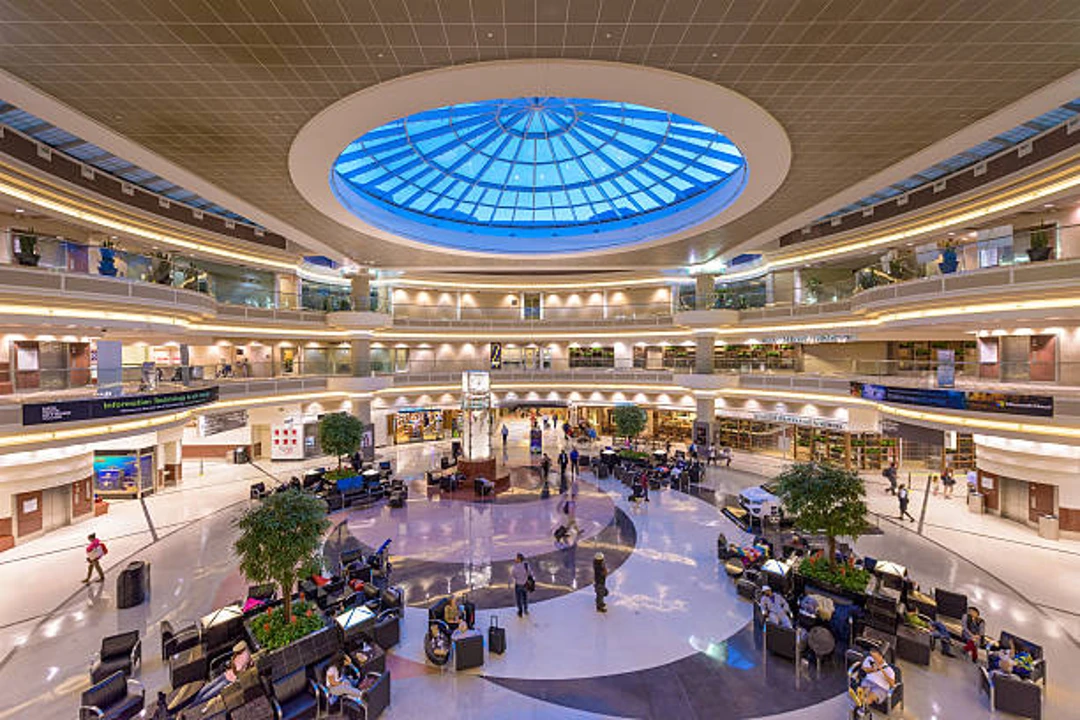
For many travelers, ATL has transitioned from a place one simply passes through to a destination in its own right. This shift is driven by the ATL Skypointe concessions program, which integrates more than 300 commercial venues for dining, shopping, and services.
The experience is further layered with the ATL Airport Art program, which weaves permanent and rotating exhibits and live musical performances into the terminal’s fabric.
Atlanta International Airport Provides Essential Passenger Services
Managing the world’s busiest airport requires a massive administrative and security apparatus. For travelers needing direct assistance, atlanta-international-airport.com provides a comprehensive directory of essential services. This includes dedicated lines for Guest Relations and General Information at (404) 530-7300, as well as specialized contacts for Lost and Found, Parking, and the Airport Division of the Police.
The sheer scale of the operation is reflected in the necessity of these dedicated channels. From noise concern hotlines for surrounding residents to TTY/TDD services for the deaf, the airport’s operational footprint extends far beyond the runways and into the civic life of the surrounding region.
Critical Contact Directory
| Department | Contact Number |
|---|---|
| General Information / Guest Relations | (404) 530-7300 / (800) 897-1910 |
| Lost and Found | (404) 530-6671 |
| Airport Police | (404) 382-1900 |
| Parking Information | (404) 530-6725 |
| Emergency Services (Fire Rescue) | (404) 530-6639 |
The Economic Friction of Growth
The existence of a dedicated Noise Concerns Hotline (770) 436-6473 suggests an ongoing effort to manage the friction between global aviation goals and local quality of life.
There is also the challenge of maintaining “efficiency” when passenger numbers cross the 100-million mark.
As the airport looks toward the future of transportation systems, the Centennial celebration serves as a bridge. It honors a century of history while acknowledging that the next hundred years will require a fundamentally different approach to how humans move across the globe.