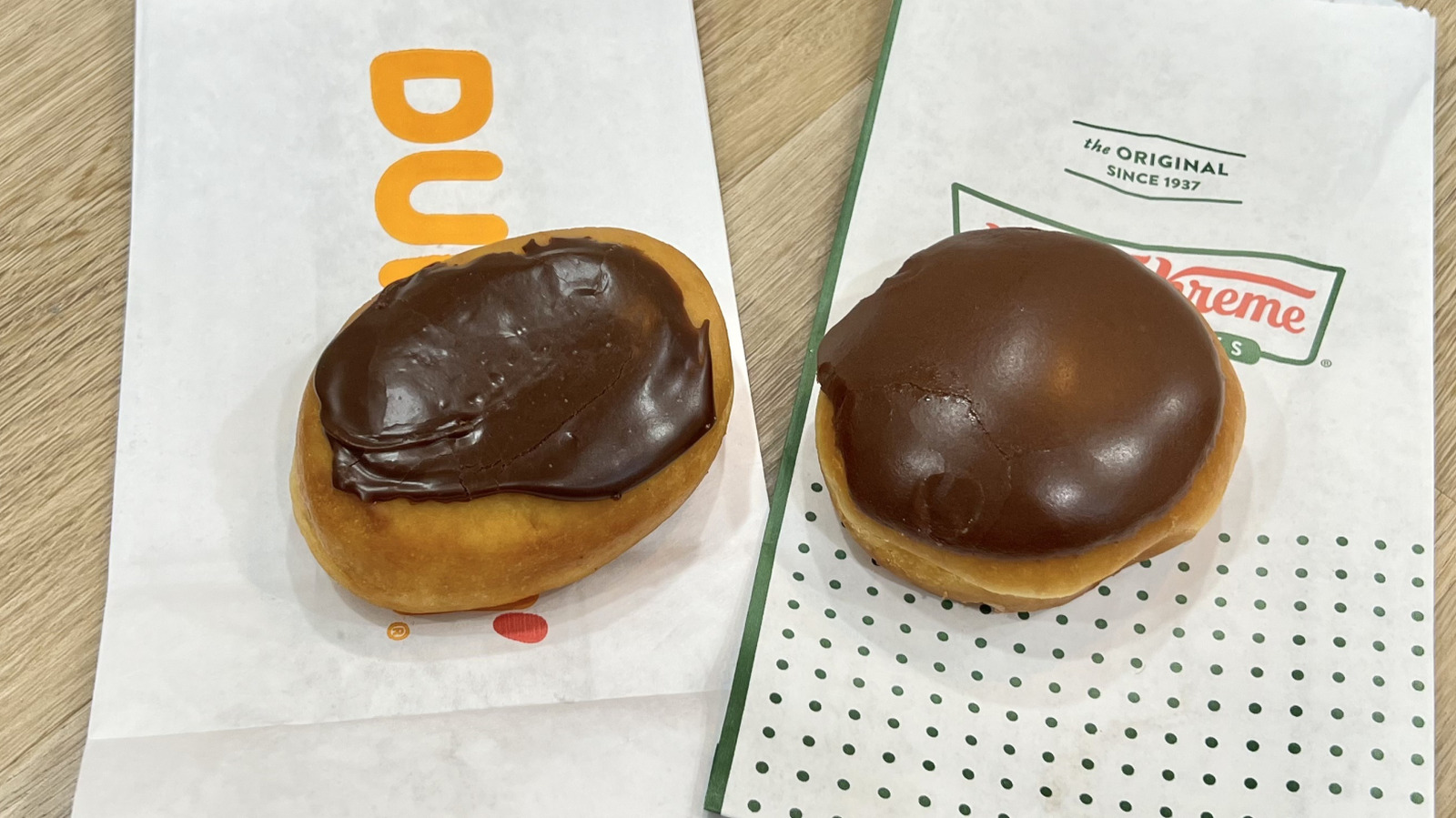
The Battle for the Boston Cream Crown
In the world of American pastry, few treats carry as much regional weight as the Boston cream donut. While the dessert traces its lineage back to the 1856 debut of the Boston cream pie at the city’s Parker House Hotel, the modern, handheld version has become a staple of national coffee chains. Recently, Megan Hageman of Tasting Table put two industry giants—Dunkin’ and Krispy Kreme—to the test to determine which chain truly masters the balance of yeast dough, pastry cream, and chocolate icing.
The stakes for this comparison go beyond simple preference. For Dunkin’, a Massachusetts-based entity, the Boston Kreme is a matter of defending home turf. For Krispy Kreme, the test involves selling a menu where the iconic donut isn't even labeled by its traditional name, forcing a comparison between the chain's standard custard-filled offering and the regional standard. The findings highlight a significant divide in how these companies approach a classic recipe.
Dunkin’ and the Hometown Advantage
At Dunkin’, the Boston Kreme is a menu veteran. Priced at $1.69 in this recent trial, the donut presented a somewhat irregular, oblong shape and a modest smear of icing. Despite the visual shortcomings, the experience was anchored by a familiar, bready texture that avoided the overly yeasty notes often found in mass-produced pastries.

The defining element proved to be the custard. Hageman observed that the filling, which leaned into a vanilla-pudding profile, was consistently present throughout the donut. The chocolate icing, while compared to the nostalgic flavor of shelf-stable frosting, provided a sufficient balance to the creamy interior. It wasn’t a gourmet experience, but it successfully captured the traditional expectations associated with the name.
The Krispy Kreme Custard Challenge
Krispy Kreme’s approach to the category proved more contentious. While the chain does not market a specific “Boston cream,” Hageman evaluated the $2.59 Chocolate Iced Custard Filled donut as the functional equivalent. The base dough, consistent with the brand’s signature fried style, was noted for being extra doughy and satisfying in its own right.
However, the execution of the filling created a significant barrier to entry. The custard was not only difficult to locate within the donut, requiring several bites to reach, but its flavor profile was described as having an unexpected lemony tang and a chemical-like aftertaste. This experience suggests that for consumers seeking a traditional Boston cream profile, the Krispy Kreme iteration may fall short of expectations, regardless of the quality of the dough.

National Chains Struggle to Standardize Regional Favorites
The divergence between these two products speaks to the broader economic reality of national chains attempting to standardize regional favorites. Dunkin’, by virtue of its history, has institutionalized the flavor profile of the Boston cream, ensuring that the custard-to-dough ratio meets a specific, expected standard. Krispy Kreme, meanwhile, appears to prioritize its own established donut architecture, which may not always work well when applied to custard-filled varieties.
While a local, independent bakery in Boston’s Beacon Hill might offer a superior product, the convenience of national chains remains the primary driver for most consumers. For those seeking a reliable, if not revolutionary, taste of the historic city, the evidence suggests that Dunkin’ currently holds the edge in this specific category. The decision ultimately rests on whether a diner prioritizes the quality of the exterior dough—where Krispy Kreme often excels—or the integrity of the custard filling, which stands as the hallmark of the Boston cream tradition.