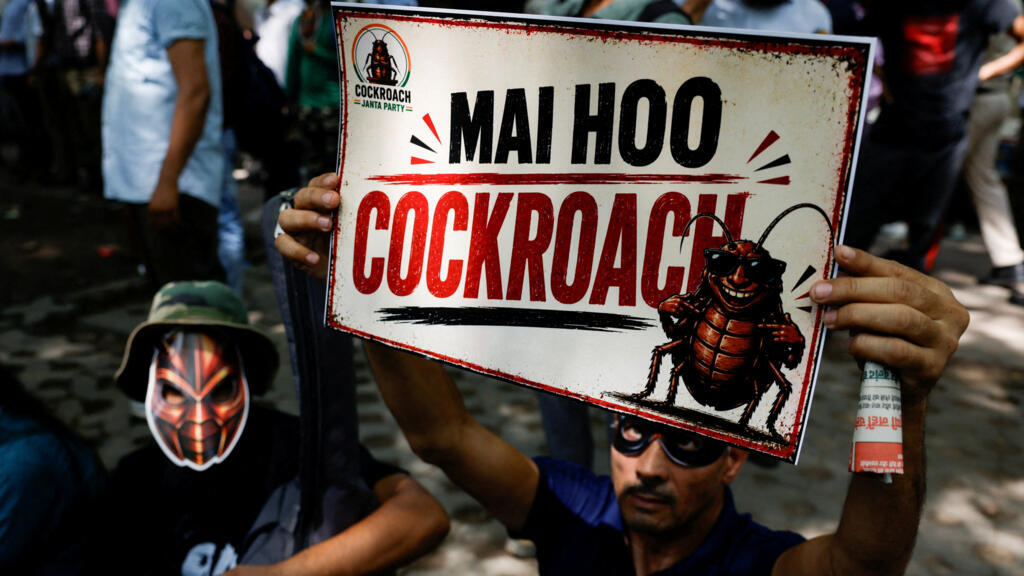
Following mass detentions in New Delhi, leaders of the youth-led Cockroach Party vowed to press forward with demonstrations demanding the removal of India’s chief election commissioner, setting up a standoff with Prime Minister Narendra Modi’s government.
Thousands Detained in New Delhi After Airport Interceptions
Indian authorities detained thousands of protesters and intercepted key organizers over the weekend as security forces locked down central New Delhi. Police moved quickly against the demonstrations, which targeted the nation’s election oversight and drew thousands into the streets in demonstrations led by the Cockroach Party, known formally as Cockroach Janata Party (CJP).
Among those taken into custody immediately upon arrival at the capital’s airport on Saturday were CJP founder Abhijit Debki and senior leaders Sourabh Das and Ashutosh Ranka. A local court ordered their release on Sunday morning under a magistrate’s directive requiring them to avoid breaching the public peace—a condition movement representatives insisted would not stop their political activism. In his initial public comments following his release, Debki declared that his movement would neither retreat nor surrender to intimidation.
The Cockroach Party will not back down and will not submit to intimidation.
Abhijit Debki, Cockroach Party founder
Online Campaign Grows as Election Commission Denies Claims
Media reports indicated that thousands of protesters had been detained and subsequently released by Saturday, with hundreds more arrested on Sunday. The unregistered political group’s massive online visibility includes twenty million followers on Instagram, representing roughly five percent of India’s total user base on the platform. Critics and opposition groups argue that the deletions disproportionately affect minority populations and opposition strongholds, creating an unfair advantage for Prime Minister Narendra Modi’s ruling Bharatiya Janata Party (BJP). Both the election commission and the government have consistently denied those allegations.
The CJP—which began as an online satire campaign after a senior judicial figure used the term cockroaches to describe unemployed youth—has evolved into a formidable political pressure group. The movement previously capitalized on widespread frustration to force the resignation of India’s education minister in July.

Supreme Court Orders Transit Restorations During Police Clampdown
To suppress the weekend demonstrations, police authorities imposed strict security barriers across New Delhi, shutting down transit stations and restricting movement. The Supreme Court intervened on Sunday, holding a special session to order the government to restore suspended mobile internet services and ensure normal operation of rail and subway networks. During these security sweeps, lawyers protesting outside the high court and reporters—including a Reuters journalist—were briefly detained by authorities.
Student leader Neha Boro, national president of the left-leaning All India Students Association, stepped forward to encourage supporters to protest wherever they were. Boro was among those detained on Saturday before being released, noting during her detention that while she was held, the movement itself remained free.
Opposition Leaders Back Ultimatums Issued to Police Authorities
Opposition figures, including senior Indian National Congress leader Rahul Gandhi, have thrown their weight behind the protests. With opposition parties and youth groups demanding Kumar’s resignation, the CJP issued an ultimatum to police authorities to schedule a permitted peaceful rally or face fresh unauthorized demonstrations.
Whether police authorities will schedule a permitted peaceful rally or how the government will respond to the ultimatum remains unaddressed.


