
At 10:00 a.m. Hague time on Thursday, the International Court of Justice will deliver its judgment in The Gambia v. Myanmar at the Peace Palace in The Hague, ruling on whether the Southeast Asian nation violated the 1948 Genocide Convention during its 2017 military campaign against the Rohingya Muslim minority.
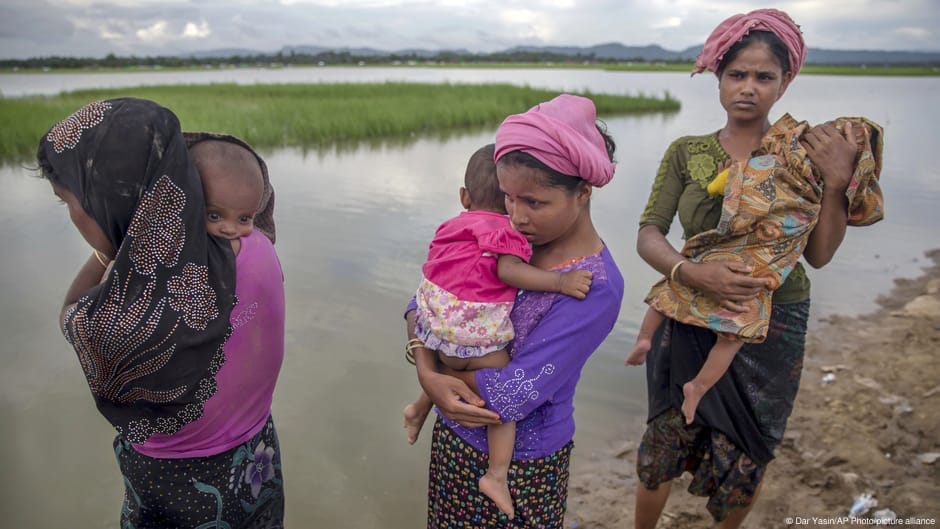
Myanmar Military Operations Drove Rohingya Refugees
The Gambia formally filed its application with the United Nations court on November 11, 2019. It accused Myanmar of breaking obligations under the UN genocide convention.
[Fears grow that US will put Nobel-winning judge under sanctions after Myanmar genocide ruling] “A ruling against Myanmar could set precedent for court’s judgment on Israel’s actions in Gaza“https://t.co/S9ADV2vs1w
Operations in Rakhine State began in 2016 and escalated sharply in August 2017. The offensive drove at least 730,000 Muslim Rohingya across the border into Bangladesh.
Refugees who survived the crackdown recounted mass killings, systemic sexual violence, and the burning of villages. Mohammadul Hassan was 19 years old. Troops hauled him and his brothers from their dwelling, made them kneel on the ground, and shot them in the back of the head.
TOMORROW: The #ICJ will deliver its Judgment in the case concerning Application of the Convention on the Prevention and Punishment of the Crime of Genocide (The #Gambia v. #Myanmar: 11 States intervening) Follow @UNWebTV: 19 November, 10 a.m. (The Hague) https://t.co/06S1Lk1ANx pic.twitter.com/bFT0SXSv5a
He survived despite being shot a second time in the chest and was carried through the jungle to Bangladesh during a 14-day flight from the violence.
Before initiating the proceedings, former Gambian Justice Minister Abubacarr Tambadou visited refugee camps in Bangladesh. He recognized disturbing parallels with the Rwandan genocide he had previously prosecuted and the case subsequently continued under Attorney General and Justice Minister Dawda A. Jallow.
An attack on the @IntlCrimCourt was never just an attack on one court. Reports that #USA could sanction judges of the @CIJ_ICJ over a possible genocide ruling against Myanmar should set off alarm bells everywhere. Independent judges must be able to interpret and apply…
Proving Intent Remains the Central Hurdle
The court issued a unanimous order in January 2020. It required Myanmar to implement every measure within its power to stop acts banned by the Genocide Convention, safeguard relevant evidence, and provide regular reports regarding compliance. Human rights advocates said Myanmar blatantly ignored these emergency orders.
The central legal hurdle involves proving specific intent to destroy the Rohingya group in whole or in part. Myanmar defended its military operations as a legitimate counterterrorism response to an uprising by insurgents. Legal scholars said establishing this intent through inference forms the primary flashpoint for the judges.
“It directly undermines Myanmar’s argument that this was a legitimate counterterrorism operation,” said Michael Becker, an associate professor of international human rights law at Trinity College Dublin and a former associate legal officer at the ICJ.
Michael Becker, associate professor of international human rights law at Trinity College Dublin and former associate legal officer at the ICJ
ICJ Genocide Findings Could Influence International Proceedings
If the court concludes that Myanmar bears state responsibility for genocide, it will be the first time the ICJ has reached such a determination regarding a UN member state since it began operations 80 years ago. Previous genocide cases brought against Serbia by Bosnia and Herzegovina in 2007 and by Croatia in 2015 did not result in findings of state-committed genocide.
Legal analysts are scrutinizing the judgment for guidance that could resonate in other international proceedings. South Africa filed a 2023 case alleging that military operations in Gaza breached the Genocide Convention. Ten states intervened in the Myanmar proceedings to submit arguments regarding the interpretation of genocidal intent.
World court to rule Nov. 19 on Myanmar genocide case over Rohingya KARAÇI – The International Court of Justice (ICJ) will deliver its judgment Nov. 19 on whether Myanmar violated the UN Genocide Convention in its treatment of the Rohingya Muslim minority, the court announced… pic.twitter.com/yJSD4H6CV9
Fears grew that the United States could impose sanctions on court judges. Nobel Peace Prize winner Navi Pillay serves as a judge ad hoc appointed by The Gambia. Think tanks close to the White House predicted a genocide ruling would lead Washington to penalize the tribunal.
Refugee Hopes and Security Realities in Cox’s Bazar
More than one million Rohingya refugees reside in the sprawling camps of Cox’s Bazar, Bangladesh. Communities await the verdict with mixed expectations of dignity, citizenship, and eventual return.
PRESS RELEASE: the #ICJ will deliver its Judgment in the case concerning Application of the Convention on the Prevention and Punishment of the Crime of Genocide (The #Gambia v. #Myanmar: 11 States intervening) on 19 November at 10 a.m. Live @UNWebTV https://t.co/Mj00rLQcSZ pic.twitter.com/1Em1IXMRQR
“There were no venues available in [Myanmar]… International venues were the only hope,” said Aung Kyaw Moe, a prominent Rohingya activist whose family was forced to flee the country during the pogroms.
Aung Kyaw Moe, prominent Rohingya activist
Activists warn that the weeks surrounding the judgment remain perilous. Due to a resurgence of online hate speech, misinformation, and reduced content moderation on social media platforms, activists warn that the weeks surrounding the judgment remain perilous. The public sitting will be streamed live on the ICJ website and UN Web TV starting at 10 a.m. local time on Thursday.
2/3 The International Court of Justice is scheduled to deliver its judgment on the merits on 19 November. Brought by The Gambia in 2019, the case concerns Myanmar’s alleged violations of the Genocide Convention against the Rohingya.


