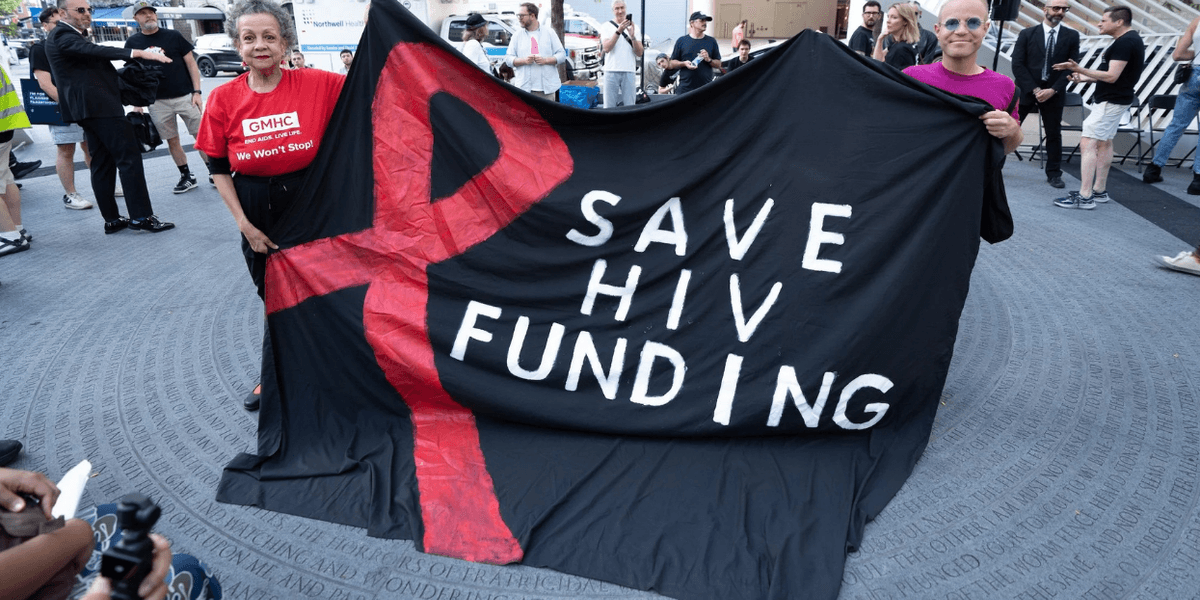
Global HIV infections fell to a historic low of 1.2 million in 2025, but international funding cuts threaten to reverse those gains and drive new transmissions back up starting in 2027.
Funding Shortfalls Threaten Global HIV Targets
International financial support for HIV programs dropped by approximately 18 percent in 2025, according to an annual report released on November 24, 2026, by the Joint United Nations Programme on HIV/AIDS. The agency reported that available HIV resources in low- and middle-income countries fell by more than US$ 1 billion in 2025, leaving a US$ 4.3 billion annual gap against what is required to end AIDS as a public health threat by 2030.
The funding contraction follows a wider decline in official development assistance, driven in part by a 26 percent reduction in U.S. bilateral contributions between 2024 and 2025. Disbursements from the Global Fund to Fight AIDS, Tuberculosis and Malaria also dropped by 13 percent last year.
Every clinic that closes, every outreach worker who loses their job, every person turned away from prevention services today risks becoming a new HIV infection tomorrow. Ending AIDS starts with access.#WorldAIDSDay #UnitedToEndAIDS @UNAIDS @UN_News_Centrehttps://t.co/EIgMmIQSZd
Winnie Byanyima, executive director of UNAIDS, told Reuters that the drop stems from a steady reduction in European funding combined with a sudden major cut from the United States.
“We are on the cusp of ending AIDS – this has been the greatest story of global health – and just when we should finish it, cuts and the rolling back of human rights is threatening to take away our gains,” Winnie Byanyima, executive director of UNAIDS, told Reuters.

We are having these scientific breakthroughs, but also having political breakdown. The consensus, the global solidarity that has driven this disease down is breaking down. So, we’re saying a scientific breakthrough is not a breakthrough unless it can be accessed by everybody.
Winnie Byanyima, executive director of UNAIDS
Impact on Prevention Services and High-Risk Populations
Although deaths related to AIDS fell to approximately 570,000 in 2025—down from 600,000 in 2024 and a peak of 1.3 million in 2010—prevention services have suffered severe disruptions. Global condom distribution dropped from 3 billion in 2024 to 2.7 billion in 2025. Access to oral pre-exposure prophylaxis, known as PrEP, declined sharply across multiple regions, while voluntary medical male circumcision procedures dropped by 53 percent across priority countries.
Across 47 nations, an evaluation by 79 community groups examined by UNAIDS revealed a 50 percent reduction in the delivery of PrEP, alongside an 85 percent plunge in specialized care for gay and bisexual men and an 82 percent decrease in programs for sex workers.
1,600 people die from AIDS-related illnesses daily as UNAIDS warns of funding crisis An estimated 1,600 people die from AIDS-related illnesses every day worldwide, as cuts in international funding threaten decades of progress in preventing and treating HIV, the Joint United…
Data from select countries indicate that PrEP use among key populations fell by 59 percent among sex workers, 58 percent among people who inject drugs, 23 percent among transgender people, and 17 percent among gay men and other men who have sex with men.
We know what happens when HIV prevention collapses. People become infected, treatment needs rise, costs soar and lives are lost. Every clinic that closes, every outreach worker who loses their job and every young woman turned away from prevention services today risks becoming a new HIV infection tomorrow.
Winnie Byanyima, Executive Director of UNAIDS
Severe Dependency in Sub-Saharan Africa and National Case Studies
Sub-Saharan Africa remains the region most affected by HIV, with more than 26 million people living with the virus. Many nations in the region depend almost entirely on external financing for their prevention programs. International donors finance approximately 98 percent of reported HIV prevention spending in Nigeria and Eritrea and Zambia, 94 percent in Mozambique and Namibia, 93 percent in Ethiopia, 88 percent in Uganda, and 86 percent in Malawi.

In Nigeria, the number of individuals receiving PrEP plummeted from roughly 43,000 in November 2024 to fewer than 6,000 by April 2025, marking an 85 percent collapse in access. Dr. Jennifer Anyanti, managing director of the Society for Family Health Advisory and second vice-president of the Healthcare Federation of Nigeria, attributed the drop to funding cuts, procurement bottlenecks, and supply chain challenges.
In Zambia, where the U.S. President’s Emergency Plan for AIDS Relief supplied 84 percent of HIV program funding at the start of 2025, PrEP delivery dropped by over 50 percent. The Zambia National HIV/AIDS/STI/TB Council reported that adolescents and young people aged 15 to 24 account for 38 percent of new cases in the country.
Treatment Metrics and Emerging Prevention Technologies
Despite declines in prevention, treatment coverage has remained comparatively stable. Approximately 32.1 million of the 40 million people living with HIV worldwide were accessing antiretroviral therapy in 2025. Expanding treatment has reduced viral loads, which in turn lowers transmission risks.
Health authorities are looking to new long-acting technologies, such as lenacapavir, a twice-yearly injectable drug, to revitalize prevention efforts. By October, 175,000 people across nine sub-Saharan African countries had started on lenacapavir, with cheaper generic versions anticipated next year.

The rollout of this injectable began in Zambia in December 2025, coordinated with the release of the nation’s 2025–2030 HIV Prevention Roadmap, which has the objective of reducing annual new infections by half to 15,000 before the decade concludes.
Regional Progress Against Global Disruptions
UNAIDS said that regional outcomes varied widely despite the broader worldwide decline in transmissions. The Caribbean successfully reduced new infections by 30 percent and AIDS-related deaths by 65 percent between 2010 and 2025, according to the report “Ending AIDS Starts with Access”. However, Belize and Suriname stood out as the only two nations in that region where new HIV infections increased over the same period.
What exists? Who can access it? The world has the tools to end AIDS: life-saving treatment, effective prevention, new technologies and the knowledge to save lives. But having these solutions is not the same as ensuring everyone can benefit from them. Millions of people still… pic.twitter.com/3ltbBnGRVU
The UNAIDS report observed that Belize funds its own HIV response through local businesses, private insurance, and individuals paying for their own care, and the country previously repealed laws criminalising HIV transmission, non-disclosure, and exposure in 2023.
Confronting Emerging Threats Before 2030
“The world is sleepwalking into a preventable crisis,” Winnie Byanyima, Executive Director of UNAIDS, said. She stressed that the systems providing community support and trusted bridges between health systems and vulnerable populations are vanishing.

Temitope Ilori, Director-General of the National Agency for the Control of AIDS, reported that Nigeria recorded 64,000 new HIV infections and 32,000 AIDS-related deaths in 2025, an improvement over the past decade. Meanwhile, UNAIDS highlighted that twice-yearly injectable lenacapavir and other long-acting prevention innovations offer the prospect of protecting millions more people from acquiring HIV if access can be sustained.
Winnie Byanyima brings extensive international leadership and advocacy experience to her current role as executive director of UNAIDS, a position she has held since 2019 alongside serving as a United Nations Under-Secretary-General. Prior to leading the Joint United Nations Programme on HIV/AIDS, she served as executive director of Oxfam International from 2013 to 2019, directing global humanitarian and anti-poverty efforts.
Global Estimates and Historical Context
Global reporting figures compiled by UNAIDS draw from data provided across 172 countries. Since the epidemic began, an estimated 92 million individuals have acquired HIV, and 44.2 million people have lost their lives to AIDS-related illnesses. By comparison, annual new infections reached a peak of 3.5 million in 1994. Testing services for advanced conditions dropped by 35 percent across six countries between 2024 and 2025, creating further hurdles for timely medical care.