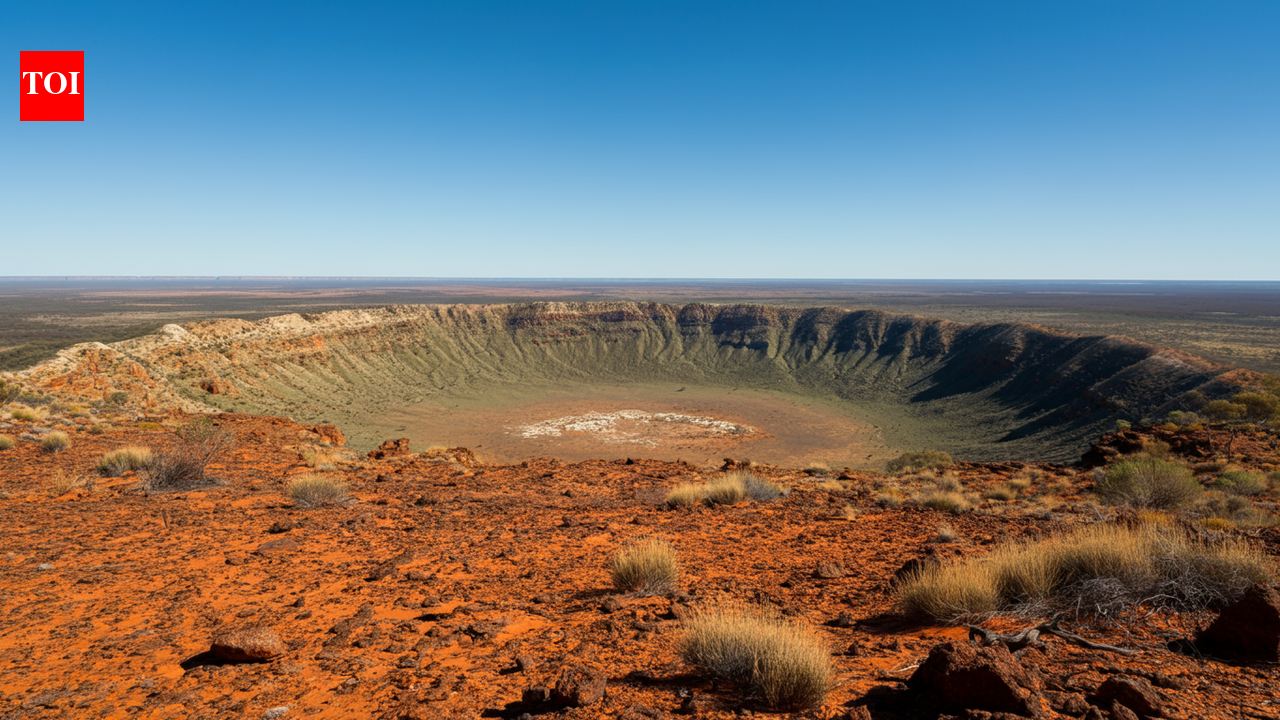
The “Orcheziz” crater in Algeria’s Tindouf desert has sparked a fresh scientific debate after a new age estimate of roughly ten thousand years was proposed, challenging previous calculations that placed it at up to a period reaching millions of years old according to reporting by Alarabiya.
The vast expanse of the Algerian desert hides geological features that hold evidence of ancient cosmic events. These include impact craters formed by space objects colliding with Earth’s surface.
At the forefront of this discussion stands Orcheziz. Located in the Tindouf region, it spans an approximate 3.5 kilometers. This scale makes it a prominent landmark for further study and documentation, according to Alarabiya.
Challenging Decades of Assumptions in the Tindouf Desert
Interest in the crater surged following statements made by Algerian researcher Ratiba Sahoui. She spoke during an October scientific symposium hosted in Oran.
Alarabiya reported that Sahoui indicated analysis of remaining materials at the site points to an age of about ten thousand years. This offers a stark contrast to earlier estimates linking the formation to a period reaching millions of years ago.
Weighing the Evidence Against Independent Verification
This substantial discrepancy raises important scientific questions. Researchers must determine whether newer analyses truly uncover a different history for the site, or if further independent checks and laboratory work are required.
Alarabiya noted that the ten thousand years figure should currently be treated as information attributed to the researcher rather than a settled final result. This provisional status remains pending access to the original scientific study and its dating methodology.
Mapping Algeria’s Hidden Meteorite Impact Sites
Orcheziz is far from alone in the region.
Information presented during the Oran symposium shows that Algeria hosts four known meteorite impact sites and craters: Orcheziz, Talemzane, Tin Bider, and Amguid, according to Alarabiya. These locations vary in their specific characteristics and estimated ages.
Together, they offer researchers opportunities to study the aftermath of cosmic impacts and the evolution of the Earth’s crust across different timelines.
Protecting Exceptional Geological Sites for International Research
Beyond pure scientific value, these geological formations hold potential for specialized geotourism. That potential relies on the sites receiving proper protection, documented field studies, and integration into natural heritage preservation programs.
Alarabiya reported that the researcher highlighted the possibility of nominating Orcheziz among exceptional geological sites worthy of protection. Such a step could grant the desert landmark a higher profile in international research.


