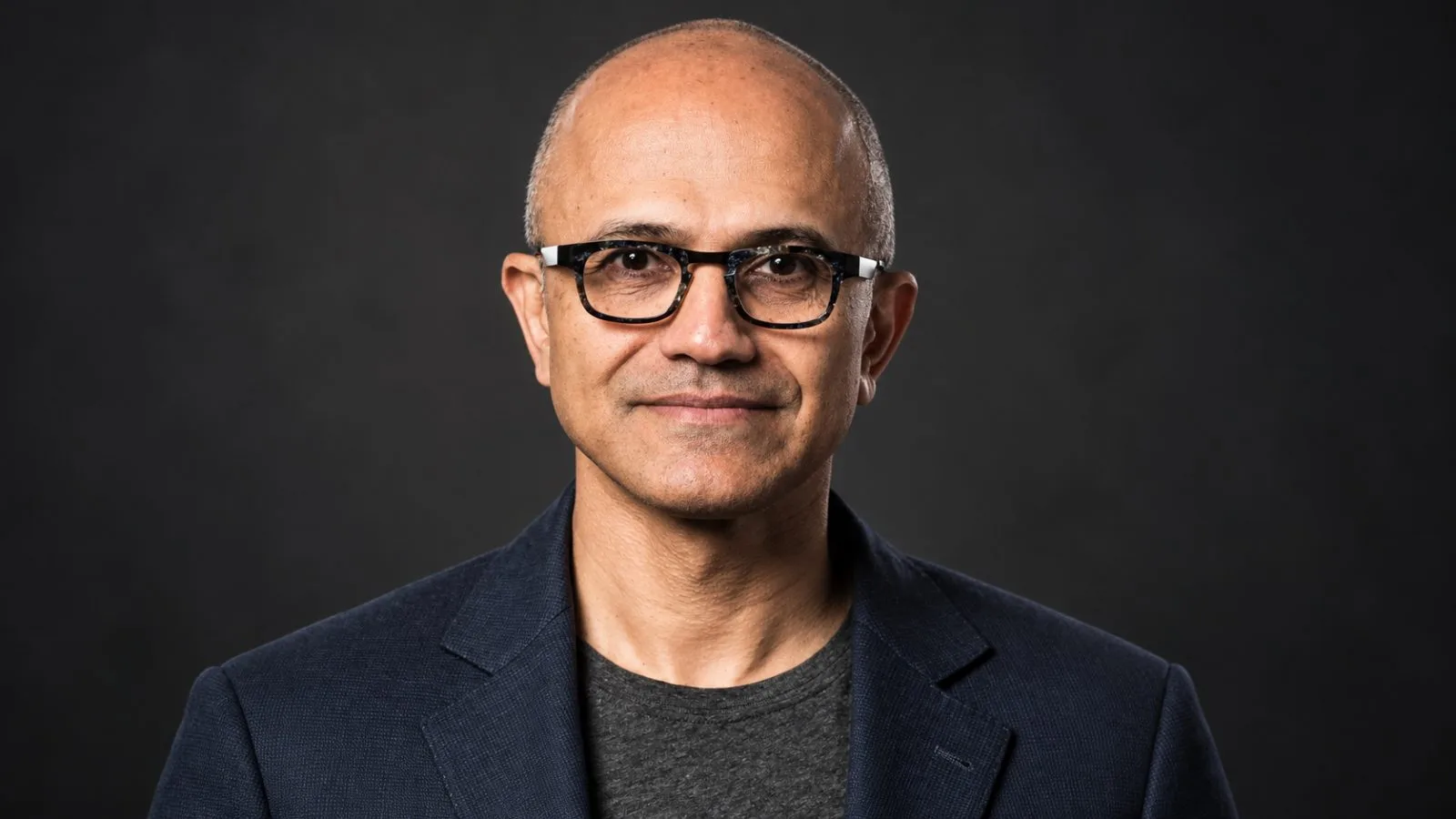
“I am AGI pilled in the sense that at an economy level, what is the political economy’s organization around AGI?” said Microsoft CEO Satya Nadella.
Nadella spoke at a roundtable after his keynote at Microsoft Ignite in San Francisco on November 17. He framed the rapid development of artificial intelligence as a fundamental shift in economic and political power, not merely a race between technology firms. He described himself as an “AGI believer” but said his primary concern is how the technology will diffuse across the economy.
The Microsoft chief warned that treating AI development as a narrow competition for market dominance misses the larger danger of centralized control. “Most people think about this as a competition between tech firms, which of course it will be,” Nadella said.
“But remember, the model has no limits. It’ll be a healthcare company. It can be a financial services company. It can be anything if it wants to be. It can take over the government.”
He argued that if a single AI model achieves a monopoly, it could threaten the stability of democratic systems. A structure where capital remains without labor would be unsustainable for any democracy, he said.

“If the Marxist sort of view is that there’s only one firm, then it’s over, right? For all of us,” he said. Such a scenario would affect not just technology companies but every sector of the economy.
Building frameworks to prevent economic control from pooling in a single locus outweighs the rivalry over AI capabilities, he said. The critical challenge for society is guaranteeing that AI disseminates broadly throughout the wider economy.
He further warned that a configuration where capital persists absent labor could make elections difficult to maintain in a democracy. “If, as in a Marxist perspective, only one company remains, it’s over,” Nadella said, calling it “an issue that applies to all of us.” This sense of the problem has been reflected in Microsoft’s AI strategy.
Nadella asked what corporate structures will look like as AI models start taking over knowledge work and human tasks. If intelligence possesses network effects, the traditional role of a company and its human capital may be disrupted. “If intelligence has network effects, what is the future of a firm?” he asked.
Nadella suggested the global economy requires a diverse ecosystem of models to prevent centralization. “By definition, we need as many models as there are companies,” he said.
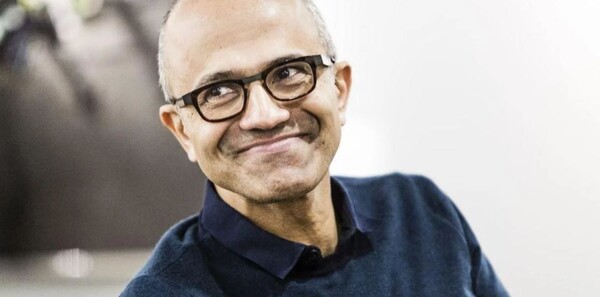
He contended the AGI contest must pivot from model benchmarks toward industrial architecture and the diffusion of authority.
During the roundtable, Nadella addressed the industry debate on whether frontier AI models possess consciousness. Asked if models like Claude are conscious, he responded, “I don’t think so.”
Nadella said he follows the view held by Microsoft AI CEO Mustafa Suleyman, who has criticized giving models moral status as a dangerous approach. Suleyman told him he thinks Anthropic’s team has “wireheaded” themselves, and that this approach is dangerous.
“It’s a good debate,” Nadella said. “I’m not sort of dogmatic about it. What I’m saying is the most important social technical issue we have to deal with is how do you ensure that an economy can diffuse this technology broadly?”