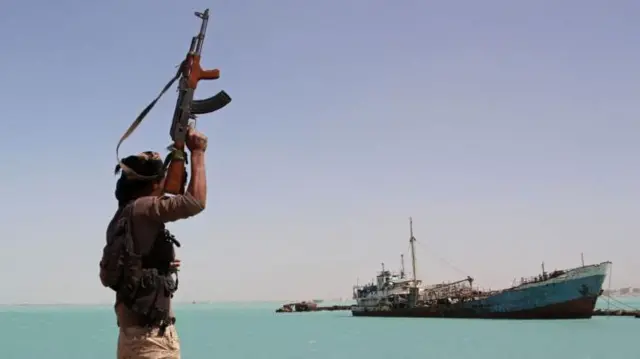
Following the October 5, 2026 launch of Operation Dawn of Yemen, state authorities and military leadership announced control over the strategic Bab el-Mandeb Strait and Perim Island. Egyptian military experts outline potential security gains and maritime impacts as shipping lines weigh regional risks.
The announcement of field control over the Bab el-Mandeb Strait and the strategic island of Perim marks a major turning point in the regional conflict. Yemeni government forces secured vital military bases and checkpoints as part of efforts to restore state institutions, prompting questions about the operational timeline for international trade, Red Sea security, and the eventual recovery of traffic through the Suez Canal.
Strategic Control of Bab el-Mandeb and Perim Island
Government forces undertook a wide-scale military operation to recover areas previously held by the Houthis along the western coast. These advances reached areas near Bab el-Mandeb and the surroundings of Mocha, signaling a shift where the domestic Yemeni conflict ties directly into broader regional confrontations involving Iran and control over vital maritime chokepoints.

Perim Island holds a critical geographic position directly inside the strait, dividing the waterway into two distinct channels. The narrow eastern channel hugs the Yemeni coastline, while the wider western channel serves as the primary route for large commercial vessels.
Military Assessments on Regional Security and Shipping
Egyptian military analysts view the securing of the terrestrial approaches and adjacent highlands as an initial reassurance to global shipping companies and the international community.
Major shipping companies rely on security assessments, and what happened makes them realize immediately that the risks are on their way to disappearing.
Despite the positive operational shift, maritime traffic will not see an immediate, substantial surge overnight. Current transit data indicates an average daily crossing volume of roughly 30 to 35 ships per day through the strait, remaining well below normal levels while operators wait for sustained calm.
Three Operational Gains for Red Sea Navigation
Stable governmental command over the coastline and island settings delivers three distinct operational advantages for regional stability.
- Enhanced maritime surveillance through the active monitoring of vessel movements and hostile actions within the strait.
- Reduced coastal threats by limiting the ability of hostile actors to utilize nearby shore positions against passing ships.
- Strengthened regional security cooperation, opening pathways for coordination between Yemen and other nations bordering the Red Sea.
Future Scenarios for the Suez Canal and Cape of Good Hope Routes
Military strategists outline two primary scenarios for how ground developments near Bab el-Mandeb will influence global shipping lanes going forward. The first scenario depends on stable governmental control and halted attacks, which would foster a steady climb in vessel transits and revenue recovery for the Suez Canal.
The second scenario points out that continued control over missile threats could prompt a limited and cautious return of some shipping lines and the cessation of diverting trips to the Cape of Good Hope route.


