
United States Secretary of Defense Pete Hegseth recently testified that the war with Iran has cost $37.5bn to date, a figure he provided while defending a $1.5 trillion defense budget request. The estimate, disclosed during a Senate hearing, arrives as hostilities escalate following the collapse of a regional memorandum of understanding.
Budgetary Strains and the Iran War Cost
Secretary of Defense Pete Hegseth confirmed the $37.5bn price tag during a tense Senate appropriations committee hearing on Tuesday. Appearing alongside Chairman of the Joint Chiefs of Staff Dan Caine, Hegseth faced scrutiny over a sprawling $1.5 trillion defense budget request that includes nearly $70bn specifically earmarked for the ongoing conflict with Iran.
The $37.5bn figure represents an $8bn increase from the $29bn estimate released by the Trump administration in May. However, the official accounting remains a subject of debate. Independent analysts at Moody’s Analytics have projected the total domestic cost could climb as high as $150bn when accounting for broader economic factors, such as the impact of higher energy prices on American consumers.
Operational Realities and Munition Shortages
Beyond the immediate financial costs, Hegseth highlighted significant logistical pressures on the U.S. military. He noted that the ongoing war, which began on February 28, has strained existing weapons stockpiles. The Pentagon is now pushing for urgent funding to accelerate production lines for high-demand hardware, including solid rocket motors, Joint Direct Attack Munitions (JDAMs), and hypersonic capabilities.
The Pentagon chief warned that future training exercises might face mandatory curtailment if the requested budget is not approved. Democratic Senator Patty Murray openly questioned the scope of the request, which bundles war funding with domestic operations like National Guard deployments in Washington, D.C., and border patrols, telling the secretary, The truth is, your request does not make a lot of sense.
The Vulnerability of Western Democracies to Political Warfare
While the U.S. manages the kinetic conflict in the Middle East, military leaders are simultaneously grappling with the rise of grey zone
tactics. General Angus Campbell, Chief of the Defence Force, recently warned that Western nations are increasingly exposed to political warfare—a form of masked aggression that includes cyberattacks, disinformation campaigns, and intellectual property theft.
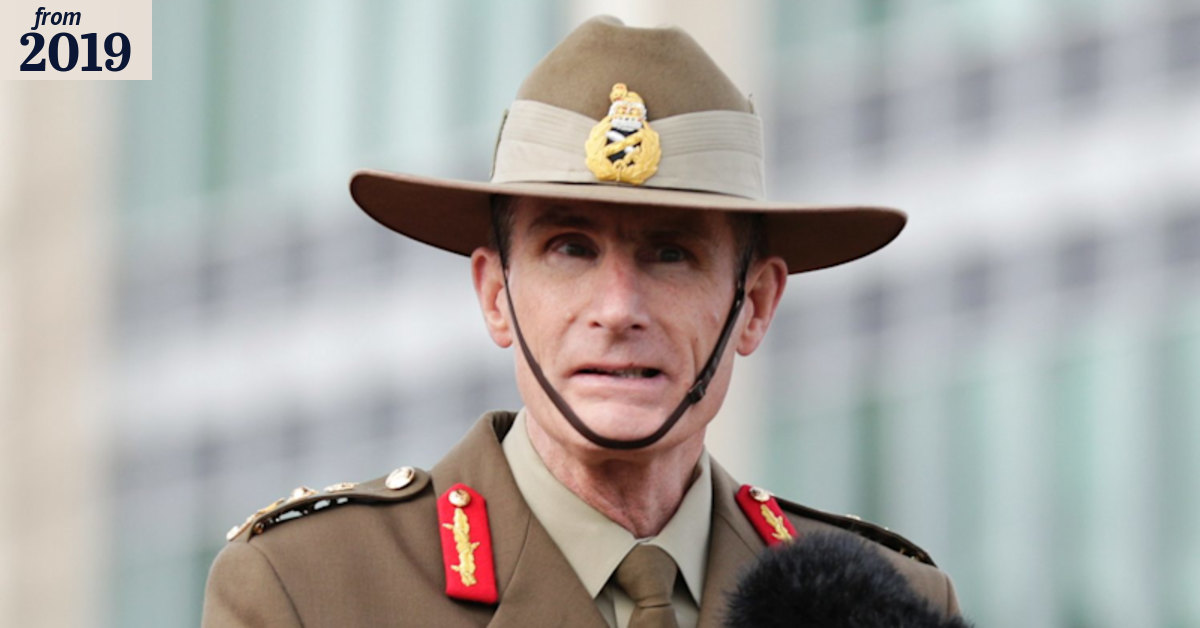
General Campbell observed that authoritarian states are often more adept at these methodologies because they can control all instruments of the state to serve their purposes. Western societies are open, diverse, organic and liberal,
he said. In a word, exposed.
Defining the Mismatch Between War and Peace
Professor Babbage, now a senior fellow at the Centre for Strategic and Budgetary Assessments, has argued that Western countries must move past their shallow
understanding of these tactics and develop a coherent counter-strategy. He emphasizes that the era of viewing cyberattacks and propaganda as unconnected and only mildly irritating
must end if democracies intend to defend themselves effectively.
Escalation Risks in the Persian Gulf
As these strategic debates continue, the immediate situation in the Middle East remains volatile. Following the collapse of a memorandum of understanding last week, U.S. forces have engaged in 10 consecutive nights of strikes against Iranian-linked sites. The conflict has extended to energy infrastructure in Kuwait and sites in Bahrain and Jordan, while Iranian-backed Houthis have initiated a maritime blockade against Saudi Arabia.
The administration has signaled a willingness to expand the scope of military action, with threats to target deep-underground nuclear sites and Iranian energy plants. Whether the current $37.5bn price tag will hold or escalate further depends on the outcome of these strikes and the potential for the conflict to spill over into wider regional instability.


