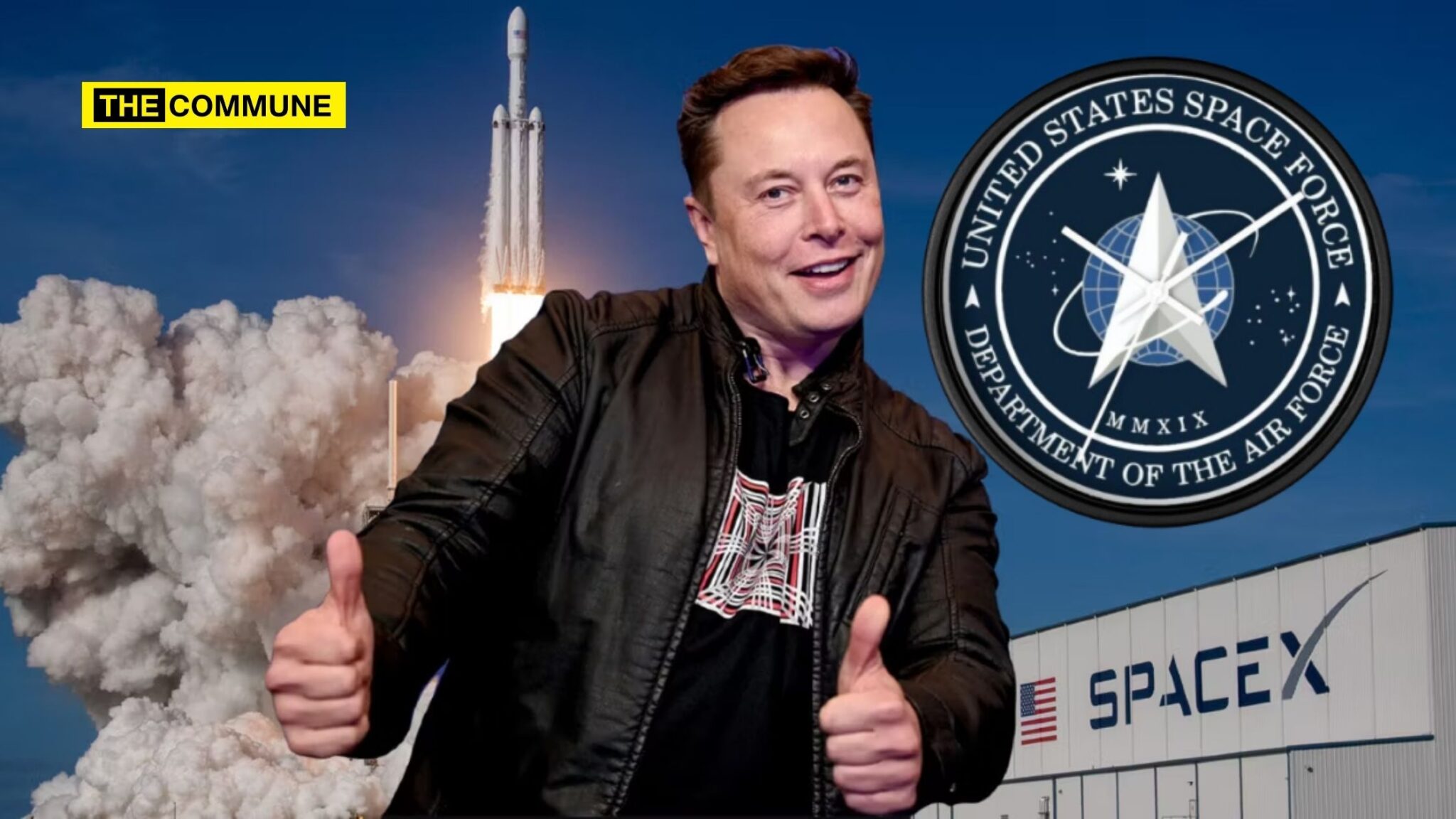
Musk, who serves as CEO and largest shareholder of Tesla and SpaceX, has seen his wealth surge, becoming the world’s wealthiest person since 2025 and the only US dollar trillionaire by June 2026.
Technology leadership in the modern era comes with distinct volatility, a reality personified by Elon Musk. While debates over the trajectory of artificial intelligence grow increasingly urgent across industries, Musk maintains a characteristic posture of acceleration.
From Early Ventures to Trillionaire Status at Tesla and SpaceX
Musk’s path to unprecedented financial milestones began decades prior. Born in Pretoria, South Africa, on June 28, 1971, he emigrated to Canada in 1989 before eventually earning bachelor’s degrees from the University of Pennsylvania in 1997, according to Wikipedia. His early entrepreneurial steps included co-founding Zip2 in 1995, a web software company that was sold in 1999. Following that sale, Musk co-founded X.com, an e-commerce payment system that merged with Confinity in March 2000 to form PayPal, which eBay subsequently acquired in 2002.
Today, Musk’s fortunes derive largely from his stakes in Tesla and SpaceX, as noted by thebiographybytes. Having joined Tesla as an early investor in 2004 before becoming its CEO and product architect in 2008, Musk helped steer the company into a dominant position in electric vehicles. Meanwhile, he founded SpaceX in 2002 to reduce space travel costs and develop reusable rockets. Financial milestones followed rapidly: Forbes estimates his net worth to be US$797 billion as of July 10, 2026, after he became the only trillionaire in terms of US dollars in June 2026.
Navigating the AI Boom Through xAI and OpenAI History
Artificial intelligence remains a central battleground for Musk’s entrepreneurial focus and public commentary. In 2015, Musk co-founded OpenAI to advance AI research, but later stepped away due to growing discontent with the organization’s direction and leadership during the AI boom of the 2020s, according to Wikipedia. This friction prompted him to establish xAI, which ultimately became a subsidiary of SpaceX in 2026.
This philosophy mirrors his approach to other high-risk sectors, such as Neuralink—the neurotechnology company he co-founded in 2016 to champion brain-computer interfaces—and the Boring Company, founded in 2017 to tackle tunneling infrastructure.
Political Alignment and Corporate Restructuring at X
Beyond engineering and software, Musk’s influence expanded into global politics and digital platforms. In 2022, he completed his acquisition of Twitter, implementing significant operational changes before rebranding the social networking service as X in 2023. His political footprint grew equally sharp; Wikipedia notes he was a supporter of global far-right politics and served as the largest donor in the 2024 U.S. presidential election in support of Donald Trump.
Following Trump’s inauguration in January 2025, Musk assumed a role as Senior Advisor to the President and served as the de facto head of the Department of Government Efficiency until May 30, 2025. Back in the corporate sphere, Tesla approved a massive pay package worth $1 trillion for Musk in November 2025, contingent on meeting strict 10-year milestones, including achieving a market capitalization of $8.5 trillion.
Balancing Population Concerns and Interplanetary Ambitions
Beneath the corporate maneuvers and public statements lies a set of deeply personal motivations that drive Musk’s expansive portfolio. According to the sources, Musk has frequently voiced worries about population collapse, a concern mirrored in his personal life as a father of at least 14 children with four women. This urgency regarding human continuity informs his professional ambitions, particularly SpaceX’s ultimate goal of enabling interplanetary life for humanity.
Whether through launching reusable rockets, building Gigafactories for lithium-ion batteries and electric vehicles, or developing satellite internet access via Starlink—which famously faced scrutiny over its terminal deployment in Ukraine—Musk continues to reshape multiple global industries simultaneously. As AI fears mount and regulatory scrutiny follows his every move, none of the current sources clarify how regulatory bodies will respond to xAI’s integration under SpaceX as Musk steers his enterprises toward an uncertain technological horizon.

