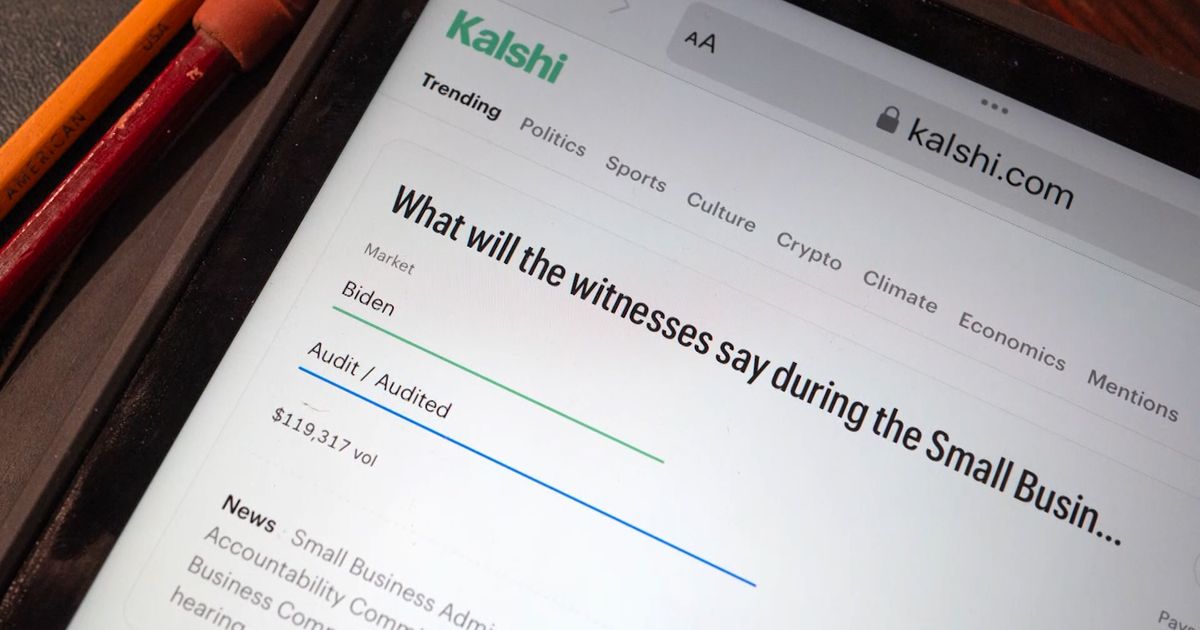
Prediction markets have surged to around $24 billion in monthly trading volume, triggering regulatory clashes between federal authorities and state governments, insider trading probes by the Justice Department, and a first-of-its-kind state authorization and tax proposal in North Carolina’s newly passed budget bill.
Millions of people are putting real money into prediction markets, trading event contracts with yes-or-no outcomes priced between zero and one dollar to reflect the probability of an event occurring according to coverage from KWTX. While the total size of all legal sports betting in America is about $14 billion, trading volume on popular platforms such as Kalshi and Polymarket jumped from under $5 billion a month in August 2025 to around $24 billion in March 2026.
Federal Futures Regulation Versus State Gambling Authority
In the United States, prediction markets operate under the oversight of the Commodity Futures Trading Commission because the trades are classified as futures contracts rather than traditional gambling as detailed by KWTX. Unlike a casino where the house sets static odds, individual users trade against one another in swaps, with the platform earning revenue from transaction fees.
As these platforms expand into sports and other sectors, state officials have argued that the markets amount to gambling in disguise. Stephen Piepgrass noted that if the CFTC is indeed the correct federal regulator, state governments are preempted from regulating or banning the exchanges according to the KWTX report.
North Carolina Moves to Authorize and Tax the Industry
North Carolina is seeking to become the first state to formally authorize and tax prediction market companies according to a report by WRAL. Tucked into page 626 of a 634-page state budget bill that passed both chambers of the legislature, the proposal would institute a 6% tax rate on net revenues generated by prediction market companies.
Predictions for Bill Belichick as North Carolina football HC | Pro Football Talk | NFL on NBC
Senate leader Phil Berger defended the approach to reporters, stating that the activity is clearly growing in popularity. House Speaker Destin Hall added that since residents are already using platforms like Polymarket and Kalshi, the state might as well collect revenue from them.
However, critics warn the framework lacks the rigorous consumer protections applied to sports betting. Mick Mulvaney, director of the group Gambling Is Not Investing and former chief of staff to President Donald Trump, criticized the lack of rules in a written statement reported by WRAL, asking why a state should favor rogue operators over fully compliant sportsbooks.
Revenue Concerns and University Funding Stakes
The budget provision has sparked intense financial debate over university funding as highlighted by WRAL. While legal sports betting in North Carolina carries an 18% tax rate (slated to rise to 23% if the budget becomes law) alongside a $1 million operational license fee, prediction markets would pay a 6% tax with no license requirement.
Photo: wral.com
Opponents fear established sportsbooks could rebrand as prediction markets to capture the lower tax burden. Because North Carolina splits sports betting revenue between the state’s general fund and individual universities, lawmakers like Sen. Julie Mayfield warned that athletic program funding could plummet according to WRAL’s coverage.
Insider Trading Investigations and Corporate Bans
Beyond state taxation battles, prediction markets face severe scrutiny over insider trading risks reported by CNBC. In May, the CFTC and the Department of Justice charged a Google employee with using material, nonpublic information to trade on Polymarket contracts related to the company’s Year in Search lists, allegedly netting about $1.2 million in profit.
Photo: kwtx.com
Financial institutions are scrambling to respond to the emerging liability. Goldman Sachs has instituted a ban prohibiting its employees from trading on contracts tied to bank-specific events, elections, financial markets, macroeconomic data, and geopolitics according to CNBC. While firms like Morgan Stanley are working on internal policies, a CNBC survey of 50 publicly traded and privately held companies revealed that only three revealed they have policies related to trading on prediction markets.
Upcoming Action on the North Carolina Budget
The disputed North Carolina budget bill now rests on the desk of Democratic Gov. Josh Stein who holds the authority to sign it, veto it, or allow it to become law without his signature.
Eleanor Voss is the editorial identity for TellingPointy's Politics desk, where elections, government, law, and public policy are treated as systems of power rather than theatre. Voss focuses on what proposals actually do, who pays, which institutions can implement them, and where rhetoric departs from the public record. Her desk separates polling from prediction, allegation from evidence, and political strategy from measurable consequences.
Secret U.S. security maneuvers in Turkey last July, including aircraft swaps, stemmed from unverified Israeli intelligence warning of an Iranian plot to…