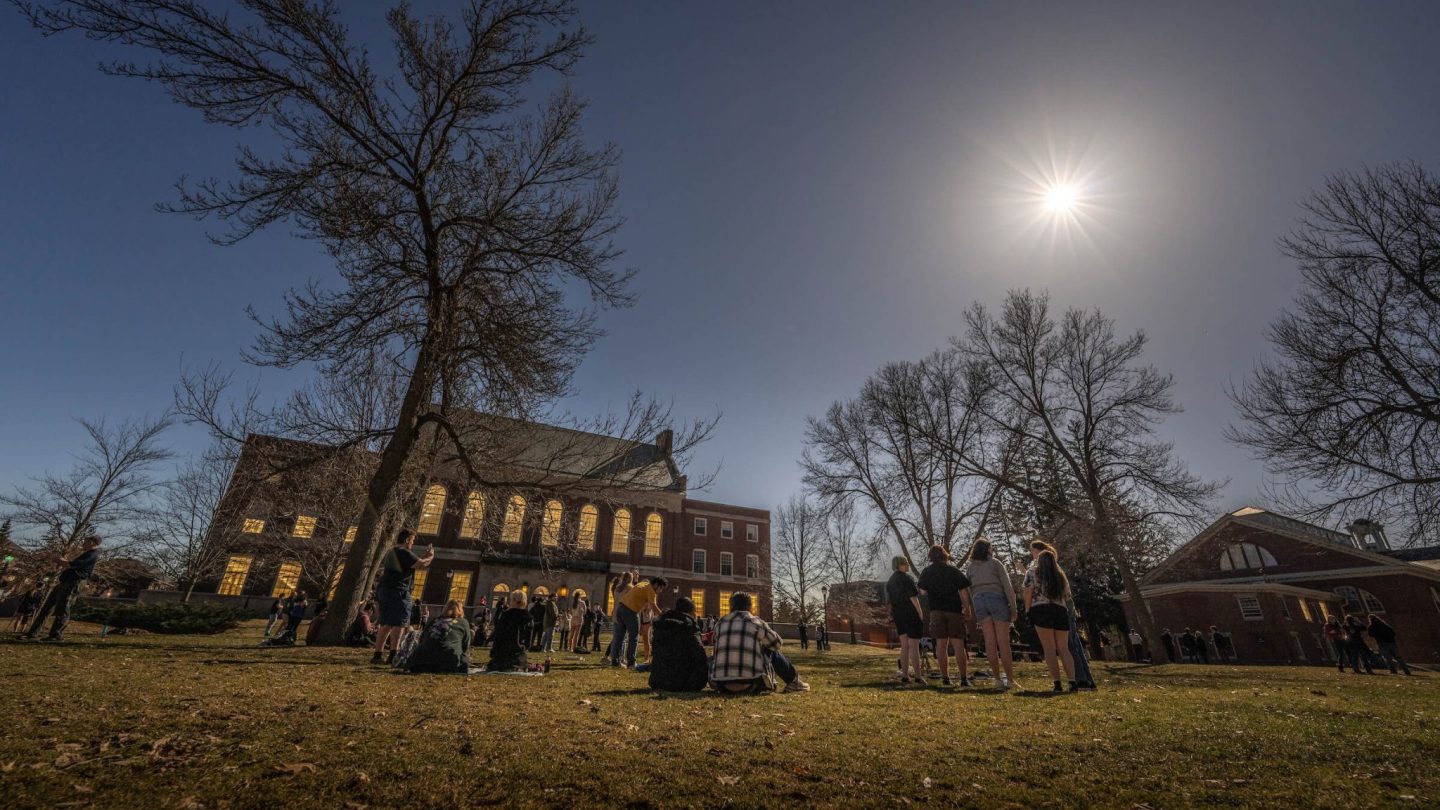
On August 12, 2026, skywatchers across North America will witness a rare midday partial solar eclipse as the Moon crosses in front of the Sun.
August is delivering a major lineup for astronomy enthusiasts, bringing together two distinct celestial displays across the skies. While parts of Europe experience a complete blackout during a total solar eclipse, observers across North America and Canada will see a different kind of spectacle as the Moon passes between Earth and the Sun. At the same time, the annual Perseid meteor shower is reaching its peak activity.
Viewing Times and Regional Coverage Across North America
Because the Sun is never completely obscured anywhere in North America during this event, the experience depends heavily on geography. According to NASA, observation windows shift across the continent, with Alaska and northern Canada catching the eclipse in the morning hours, eastern Canada in the afternoon, and parts of the northern United States from midday into the afternoon.
In Anchorage, Alaska, the eclipse peaks at 8:21 a.m. ET, while viewers in Washington, D.C., will see the maximum coverage at around 1:53 p.m. ET. Farther north, Mainers are preparing for a particularly notable afternoon. Shawn Laatsch of the University of Maine’s Versant Power Astronomy Center noted that the partial solar eclipse will be visible throughout the state around midday, weather permitting, noting that another solar eclipse will not appear in Maine’s sky until 2045.
In the greater Bangor area, the partial eclipse runs from 12:54 p.m. to 2:49 p.m., peaking at 1:53 p.m. when the Moon blocks roughly 23.6% of the solar disk. Coverage varies slightly by location, with Caribou seeing about 25% coverage and Portland experiencing roughly 21%.
Telescope Viewings and Public Observatory Events
Institutions are opening their doors to help the public view the event safely. The Versant Power Astronomy Center is inviting the public to watch the eclipse from the Historic Clark Telescope Observatory from 12:30 p.m. to 2:30 p.m. on August 12. Laatsch said that because the telescope gives a magnified view, viewers will probably see some sun spots.
For those unable to attend an organized gathering, NASA is providing digital access by livestreaming the eclipse across multiple platforms, including YouTube, Twitch, X, Amazon Prime, Facebook, Instagram, and NASA+.
Safety Warnings and Eye Protection Standards
Health and space agencies emphasize that looking at a partially eclipsed sun without certified protection carries severe risks. The UK Health Security Agency issued warnings noting that the sun would appear dimmer than usual, which would make it easier to look at directly, resulting in damage to eyesight. Historical data underscores the hazard: following the 1999 total solar eclipse, the Royal College of Ophthalmologists reported about 70 cases of people experiencing vision problems, with about 40% of those people having looked at it for less than a minute.


Experts reiterate that regular sunglasses are not safe. Viewers must use certified eyewear that meets the ISO 12312-2 international standard, which ensures glasses filter 99.99 percent of all sunlight. Anyone utilizing binoculars, cameras, or telescopes must fit an approved solar filter to the front optics.
“You should never look directly at the sun for more than a second or two without protection. Solar eclipse glasses and solar filters block out 99% of the sun rays.”
Shawn Laatsch, Versant Power Astronomy Center
For those without glasses, indirect viewing methods offer safe alternatives. Observers can use pinhole projectors, a colander, or the gaps between tree leaves to cast the sun’s image onto the ground or a sheet of paper.
The Perseid Meteor Shower Peak
Adding to the week’s astronomical calendar, the Perseid meteor shower peaks concurrently on the night of August 12 to 13. Cited by the Canadian Space Agency as the best meteor shower of the year,
the display stems from Earth passing through debris left behind by Comet Swift-Tuttle.
Debris fragments enter Earth’s atmosphere at a velocity of 59 kilometers per second, vaporizing at high altitudes to create streaks of light. Pierre Langlois, manager for the space astronomy and planetary science missions at the Canadian Space Agency, advises stargazers to seek locations far from big cities and allow 30 minutes for night vision to adapt.
“You have to be patient, but it’s a great spectacle if you’re lucky to be in a region where you can see it.”
Pierre Langlois, Canadian Space Agency
With clear skies and proper safety gear, August 12 offers a convergence of solar mechanics and annual meteor activity. Observers should verify eclipse glass certifications, plan travel early if heading toward totality zones, and monitor local forecasts as the event approaches.


