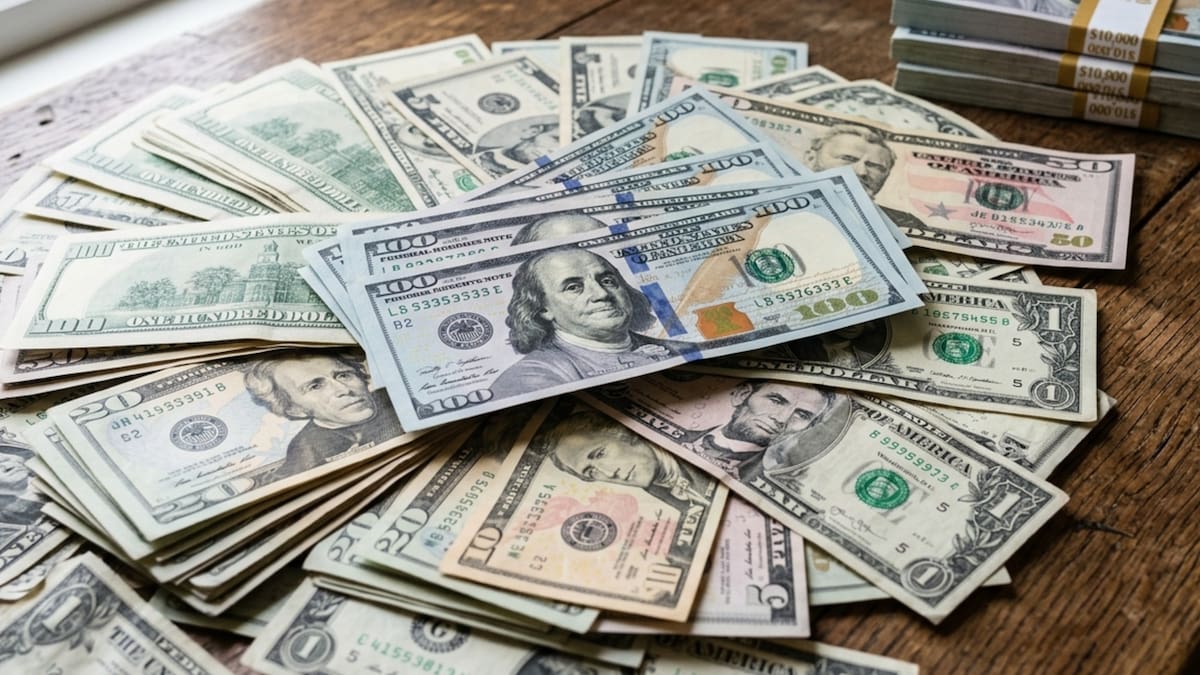
The official dollar is trading at $1515 for purchase and $1579 for sale according to BYMA data.
Meanwhile, other exchange values include the credit card rate at $2052.70 for sale, the wholesale rate at $1544 for sale, and the euro at $1715 for purchase and $1795 for sale.
At the Banco Nación counter, the official bill is valued at $1,570, marking a $10 increase or 0.6% gain across November despite global shocks from elections in Brazil and the United States alongside rising country risk. The exchange rate currently maintains a distance of approximately 20% from the ceiling of the exchange bands. This stability is supported by government interventions and the flow of foreign currency from trade surpluses and foreign debt placements.
In the informal market, the blue dollar trades at $1545 to buy and $1565 to sell, while the parallel rate in Mendoza sits at $1,536 for purchase and $1,570 for sale.

In Mendoza, the blue dollar remains a frequent topic of conversation as residents seek to protect their savings from inflation and peso devaluation. Financial exchange rates show the MEP dollar operating near $1577.7 for purchase and $1578.7 for sale with a 0.61% variation, while the contado con liquidación registers at $1668.27 for sale.
Operating under a January shift introducing sliding bands without capital controls for individuals, the official rate floats inside a band adjusted for inflation with a two-month lag. This system replaced the 1% monthly fixed adjustment with the INDEC consumer price index.

On the 12th of November, the central bank intervenes by buying or selling only if the exchange rate breaches the band. The elimination of the $200 monthly purchase cap and the 30% surcharge on digital transactions allows bank customers to purchase currency according to their payment capacity.
INDEC is scheduled to release the October inflation rate alongside the basic food basket and total basic basket figures, with inflation expected between 1.8% and 2%. These indicators are critical as consumers face persistent inflation, often leading merchants to pass increased costs onto final prices.
The Ministry of Economy renewed 84% of local currency debt maturities, injecting liquidity into the financial system during Thursday trading. Meanwhile, the MSCI Merval index dropped 0.8% in pesos and 1.3% in dollars, and country risk hovered just above 850 basis points. ADRs closed with mixed results as the market continues to monitor the impact of these economic variables on the agricultural sector and local economy.