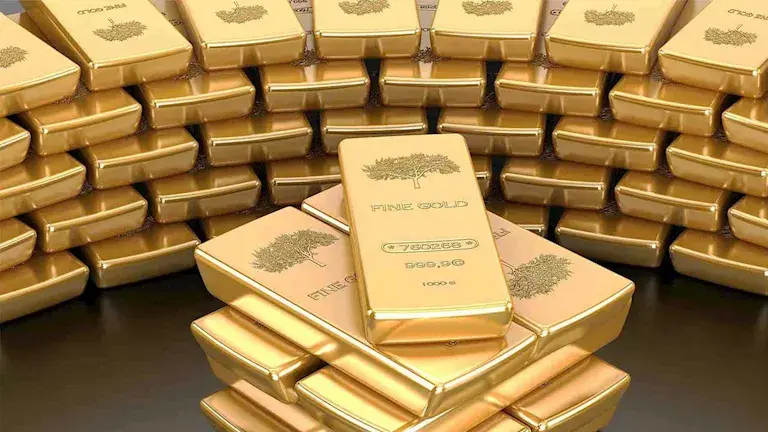
Gold prices retreated toward $4,024 per ounce on Thursday as investors recalibrated their expectations following the Federal Reserve’s decision to hold interest rates steady. With markets now pricing in an 83% probability of a December rate hike, the metal faces continued pressure from a strengthening dollar and uncertainty over future policy shifts.
Federal Reserve Holds Interest Rates Steady
The Federal Reserve opted to keep interest rates unchanged in a range between 3.75% and 4.00% during its Wednesday meeting, a move that was widely anticipated by investors. Despite the pause, the central bank refrained from providing clear guidance on its next steps, leaving the door open for potential increases before the end of the year. As of Thursday, traders were pricing in an 83% probability of a rate hike in December, according to data from the FedWatch tool provided by CME Group. The central bank’s rate-setting panel voted by a margin of 10-2, with dissenters Cook and Hammac. This decision left borrowing costs unchanged while policymakers await further inflation data and look past the upcoming US midterm elections.
Market analysts noted that the lack of definitive signals from the Fed, combined with commentary from Chair Kevin Warsh, prompted a shift in sentiment. The outcome of the Federal Open Market Committee meeting and Warsh’s comments pushed investors at the start of Asian trading to take positions betting on a decline in assets, said Kelvin Wong, a senior market analyst at OANDA, as reported by Al-Quds Al-Arabi. Ole Hansen from Saxo Bank described the current market setup at prevailing price levels as akin to flipping a coin, while adding that a break above key technical levels such as $4,070 and $4,230 per ounce could encourage funds to resume buying activity.
Gold Prices Oscillate Around Key Threshold
Gold prices saw significant movement this week, oscillating above and below the $4,000 threshold. While the metal briefly recovered earlier in the week, it faced renewed selling pressure, falling approximately 1% on Thursday to reach $4,024.22 per ounce. This decline comes as the market awaits the Personal Consumption Expenditures (PCE) price index, which is the Federal Reserve’s preferred measure of inflation. Meanwhile, standard futures contracts for December delivery traded around $4,035.90 per ounce, as physical buyers and bargain hunters provided a floor near the $4,000 mark during recent sessions.
Expert analysis suggests that the current environment remains challenging for non-yielding assets like gold. Mahmoud Nagla, executive director of money markets and fixed income at Al Ahli Financial Investments, noted that the direction of gold during the coming period will depend on US economic data, particularly figures related to inflation and employment, as told to Masrawy. Concurrently, other precious metals felt the downward momentum; spot silver fell 2.3% to $52.71 per ounce, platinum dropped 1.8% to $1,511.02 per ounce, and palladium retreated 0.5% to $1,006.03 per ounce.
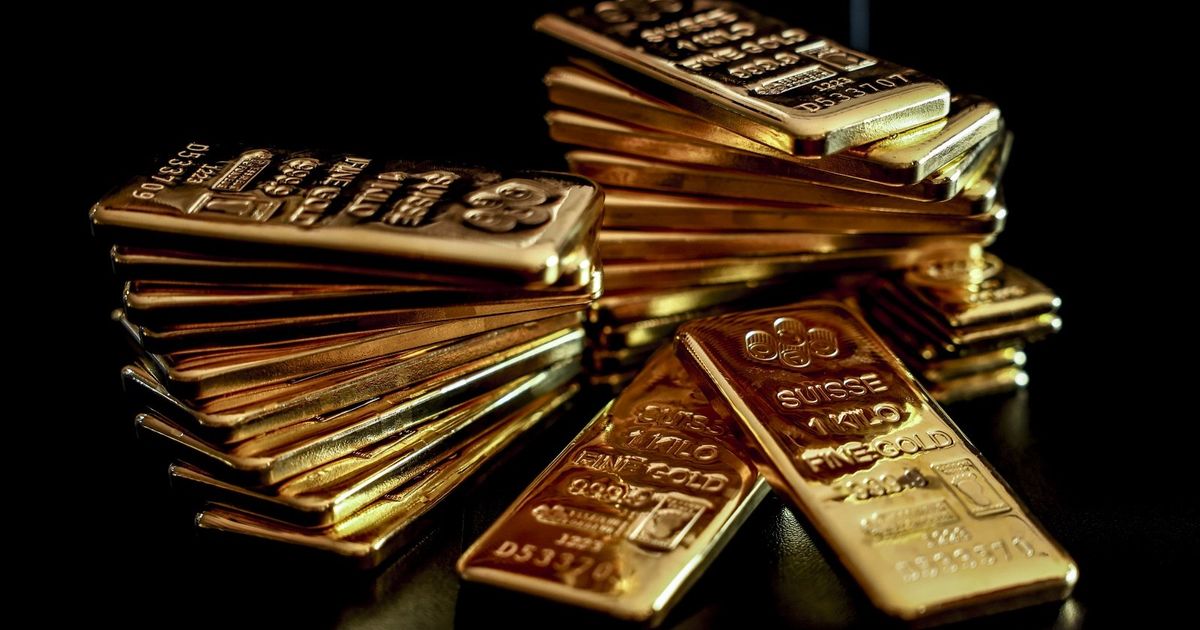
Geopolitical Uncertainty Influences Broader Commodities Market
The broader commodities market is currently navigating a complex landscape of geopolitical uncertainty. Reports that US Vice President JD Vance sent a letter to Iranian National Security Council Secretary Mohsen Rezaee in an effort to revive peace negotiations have influenced oil prices, which in turn affect inflation expectations. According to Christopher Wong, a strategist at Oversea-Chinese Banking Corp, the risks in the near term remain tilted toward more sideways moves, but demand conditions should provide some support once the selling pressure to liquidate positions subsides, as reported by Al-Eqtisadiah. Furthermore, a World Bank report highlighted that global commodity prices are projected to rise by 23% in 2026, driven by elevated energy costs, shipping disruptions from Middle East conflicts, and steady safe-haven demand.
| Metal | Price (USD/oz) | Change (%) |
|---|---|---|
| Gold (Spot) | 4,042.05 | (0.60%) |
| Silver (Spot) | 53.3970 | (1.10%) |
| Platinum (Spot) | 1,524.61 | (1.20%) |
| Palladium (Spot) | 1,010.49 | (0.75%) |
Investors are closely monitoring whether gold can maintain its role as a hedge against economic volatility, even as higher interest rates increase the opportunity cost of holding the metal. Egyptian local market observers, including Lotfy Mounib, deputy head of the Gold and Jewelry Division at the Federation of Egyptian Chambers of Commerce, noted that global price movements are frequently balanced locally by currency fluctuations against the Egyptian pound.