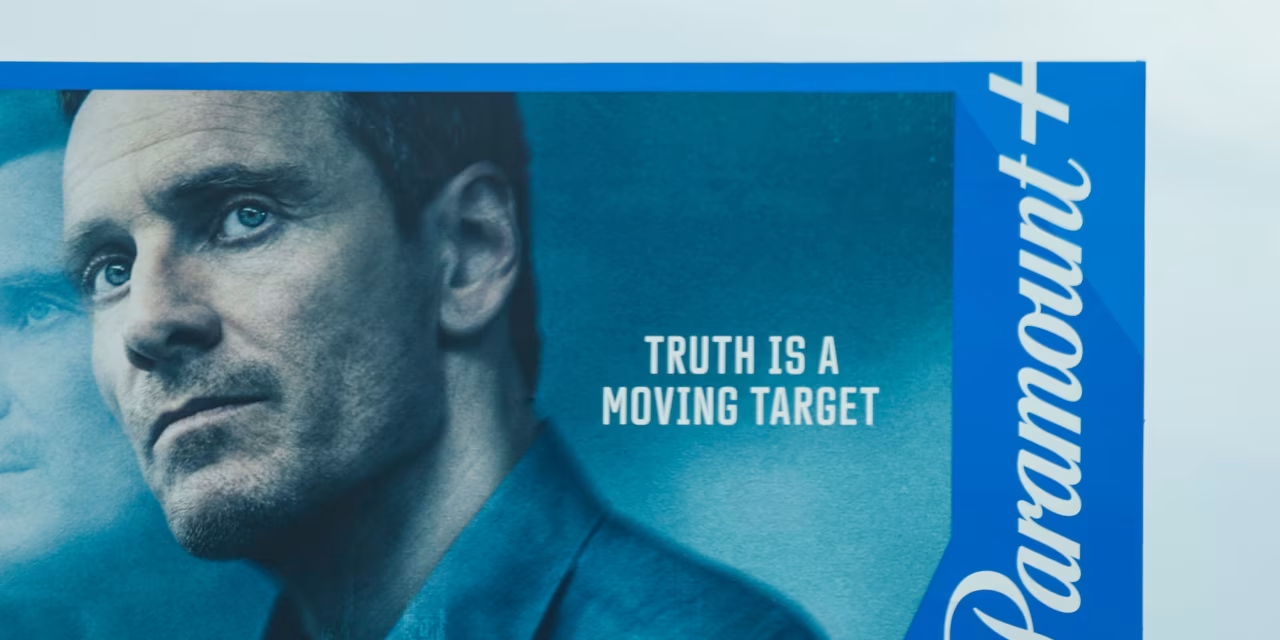
A federal judge on Wednesday formally approved a legal settlement between Paramount Skydance and a coalition of 12 state attorneys general, removing the final major legal barrier to the company’s $110 billion takeover of Warner Bros. Discovery. U.S. District Judge Araceli Martínez-Olguín issued an order concluding that the proposed consent decree represented a fair, reasonable, and good faith approach to address the competitive harms
alleged by the state prosecutors, according to TheWrap.
Federal Judge Clears Settlement for Paramount and Warner Bros. Discovery Merger
The ruling brings an end to an antitrust lawsuit led by California Attorney General Rob Bonta and filed by the dozen Democratic attorneys general in July. The state prosecutors had argued that the merger would reduce industry competition, drive up consumer costs, and potentially threaten the journalistic independence of CNN. While the U.S. Justice Department, the European Commission, and regulators in dozens of other countries had previously granted regulatory clearance, the state-level litigation kept the transaction in limbo.
Details of the Settlement and Operating Commitments
To resolve the states’ legal challenge, Paramount reached an agreement on September 21 that binds the combined media giant to a series of behavioral requirements over a five-year period. Under the terms of the settlement, the company must invest a minimum of $300 million annually for five years in U.S. film and television production, totaling at least $1.5 billion.

The agreement also imposes strict theatrical film distribution quotas. Paramount is required to release at least 30 movies theatrically per year during the first two years following the merger, increasing to at least 32 films annually during years three through five. Additional requirements mandate that at least four of these annual releases must be independent films—defined in the decree as movies based on an original screenplay or co-produced by Paramount—and at least 20 percent must be blockbusters.
The settlement incorporates specific penalties for noncompliance, including a $30 million fine for each film the studio falls short of its theatrical quota. Other potential penalties involve forced asset divestitures, such as selling off the company’s 49 percent stake in Miramax within 12 months, or parting with networks like Comedy Central, BET, VH1, Smithsonian, Destination America, and Science Channel within 120 days. The company also agreed to maintain a 45-day theatrical window and hold films back from streaming platforms for 90 days, while keeping studio lots open and honoring collective bargaining agreements with Hollywood unions.
Leadership Structure and Immediate Next Steps
With the final legal hurdle cleared, the companies stated that the transaction is expected to close on October 6. David Ellison will serve as chairman and chief executive officer, leading all corporate strategy, creative direction, and technology. Ynon Kreiz, the chief executive of toy giant Mattel, will join the company as co-CEO to oversee day-to-day operations and the integration of the combined businesses.
The seismic media combination brings together an extensive collection of entertainment assets and brands, uniting Hollywood legacy studios, cable networks, and streaming services. The merged enterprise will house CBS News, CNN, HBO Max, Paramount+, Warner Bros., DC, and Paramount Pictures under a single corporate umbrella.

Opposition and Criticism From Coalitions and Lawmakers
Prior to Wednesday’s decision, Judge Martínez-Olguín allowed outside critics and opponents to voice their concerns. The judge instructed Paramount and the state attorneys general to address questions raised by Democratic Senator Cory Booker, who had requested an independent public-interest review of the consent decree.
Opponents, including the Block the Merger coalition and the League of United Latin American Citizens, sharply criticized the settlement as toothless and inadequate for protecting fair competition or preventing job losses. Following the judge’s approval, the Block the Merger coalition issued a statement warning that the consolidation will mute creativity and weaken independent journalism. The Writers Guild of America had pursued a separate lawsuit in July before reaching its own settlement agreement with Paramount.


