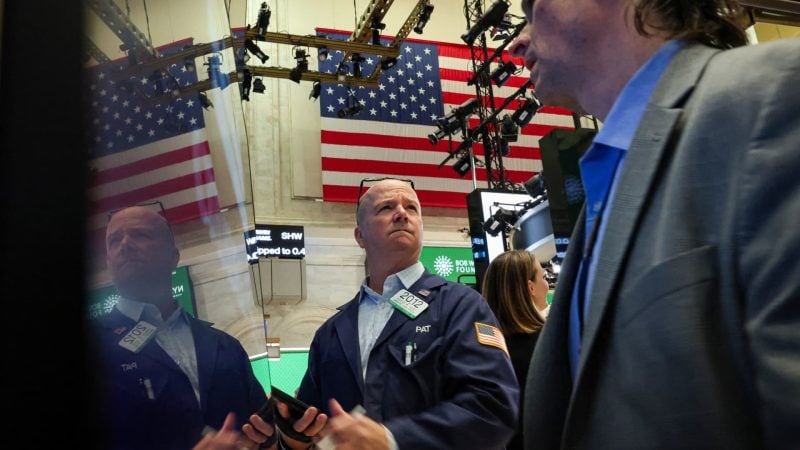
“This does reflect financial hardship out there,” researchers at the Federal Reserve Bank of New York said on a press call, noting that cumulative balances continue to mount across the economy.
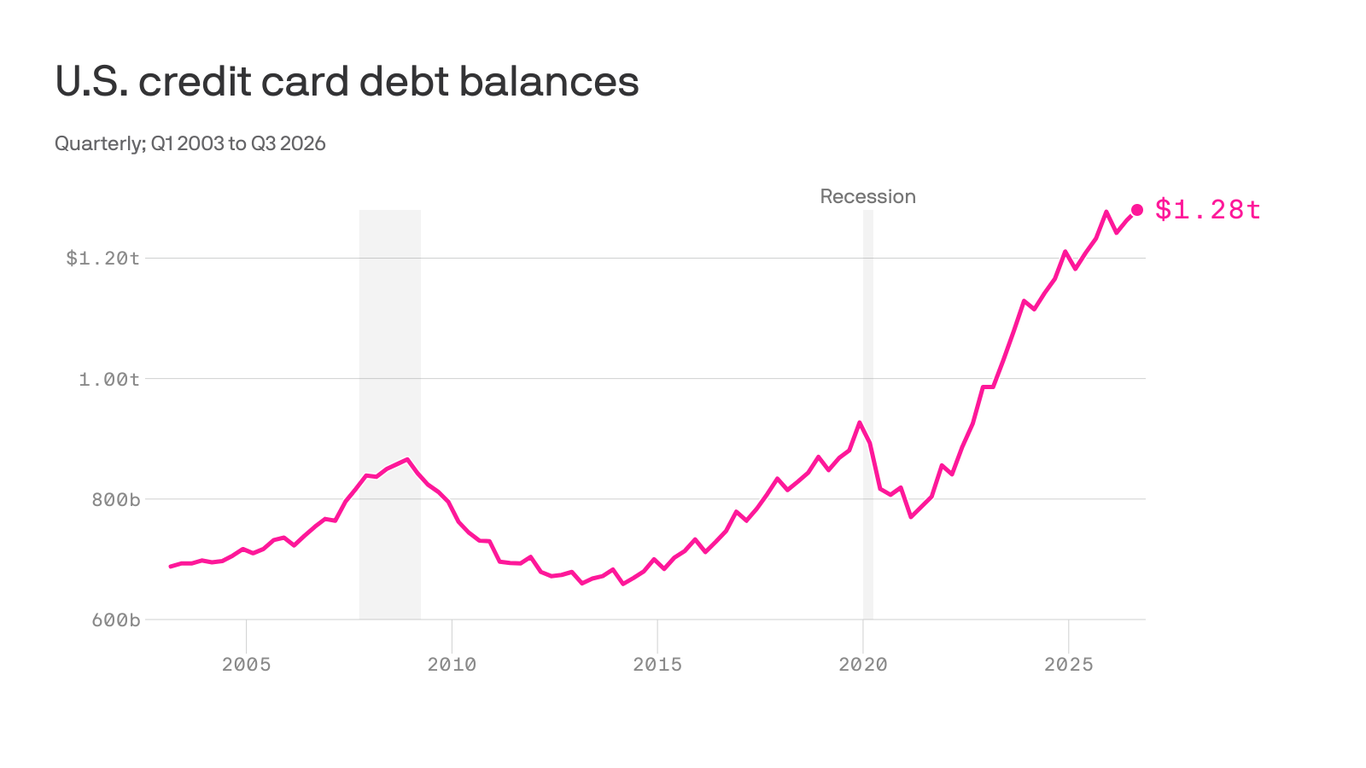
Americans piled another $22 billion into credit card debt during the third quarter, driving total balances to a record $1.29 trillion. The numbers, released Tuesday in the New York Fed’s household debt report, show card obligations grew 4.2% from a year earlier. Across all household liabilities—including mortgages, auto loans, and student debt—total debt expanded by $334 billion to reach an all-time high of $19.1 trillion.
Americans Carry Rising Credit Card Debt at High Rates
The average American consumer now carries $6,678 in credit card debt, according to a separate quarterly insights report from TransUnion. While credit cards remain accessible compared to other loan types, they also represent one of the most expensive ways to borrow, with average annual percentage rates on new offers hovering near 24% according to LendingTree data.
“Credit cards continue to be one of the most expensive ways to borrow,” said Charlie Wise, senior vice president at TransUnion.

Prices for everyday essentials like gasoline and groceries have remained elevated, while October consumer price index figures showed costs for goods and services rising faster than expected. Ted Rossman, principal consumer finance analyst at Money Management International, said that inflation has created an affordability squeeze.
Higher prices and higher rates have pushed more people into debt.
Ted Rossman, principal consumer finance analyst at Money Management International
According to the Federal Reserve Bank of New York’s Quarterly Report on Household Debt and Credit published this Tuesday, U.S. credit card debt rose by $22 billion during the third quarter, reaching an all-time high of $1.29 trillion, a 4.2% increase compared to the previous year. In Q3 2026, the overall debt load for households grew by $334 billion, marking a 1.8% rise to a total of $19.1 trillion.
The New York Fed reported that credit card debt for the current year surpassed $1.28 trillion, with balances in the third quarter exceeding those from the same period in 2025 by $52 billion.
Sure, and watch everyone with a credit score under 750 see their credit cards cancelled by the banks. I bet they'll love having to instead rely on payday loans, pawn shops, and local loan sharks to provide quick credit in a pinch. https://t.co/jfnRrf4Csq
From the second quarter to the third, credit card debt climbed by $22 billion to $1.3 trillion, while the total for auto loans grew by $21 billion to reach $1.7 trillion. With a surge in new home-related financing, mortgage debt grew by $257 billion to $13.4 trillion, remaining the most significant portion of the total debt held by Americans.
The Century Foundation’s chief economist, Kyle Moore, observed that a common theme across the data released Tuesday is the growing sense that the American economy is failing to support families.
As recently as last month, individuals who live paycheck to paycheck while managing to keep up with their financial obligations expressed declining certainty regarding their ability to handle their debt over the coming year. The primary reasons cited by cardholders for reducing the frequency with which they pay off their balances in full were increased regular living costs and expenses that outpaced their earnings.
Income Divides in Delinquency Rates
Beneath the headline debt figures, repayment stress is hitting specific communities hardest. New York Fed researchers reported that accounts issued during the Covid-19 pandemic—when lenders temporarily loosened standards and extended cards to borrowers with lower credit scores and incomes—are displaying elevated distress. A companion analysis revealed that delinquency rates have widened along neighborhood lines since 2022.
In the lowest-income neighborhoods, 10.3% of credit card balances turned seriously delinquent over the past year. That figure is more than double the 4.4% serious delinquency rate recorded in the wealthiest neighborhoods. Borrowers under the age of 30 also registered the highest rate of accounts newly moving at least 90 days past due.
Yet the broader portfolio showed slight signs of stabilization. The overall rate of credit card debt turning seriously overdue edged down to 6.9% in the third quarter, dipping below the 7.05% recorded in the same period of 2025. Fed researchers suggested that if current patterns persist, the heightened default rates of recent years may fade as older pandemic-era accounts shrink.
Lawmakers Propose Capping Credit Card Interest Rates
The mounting debt figures arrive alongside fresh political battles over borrowing costs. Following President Trump’s call for a one-year, 10 percent cap on credit card interest rates, lawmakers moved to codify the proposal. Sen. Elizabeth Warren announced she is prepared to advance legislation implementing the cap as Democrats assume control of both congressional chambers in January.

Sen.-elect James Talarico (D-Texas) also campaigned on capping interest rates, calling credit card companies “predatory”. But Jessica Riedl, a budget and tax fellow at the Brookings Institution who worked for former Sen. Rob Portman (R-Ohio), argued that capping interest rates will result in banks cancelling the credit cards of “everyone with a credit score under 750”.
She wrote on social platform X, “I bet they’ll love having to instead rely on payday loans, pawn shops, and local loan sharks to provide quick credit in a pinch.”
At the same time, traders on financial markets are pricing in a 100% chance of a Federal Reserve interest rate hike at its December 9 meeting. Because most variable credit card annual percentage rates track the central bank’s benchmark prime rate, any increase in the federal funds rate would quickly flow into monthly interest charges for consumers carrying balances.