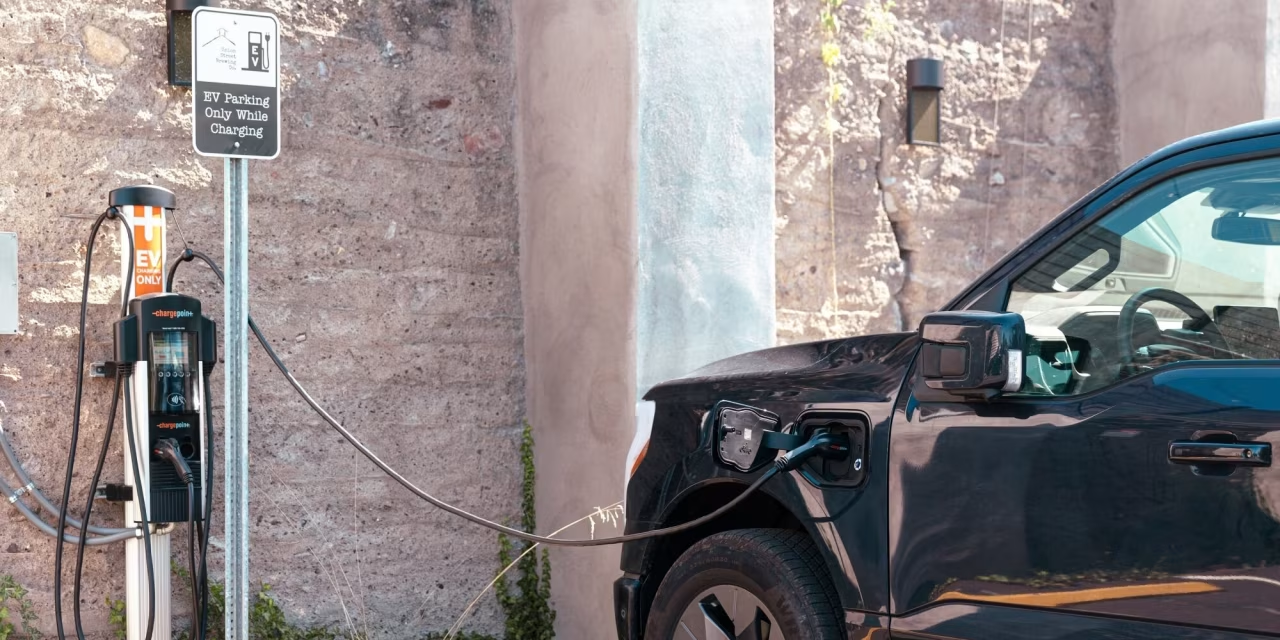
U.S. electric vehicle sales fell 30.7% in the first nine months of 2026, dropping to 6% of the overall market. While the expiration of a $7,500 federal tax credit has cooled demand, charging infrastructure continues to expand, with industry executives positioning the network for a future market recovery.
Market Contraction Following the $7,500 Credit Expiration
The American electric vehicle market is navigating a sharp downturn following the end of the federal $7,500 tax credit, which lapsed for vehicles acquired after September 30, 2025. Data from Motor Intelligence confirms that sales plummeted 30.7% year-over-year during the first three quarters of 2026, a stark contrast to the 8.5% market share recorded during the same period in 2025 when buyers rushed to utilize the incentive. The Internal Revenue Service (IRS) has confirmed that both the new clean vehicle credit and the commercial clean vehicle credit—the latter of which provided up to $7,500 for vehicles under 14,000 pounds and up to $40,000 for heavier units—ceased to apply after the September 2025 deadline.
Automakers are adjusting their strategies as the policy support fades. Ford reported a 68% decline in EV sales through September, while General Motors saw a 43% drop. GM’s performance was particularly impacted by sharp declines in specific models, with Equinox EV deliveries falling 92.4% to 1,905 units and the Blazer EV dropping 84.4% in the third quarter. Honda has opted to cease production of its electric models after this year to focus on hybrid expansion. Once they scaled back the $7,500, it became obvious
that market share would decline, said Lance Woelfer, vice president of U.S. auto sales at Honda.

Despite the broader market slump, some manufacturers are finding pockets of success. Tesla delivered 486,532 vehicles in the third quarter, which exceeded analyst expectations of 464,000, though the figure remained 2.1% below the same quarter in 2025. Rivian also outperformed forecasts, delivering 19,248 vehicles against an expected 17,600, a boost attributed to the introduction of its more affordable R2 SUV.
Charging Infrastructure Expansion
Despite the cooling sales environment, the charging industry is maintaining an aggressive installation schedule. This infrastructure build-out is intended to serve existing EV owners and prepare for a eventual rebound in demand. The expansion is supported by the National Electric Vehicle Infrastructure (NEVI) Formula Program, established under the 2021 bipartisan Infrastructure Investment and Jobs Act (IIJA), which set aside $5 billion for allocation between fiscal years 2022 and 2026.
The program faced legal challenges following the transition of power in Washington. In January 2026, a federal judge ruled that the administration had unlawfully withheld funds from states and permanently barred the Department of Transportation (DOT) from doing so. The Trump administration has since proposed canceling $2.7 billion in unobligated NEVI funds in its fiscal year 2027 budget request. EV charging power capacity increased by 47% to 20.7 GW to help reduce wait times for drivers.

Expanding Charging Networks Boost American Electric Vehicle Interest
Industry analysts and executives remain optimistic about a long-term rebound, even as U.S. adoption lags behind European markets, where EV market share climbed to 23.2% in the first nine months of 2026. Robert Fisher, a senior consulting manager at SBD Automotive, noted, While EV uptake may be slowing, the findings suggest continued investment in charging infrastructure is starting to translate into greater consumer confidence.
According to the 2026 HERE-SBD EV Index, 57% of Americans are increasingly open to EV ownership, bolstered by the expansion of the charging network and the volatility of fuel costs.
Some automakers are already seeing signs of a potential turnaround. Randy Parker, CEO of Hyundai Motor North America, reported a recovery in EV sales since late winter as fuel prices climbed. We’re not giving up on EVs by any stretch of the imagination,
Parker said. With dealership inventory levels falling from 180 days earlier in the year to 78 days in August, the market is beginning to stabilize, setting the stage for a new phase of adoption.


