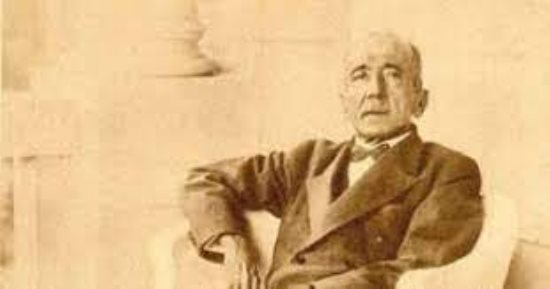
The Lebanese Permanent Military Court has lifted the travel ban previously imposed on singer Fadel Chaker and returned his passport. This judicial decision follows his release on bail earlier in July, contingent upon his commitment to attend all future court sessions regarding the cases pending against him.
Legal Status and Ongoing Proceedings
Fadel Chaker was released from detention on July 8 after the Permanent Military Court approved his release in four security-related cases, the most prominent of which is the “Abra events” file. According to the National News Agency, the court set bail at 100 million Lebanese pounds for each of three cases, and 200 million pounds for the Abra file, totaling 500 million Lebanese pounds. Despite his release, the legal proceedings against Chaker remain active. He is expected to appear before the Permanent Military Court on August 5 to resume his trial, following a session that was postponed from June 30. His legal representatives continue to deny his involvement in armed activities, specifically regarding allegations of shooting at the Lebanese Army or supporting armed groups. Separately, in May, the Beirut Criminal Court acquitted Chaker of the charge of attempting to kill Hilal Hammoud, a local official in the “Saraya al-Muqawama” group in Sidon, due to a lack of legal evidence and the withdrawal of the plaintiff’s complaint.

Context of the Abra Events
The legal challenges facing Chaker date back to 2013, when armed clashes erupted in the Abra region near the city of Sidon between the Lebanese Army and supporters of Sheikh Ahmed al-Assir. Chaker, who had previously achieved fame as a prominent romantic singer before announcing his retirement in 2012, had become associated with al-Assir’s religious and political activities. Following the 2013 confrontation, which resulted in the deaths of soldiers and militants, Chaker became a wanted figure. He spent an extended period hiding within the Ain al-Hilweh Palestinian refugee camp before eventually surrendering to Lebanese authorities. Following his surrender, previous judgments issued in absentia were canceled in accordance with Lebanese law, allowing for a retrial.
Health and Public Reaction
The request for Chaker’s release was based on two primary factors: legal arguments concerning testimony from former Lebanese Army officers—which, according to the National News Agency, did not substantiate claims that Chaker participated in fighting, carried weapons, or financed al-Assir’s group—and medical reasons. Reports indicated a decline in his health, including complications related to diabetes, vision issues, and arterial obstruction, which led to his transfer to a military hospital. Following his release, Chaker posted a message on social media stating, “Thank God, Lord of the Worlds. Today, new lines of freedom have been written for me.” He expressed gratitude to his supporters and requested time to recover and attend to his family.
Future Artistic Prospects
The lifting of the travel ban coincides with Chaker’s plans to resume his artistic career. There is public anticipation regarding his potential appearance at a concert in Saudi Arabia. Additionally, Mazen al-Natour, the head of the Syrian Artists Syndicate, has extended an official invitation to Chaker to visit Syria, announcing that he has been granted membership in the syndicate and inviting him to perform at events in the country.

Summary of Legal Developments
| Action | Status |
|---|---|
| Travel Ban | Lifted; passport returned |
| Detention Status | Released on bail (500 million LBP total) |
| Pending Trials | Ongoing; next session scheduled for August 5 |
| Previous Acquittal | Cleared of attempted murder charge (May) |
Find more reporting in our Culture section.