
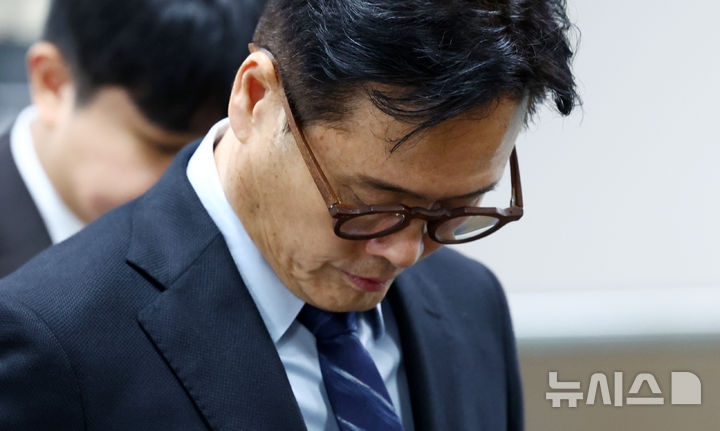
Actor and professor Nam Kyung-joo denied allegations of sexual assault on November 27 during the first day of his jury trial at the Seoul Central District Court, where prosecutors introduced a confidential letter and audio recordings from the victim.
The Charges and the Jury Trial at Seoul Central District Court
Presiding over the case, Judge Um Gi-pyo of the Seoul Central District Court Criminal Settlement Division 29 opened the proceedings on the morning of November 27 after selecting a jury panel consisting of seven main jurors and three alternates.
Prosecutors detailed that the incident occurred around December 20 of last year at Nam’s private studio in Seocho-gu, Seoul, following a year-end gathering with students. According to the state’s case, Nam remained alone with a female student after midnight and used his academic position and industry influence to force the encounter despite her repeated refusals.
The prosecution argued that the victim was facing grade evaluations for the courses she took under Nam and had also been offered a teaching assistant position.

To establish Nam’s standing in the theater world, prosecutors screened a video presentation and presented queries put to artificial intelligence tools. Prosecutors told the jury that when asked who the most influential male musical actor in South Korea was, Google’s Gemini named Nam first, while ChatGPT similarly placed him at the top when asked about actors who sway casting decisions.
Defense Denies Charges, Disputes Supervisory Relationship
Nam’s defense team entered a full denial of the charges, urging the jurors to approach the evidence with completely open minds. Defense counsel asked the jury to press the reset button in their minds to clear away impressions left by prior news reports.
The defense argued that no formal supervisory relationship existed at the time of the alleged offense, noting that the victim had already completed Nam’s classes and thus stood outside his grading authority. Lawyers said that the teaching assistant position was merely a proposal under discussion, meaning the dynamic had shifted because the power balance had reversed while the offer remained pending.
While acknowledging that Nam had attempted sexual contact, the defense maintained that no actual penetration occurred and that no physical or psychological force was applied to overcome the victim’s free will. Counsel also emphasized that the crime of abuse under a supervisory relationship carries no statutory provision for punishing attempted offenses, arguing that an incomplete act mandates an acquittal.
Audio Recordings and the Letter Disclosed in Court
During the afternoon evidentiary hearings, the prosecution played audio recordings of a telephone call the victim made to an acquaintance immediately after the incident. In the recordings, the victim sobbed as she described the encounter, expressing profound shock at the betrayal.
“I genuinely respected him. I wanted to live like that as I got older. How could he do that the moment everyone else left?” the victim said, according to the transcripts and audio played in court.
Prosecutors also submitted a handwritten letter that Nam sent to the victim via KakaoTalk roughly ten days after the event, on December 30 of last year. In the message, Nam described his actions in stark terms.

An action that made a person’s life unhappy, something that should never happen between a professor and a student, an act that cannot be forgiven for any reason.
Nam Kyung-joo, defendant
In the same message, Nam asked the victim not to make the matter public so that his school would not face a stigma and his family would be spared pain, while also requesting that he be allowed to proceed with scheduled performances.
Prosecutors stated the letter was introduced only after Nam continued to contest the charges, whereas the defense countered that the message reflected remorse for ethical failings as a married man rather than any legal admission of the charged offenses.
Witnesses Describe Professors' Lack of Casting Influence
Witnesses testified regarding the actual degree of influence professors hold over casting decisions in the local musical industry. A former teaching assistant for Nam said that although applicants hoped working with a prominent figure might indirectly aid their careers, Nam never pressured students or flaunted his connections.
A veteran musical producer called by the defense testified that while producers hold considerable sway over casting, individual actors and professors possess zero influence over final casting decisions.
Prosecutors Broaden Force Definition; Defense Cites DNA Gap
Prosecutors stressed that legal definitions of force encompass not only physical violence or threats, but also the exploitation of social, economic, or political standing and authority to overcome a victim’s free will. Legal representatives for the state cautioned the panel against applying a rigid standard of victim behavior, noting that established precedents dictate there is no uniform pattern for how victims respond to assault.
The defense countered by pointing out that forensic examinations failed to compare DNA collected from the victim against Nam’s genetic profile to confirm ownership, arguing that such omissions preclude a finding of guilt under statutes lacking an attempt provision.
The jury trial is scheduled to conclude on November 30 with further witness examinations of the victim, final questioning of the defendant, the prosecution’s sentencing recommendation, and the defense’s closing arguments. The presiding judge will then hand down the first-instance verdict following deliberations by the jury panel.


