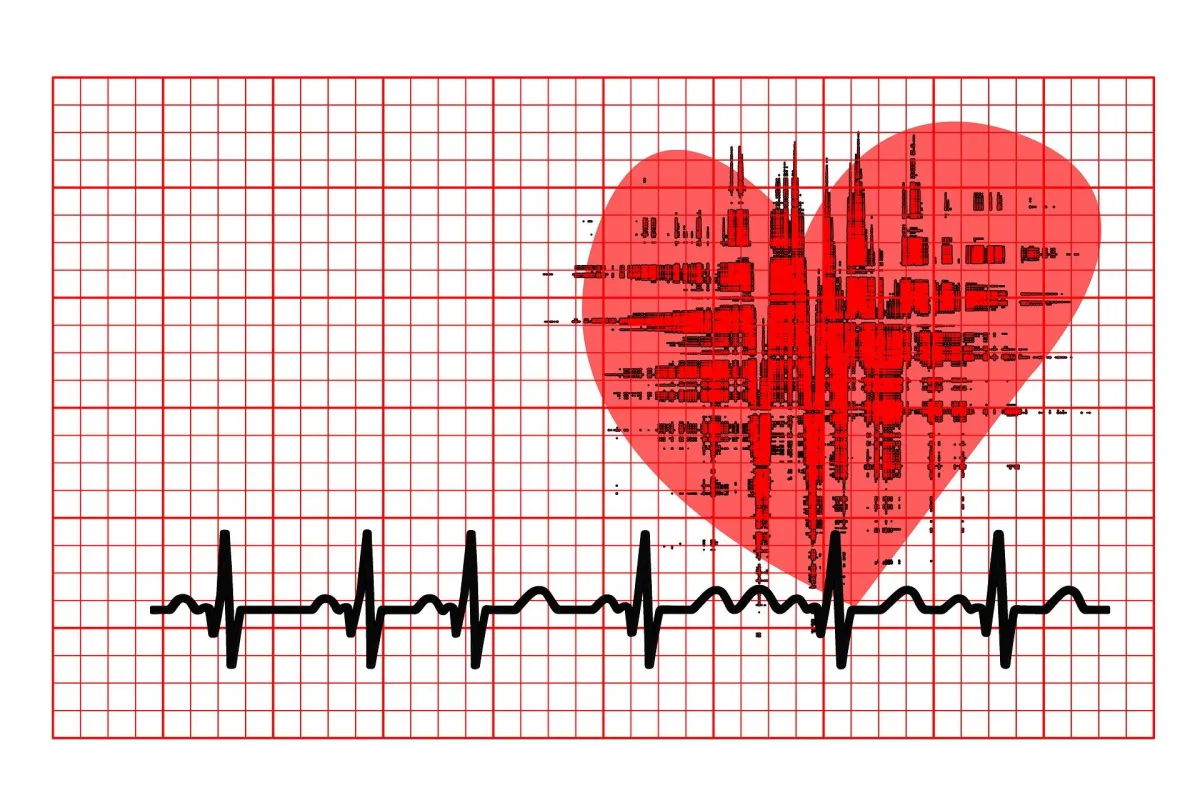
Continuous mechanical contractions of heart muscle cells block their ability to divide and regenerate, according to a new study published in Nature Cardiovascular Research that sheds light on why the adult human heart cannot effectively repair itself after injury.
Following a heart attack, an adult human heart can lose up to one billion heart muscle cells, and because the organ lacks regenerative capacity, lost cells are never replaced, leading to scar formation, heart failure, and potentially death, according to findings discussed by University of Cambridge reporting.
“The heart is easily repaired when we are babies in the womb, but our heart muscle cells lose the ability to regenerate and fix the heart shortly after we are born,” Professor Bryan Williams, chief scientific and medical officer at the British Heart Foundation, said.
“Our findings show that cardiomyocytes face a fundamental biological trade-off: the very machinery that enables them to contract and sustain life also prevents them from dividing and replacing damaged tissue,” said Florian Weinberger, head of the cardiac tissue engineering and regenerative therapies laboratory at the CNIC and lead author of the study.
Florian Weinberger, head of the cardiac tissue engineering and regenerative therapies laboratory at the Centro Nacional de Investigaciones Cardiovasculares Carlos III (CNIC) and lead author of the study, said:
Unlike tissues such as the skin or liver that readily replace damaged cells, the adult heart possesses a severely limited capacity for regeneration. This ability is largely lost shortly after birth as the heart adapts to the workload of life outside the womb.
To investigate whether continuous mechanical activity causes this decline, the CNIC research team employed various experimental models, including human stem cell-derived heart cells, engineered heart tissues, live heart muscle slices, and animal models.
“Why do adult cardiomyocytes not proliferate? That's one of those big questions in cardiac biology, and we are proud to have contributed a piece to the bigger puzzle. Active contraction provides a brake on proliferation,” Thomas Eschenhagen, a researcher at the University Medical Center Hamburg-Eppendorf and ERC grantee, said. He stated:
The study demonstrated that temporarily inhibiting heart muscle cell contraction causes the structured sarcomere components responsible for contraction to disassemble, allowing cells to re-enter the cell division cycle and exhibit a marked increase in proliferation. Conversely, when contraction is restored, sarcomeres reassemble, and the cells exit the cycle and lose their capacity to divide.
Further analyses showed that these structural adjustments coincide with metabolic shifts. When cardiomyocytes stop contracting, they shift toward glycolysis and reduce their reliance on energy-intensive processes required for continuous contraction, thereby creating conditions conducive to cell division. Restoring contractile function returns the cells to a mature metabolic profile that reinforces their non-dividing state.
Nancy Shehata, a researcher at the University Medical Center Hamburg-Eppendorf and visiting scientist at CNIC, said that while clinical regenerative treatments require further research, understanding how to temporarily unlock cardiomyocyte proliferation without harming heart function could point toward future therapies. She concluded: