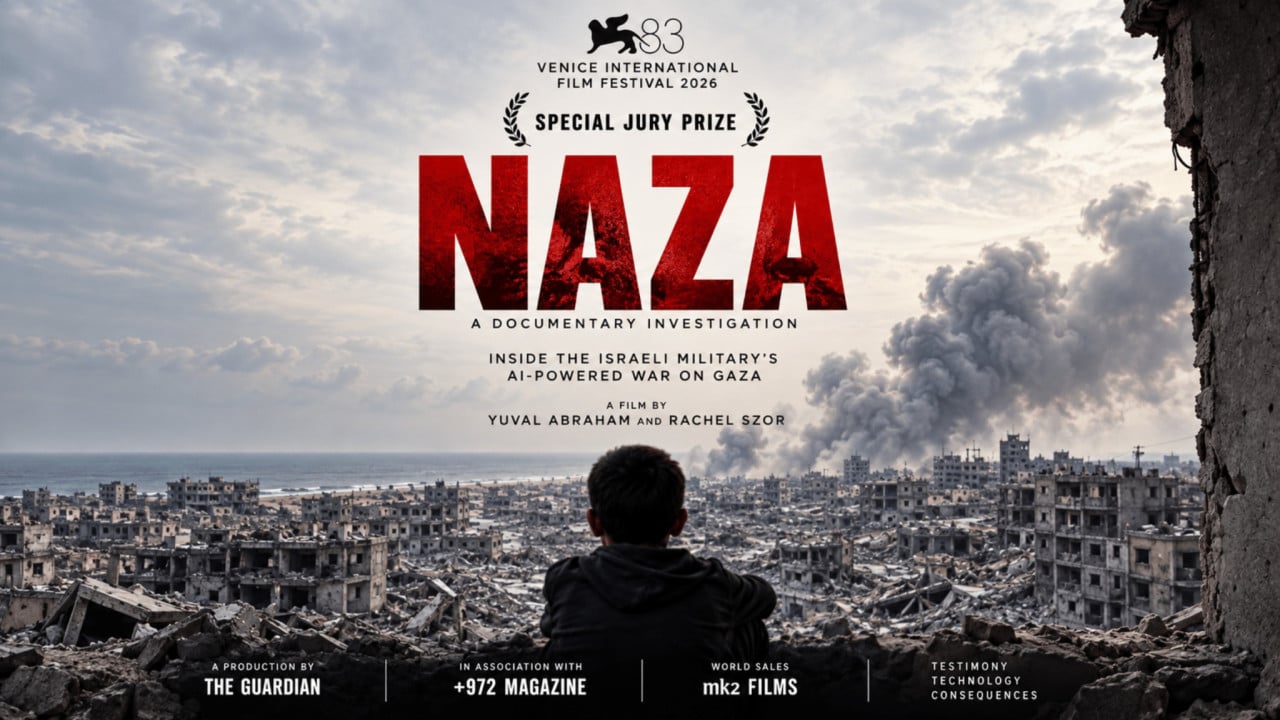
Directed by Israeli filmmakers Yuval Abraham and Rachel Szor, the film examines the methods used by the Israeli military to identify and target individuals in Gaza.
In North America, the film recorded 83,673 admissions in the United States and Canada following its September 30 distribution launch.
The film’s performance has been particularly notable in Italy, where it was released by I Wonder Pictures on September 29. With 717,517 tickets sold, it ranks as the third most popular documentary in the history of the Italian box office, trailing only Fahrenheit 9/11 and March of the Penguins.
In the United Kingdom and Ireland, the distributor Dogwoof reported 102,509 admissions. France also saw strong numbers, with the film topping the box office during a two-day release window across 260 theaters, attracting more than 82,000 viewers, according to production data.
Other markets include Germany, which recorded 83,355 admissions, and Austria, where the film has drawn 16,521 viewers since its October 1 release. In Spain, the film was released on October 9 across 105 screens, reaching 61,783 visitors by the previous Friday.
The film also saw strong responses in Belgium, the Netherlands, and Luxembourg, totaling 132,323 admissions, as well as in Switzerland, where more than 50,000 people watched it. Enthusiastic receptions were also noted in Australia, New Zealand, Japan, Mexico, Indonesia, Romania, Thailand, and Poland.
The documentary is built upon anonymous interviews with 24 Israeli intelligence officers and soldiers. The film details the use of artificial intelligence, phone surveillance, and automated scoring systems in the military’s target selection processes in Gaza. The title “NAZA” refers to a military acronym used to describe calculated collateral damage of an attack.

The film’s international success follows its world premiere at the Venice Film Festival in September, where it received the Special Jury Prize and an approximately 25-minute standing ovation.
It has since been honored with the Audience Award at the San Sebastian Film Festival and the Critics’ Award at the Hot Springs Documentary Film Festival. On November 8, the film also won Best Political Documentary from the New York Film Critics Circle.
While the film has garnered international recognition, its reception within Israel has been marked by political backlash and security concerns. The film’s revelations were published shortly after the events of October 7 by The Guardian, in collaboration with reporters from +972 Magazine and Local Call.
Following the Venice premiere, the film triggered intense political controversy, with government officials and far-right figures attacking the creators. Far-right activists also broke into the offices of the independent media outlets +972 Magazine and Sicha Mekomit, where the original investigative research by Abraham had been published.
The newspaper Haaretz reported that the threats directed at Abraham and Szor pose a safety risk. Conversely, more than 2,000 individuals, including filmmakers Ari Folman and Nadav Lapid, signed a statement supporting the directors. The Israeli military issued a statement rejecting the film’s claims, labeling the depiction of its operational procedures as “distorted, misleading and disingenuous.”
The events are organized by a coalition of groups, including the Alliance Against the Far Right, Fascism and Racism, in cooperation with Friends of the Earth, Genocide Free Cyprus, Far Right Watch, and Cyprus Palestine Solidarity Action.