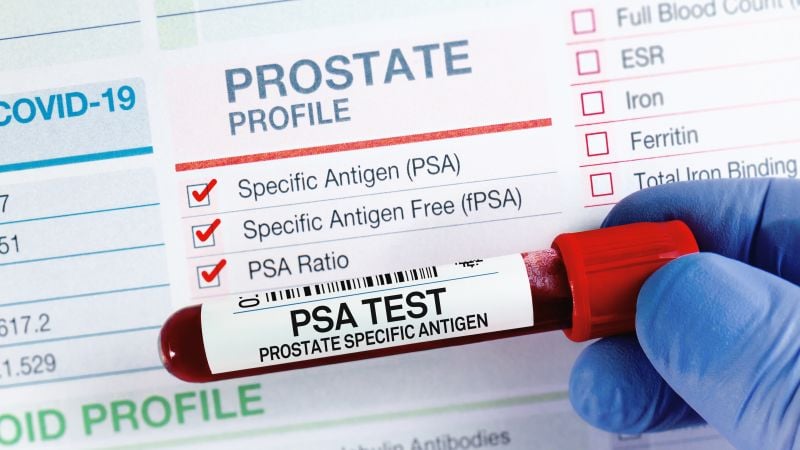
The American Cancer Society updated its prostate cancer screening guidelines on Thursday, shifting away from shared decision-making to recommend regular testing for men at average and high risk.
The organization, which had not updated these recommendations since 2010, now emphasizes a standardized approach to PSA-based screening to address the rising rates of advanced prostate cancer. According to the American Cancer Society, an estimated 333,830 men will be diagnosed with prostate cancer in 2026, with more than 36,000 deaths expected from the disease.
The updated guidelines advise men at average risk to undergo prostate-specific antigen blood testing every two years between 50 and 69. High-risk groups, including Black men and those with a strong family history, need annual screening beginning at age 45.
New Testing Intervals for High-Risk Groups
Non-Black men with a single first-degree relative diagnosed at age 65 or older begin screening at age 45. They undergo testing every two years.
New prostate cancer screening guidelines include regular testing for most older men The American Cancer Society aims to reverse rising rates of advanced prostate cancer with a major change in guidance for prostate-specific antigen, or PSA, I report for @NBCNews The change in… pic.twitter.com/TZAOBDs6Th
Dr. William Dahut said that the update provides a balanced approach to early detection. “Regular screening is now recommended with a PSA-based test (prostate-specific antigen) to detect prostate cancer earlier and to reduce the risk of diagnosis of advanced prostate cancer and death,” Baskies said. He added that while the PSA test is effective, it can produce elevations for noncancerous reasons. This leads to potential patient anxiety or unnecessary testing.
Options for Elevated PSA Results
Clinicians can offer testing via magnetic resonance imaging or a validated biomarker for elevated PSA results. Dr. William Dahut said that these options provide flexibility for patients without easy access to MRI technology.
Black men in the District of Columbia experience an incidence rate of 161 cases per 100,000. White men see 99 cases per 100,000.
Disparities in Prostate Cancer Rates
Yaw Nyame said that the risk of death is two to four times higher in Black patients. He said that improving access to care matters a great deal.

Men aged 70 to 74 receive individualized decisions based on overall health. Testing is not advised for men 75 years of age or older, nor for individuals with a life expectancy of less than 10 years. The American Cancer Society also notes that advances in active surveillance have helped clinicians distinguish between aggressive cancers and those that can be monitored without immediate treatment.
Evidence From Long-Term European Research
The update relied on long-term follow-up from the European Randomized study of Screening for Prostate Cancer. PSA-based screening identifies early-stage cancer, allowing for standard treatments like surgery and radiation. While some concerns emerged in the 2000s regarding the risks of over-treatment, the American Cancer Society now points to stronger evidence that PSA screening saves lives.
The American Cancer Society has updated its guidelines for prostate cancer screenings, encouraging more men to get tested at certain intervals instead of just starting conversations with their doctors. https://t.co/c0rJj6Ro0Z
Readers concerned about their risk profile should consult a professional to discuss the latest guidelines and their specific health history. The American Cancer Society can be reached at 1-800-227-2345.