“We firmly believe that strong signals must be sent to the leaders of countries currently charged with crimes against humanity by the ICC,” said Florentina Holzinger and her team in a statement on May 9.
American sculptor Nick Cave and the Indian pavilion won the Venice Biennale’s Visitors’ Lions on Tuesday, ending a 61st edition that replaced traditional jury prizes with a public vote after the international jury resigned en masse in April.
The five-member jury quit on April 30, days before the Biennale opened on May 9. It had announced it would not consider nations whose leaders face International Criminal Court charges for crimes against humanity — effectively excluding Russia and Israel from Golden and Silver Lion contention. La Biennale di Venezia kept both pavilions open and introduced the Visitors’ Lions as a replacement, stating it would “guarantee all visitors their freedom of expression”.
By June 3, artists including Alfredo Jaar, Nolan Oswald Dennis, Zoe Leonard, Tabita Rezaire, Laurie Anderson, and Otobong Nkanga, alongside participants from 39 national pavilions among them France, Austria, the Netherlands, Britain, and Ukraine, had signed an e-flux statement demanding removal from the ballot. The Biennale excluded formal withdrawals from eligibility but kept their names on the ballot, meaning the winners were not necessarily the top vote-getters.

India secured Best National Participation for “Geographies of Distance: Remembering Home,” its first Venice showing in seven years. Commissioned by the National Gallery of Modern Art and the Ministry of Culture, the Arsenale presentation brought together Alwar Balasubramaniam, Sumakshi Singh, Ranjani Shettar, Asim Waqif, and Skarma Sonam Tashi under curator Amin Jaffer.
Cave, born in Chicago in 1959, won Best Participant for Two Points in Time—At Once, a suite of large bronze sculptures installed in the Arsenale and overlooking its harbor that allude to the seven stages of grief. Critic Ben Davis wrote that Cave’s “hybrid-bodied, craft-adjacent, ritual-inspired idiom” captured “the show’s picture of what matters now in global art.”
Ticket holders who visited both the Giardini and Arsenale cast ballots from the May 9 opening until the Biennale closed on November 22, Artnet News reported. The winners were chosen by this public vote rather than by an expert jury, marking the first time in the Biennale’s history that the Golden and Silver Lions were replaced by attendee awards, according to Monopol Magazine.
The five-member international jury resigned en masse on April 30, just over a week before the exhibition opened to the public, Monopol Magazine said.
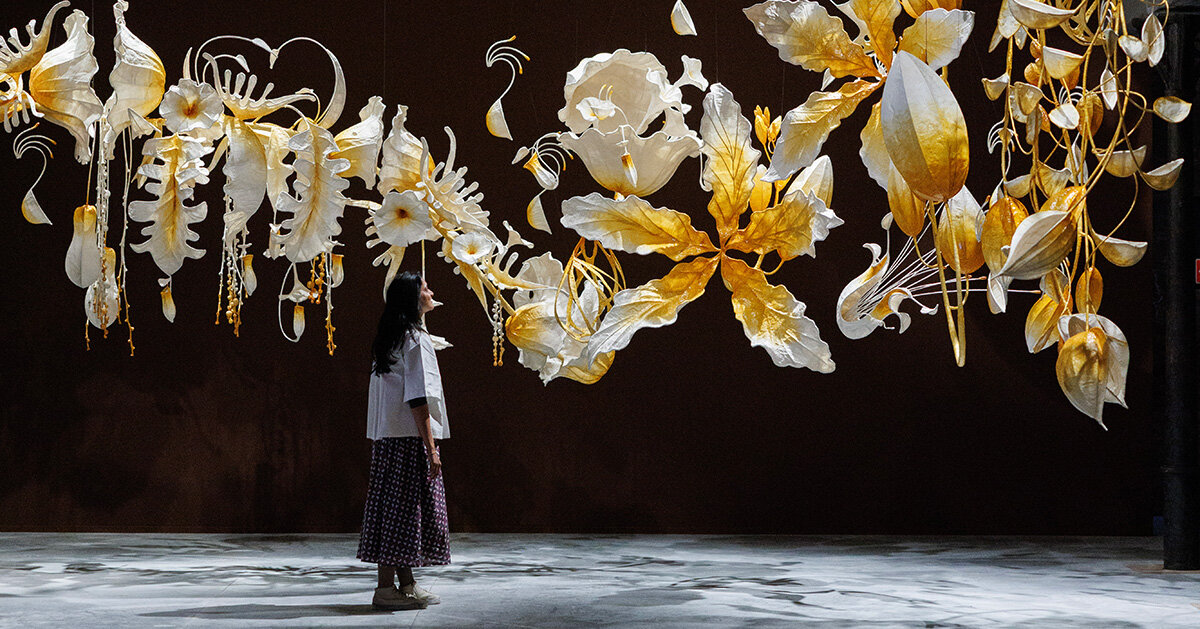
By June 3, 80 artists in the main exhibition and participants from 39 national pavilions had signed an e-flux statement demanding removal from the ballot, Monopol Magazine reported.
Votes cast for withdrawn artists and pavilions were not counted, Artnet News said.
The European Commission withdrew €2 million in funding over Russia’s return to the Biennale for the first time since its 2022 full-scale invasion of Ukraine. Holzinger’s Austrian pavilion was among those withdrawing from the Visitors’ Lions. The 2027 architecture biennale already faces similar calls to exclude Russia.
La Biennale di Venezia did not respond to requests for details on vote totals, turnout, or the number of invalid ballots cast for withdrawn participants.