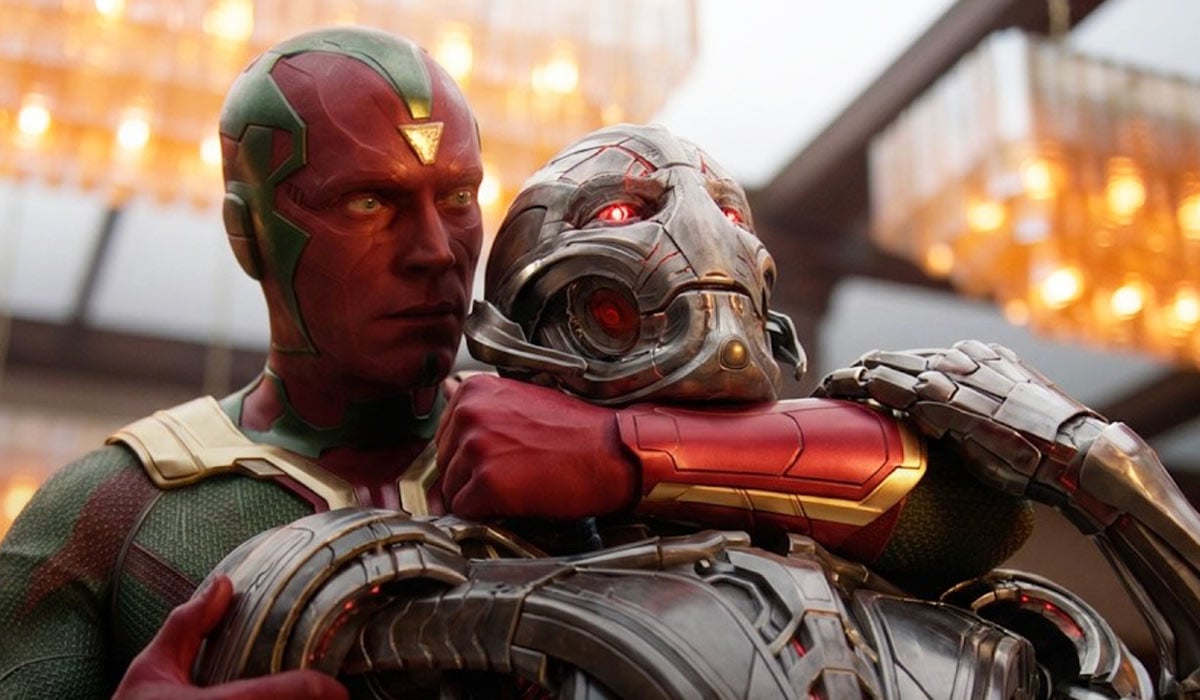
Paul Bettany’s Vision and James Spader’s Ultron face off in a climax driven entirely by conversation rather than a standard physical brawl in the series finale of VisionQuest.
Released on Tuesday, the Disney+ finale titled “Forever” closes out a reality-bending trilogy that includes WandaVision and Agatha All Along.
Showrunner Terry Matalas wrote and directed the final episode, which brings back key characters and introduces a major setup for the Marvel Cinematic Universe.
Following six years of storytelling, Peabody Awards, Emmy Awards, and hit songs, the conclusion of the WandaVision trilogy ensures the Marvel Cinematic Universe is changed forever.
For Paul Bettany, returning to the role of Vision for the first time since he flew off into the horizon at the conclusion of WandaVision has been a long time coming. In developing the series, Matalas received a clear directive from Marvel to make it a show about fathers and sons.

After Ultron’s synthetic romantic partner Jocasta is destroyed by Virgil Horton, an enraged Ultron sets world-destroying nanites to self-destruct with no override or kill switch. With physical combat unable to stop the swarm, Vision pulls Ultron into his mind to stage a simulated reality modeled on a sitcom called UltraVision.
Ultron initially reacts poorly to the confrontation, reacting with extreme distress over losing a loved one. The finale uses the sitcom framing to bring things full circle back to WandaVision, where the entire premise centered on an evolving sitcom-based world created by Wanda.
Throughout the season, Vision sought guidance from other AI characters from throughout Marvel’s past, including James Spader’s sinister Ultron, in his efforts to rediscover the man he once was.
Through this intimate conversation about generational trauma and self-acceptance, Vision convinces Ultron to stand down. As Ultron is swayed by this heartfelt conversation, he destroys the nanites, ending the threat while destroying both himself and Vision in the process.
Following these events, a post-credits scene reveals Ultron holding onto a memory stick or hard drive labeled with Jocasta’s name, indicating his hope to bring her back.
In a connection to past Marvel films, this drive is clearly the same one seen in Avengers: Age of Ultron when Tony Stark reviewed potential AI options before choosing F.R.I.D.A.Y., with Matalas noting that they worked out the timeline of Ultron or a facsimile of him being present at the Stark Expo.

“I think that all good endings need to touch upon the beginning — the WandaVision of it all. It was a big swing. We were really nervous as to whether or not we could pull it off or if the audience would think 'OK, they have really jumped the shark in an unbelievable way.' But you know, a great sitcom is just people in a room talking about their feelings and working through things,” Matalas said.
Billy, reprising his role from Agatha All Along, successfully manages to master portals and arrive just in time. During the finale’s dialogue, Tommy questions whether their mother, Wanda, might still be alive just like they are.
The series finale saves its most major MCU-altering moment for a post-credits scene.