
The 34 Billion Dollar Shadow Market Driving Apes Across Borders
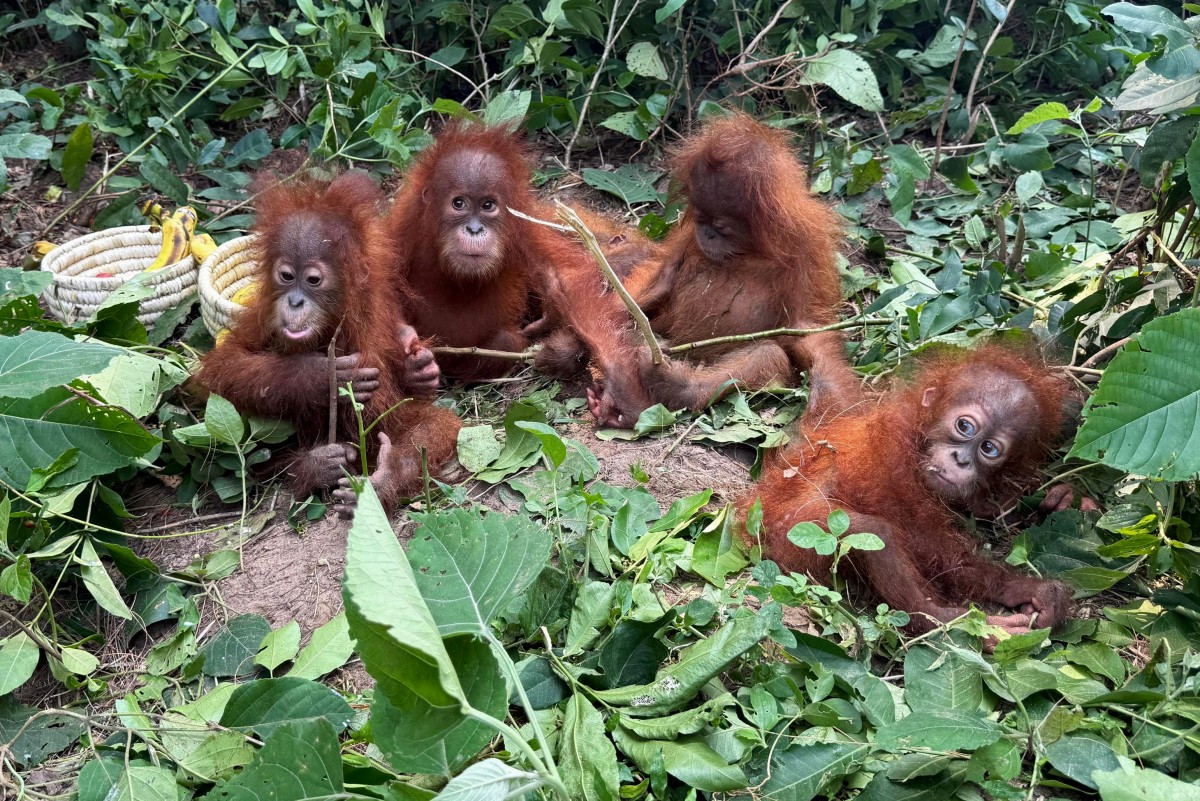
A staggering $34 billion a year fuels the global illegal wildlife trade, per a 2026 study by National University of Singapore researchers, and India is emerging as an important market for exotic primate smuggling. In early September, villagers in eastern India’s Odisha stumbled across five baby orangutans left abandoned on a plantation. Aged just 6 to 8 months with unfamiliar faces and reddish hair, the three males and two females were discovered over 2,700 kilometers (1,700 miles) away from their native rainforests in Borneo and Sumatra.
Wild orangutans exist on those two Southeast Asian islands. With roughly 119,500 individuals remaining in the wild according to the World Wildlife Fund, the species is endangered. Yet law enforcement seizures represent merely a fraction of a burgeoning underground market catering to wealthy collectors who prize rare exotic animals.
Loopholes, Air Routes, and the Rise of Primate Smuggling
India’s wildlife laws were mainly designed to shield native species like tigers, rhinos, and elephants from overseas trafficking. Consequently, gaps in import controls complicate efforts to trace the provenance of exotic wildlife. Smugglers have capitalized on expanding tourism and direct flight routes through cities like Bangkok and Kuala Lumpur, trading risky overland border crossings for much faster commercial air links. “The profit margins are so high that they can afford to lose a few animals and still make a profit,” explained Uttara Mendiratta, a wildlife trafficking researcher in India.
The regulatory blind spots deepened in 2020. Amid pandemic-era concerns over zoonotic disease transmission, the Indian government allowed citizens to register exotic animals through an online portal without proving their origins, creating an avenue to legitimize trafficked wildlife. Although India tightened its wildlife statutes in 2022 to empower authorities with clearer seizure and prosecution tools, researchers argue the policy shift had already opened the floodgates.
| Incident Year | Species & Quantity | Location Found |
|---|---|---|
| 2022 | 2 juvenile Sumatran orangutans | Checkpoint between Assam and Mizoram |
| 2023 | 1 young orangutan | Mizoram |
| November 2024 | 1 young orangutan | Apartment near Mumbai |
| 2025 | At least 23 gibbons | Indian airports (Wildlife Trust of India) |
| September 2026 | 5 baby orangutans | Odisha plantation |
Primate trafficking extends well beyond domestic borders. In May 2026, Egyptian authorities intercepted three sedated, India-bound baby chimpanzees. Sinan Serhadli, a wildlife trafficking expert at Indonesia’s Orangutan Information Centre, stated flatly, “India has become the number one destination for the live trade of primates.”
Experts Question Legality of Orangutan Imports into India
As the five newly discovered infants sit in an Indian zoo, international scrutiny has mounted over the legal import and custody of rare great apes. Between 2021 and 2024, India legally imported 41 orangutans under exceptions for captive-bred specimens regulated by CITES, the global treaty governing endangered wildlife trade. Independent experts like Serhadli have questioned whether those animals were genuinely bred in captivity, pointing to systemic loopholes.
Complicating matters further are high-profile private facilities like Vantara, a 3,500-acre wildlife facility in western India run by the family of billionaire Mukesh Ambani. Vantara houses over 150,000 animals spanning more than 2,000 species, but its acquisition practices have drawn international scrutiny. In late 2025, CITES questioned shipments of non-native animals to the facility, including snow leopards from Germany, a bonobo from Iraq, and a gorilla from Haiti. While India’s Supreme Court cleared Vantara of animal mistreatment and trafficking allegations in 2025, a coalition of 27 conservation organizations urged the facility last September to halt wild animal imports entirely due to the scale of acquisitions.
Vantara’s 2024–25 inventory also listed a Tapanuli orangutan—the world’s rarest great ape, with only 716 remaining in the wild across a small pocket of Sumatra. Trade data indicates the animal left Indonesia in 2024 and entered India via the United Arab Emirates. Vantara maintained it was legally imported, though noting the prior chain of custody required clarification with the UAE.
Meanwhile, Indonesian forestry officials are pushing to bring home rescued animals. On Monday, Indonesia’s Forestry Ministry repatriated a 3.5-year-old male Sumatran orangutan named Heera through Kualanamu International Airport in Deli Serdang, North Sumatra, after he had been illegally trafficked to India. Forestry Minister Raja Juli Antoni emphasized that the repatriation proves the value of cross-border cooperation in securing better lives for trafficking victims, adding that Heera is currently undergoing rehabilitation at the Sumatran Rescue Alliance in Langkat regency. Indonesia’s Ministry of Forestry announced it is taking active steps to verify the origins and health of the five baby orangutans found in Odisha as well, aiming to return them to their natural habitat.


