Blood tests measuring phosphorylated tau 217 in plasma show a 38% absolute risk of cognitive impairment over the next five years for adults over 60 with very high levels, according to research published in JAMA.
The study examined close to 2,700 cognitively healthy adults across six research studies dating back to 2004. Participants with slightly elevated p-tau217 levels faced a 15% chance of impairment over five years. This rises to 45% over ten years. Adults with very high levels face a 78% risk over the ten-year timeframe.
Measuring Tau Tangles in Plasma
In autopsy cohorts, eMTBR-tau concentrations were 25.2 to 50.5 times higher among people at Braak stage VI compared with stages I–II.
“One of the most challenging tasks in Alzheimer’s disease diagnosis is to establish in a patient with cognitive impairment that Alzheimer’s pathology is not just present, but that is present in a sufficiently advanced biological stage to be a likely explanation for symptoms,” said co-senior author Niklas Mattsson-Carlgren, MD, PhD, a neurologist at Skåne University Hospital and researcher at Lund University, via Inside Precision Medicine.

Nicholas Ashton, PhD, senior director of Banner’s Fluid Biomarker Program at Banner Sun Health Research Institute, said that while p-tau217 detects early signs of Alzheimer’s disease, eMTBR-tau measures how far tau tangles have spread. Together they could help doctors make better treatment decisions and identify the right patients for clinical trials.
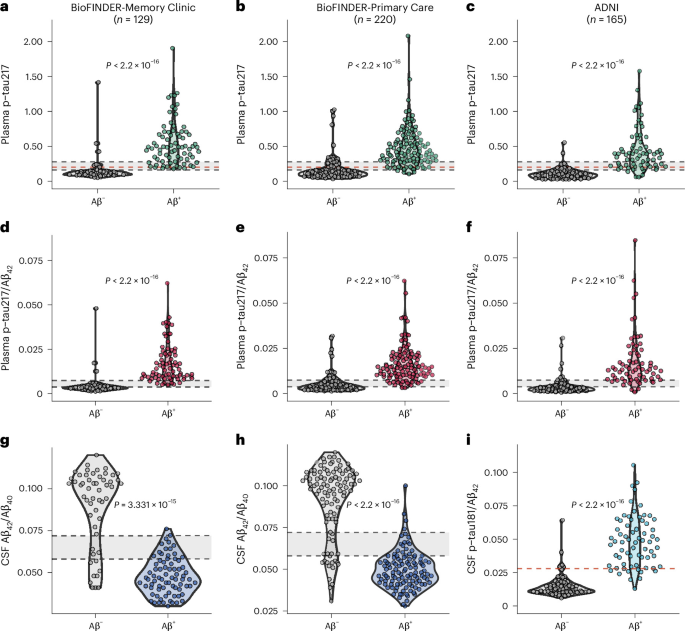
Further testing across diverse datasets and cohorts incorporated 129 people from the BioFINDER-Memory Clinic study (NCT06122415). It included 220 people through the BioFINDER-Primary Care study (NCT06120361), and 165 participants from the Alzheimer’s Disease Neuroimaging Initiative (ADNI).
Subjects had a mean age of 72 years, spanning from 49 to 89 years old. 47 percent were female and 45 percent carried the APOE-ε4 gene variant. Across these cohorts, plasma p-tau217 and plasma p-tau217/Aβ42 levels differed significantly between amyloid-positive and amyloid-negative participants.
Linking CSF1 to Pathology
Additional investigations published in Alzheimer’s Research & Therapy examined 706 participants from the Alzheimer’s Disease Neuroimaging Initiative. The investigation linked elevated cerebrospinal fluid concentrations of colony-stimulating factor 1 and its receptor CSF1R to tau-related pathology and clinical progression.
Higher baseline CSF1 concentrations connected to an increased risk of incident dementia, with a hazard ratio of 1.325 and a 95 percent confidence interval between 1.142 and 1.537. Through mediation analyses, researchers uncovered indirect routes linking amyloid deposits to tau pathology via sequential cascades involving CSF1 or CSF1R and sTREM2-related microglial responses.
Clearing the Lumipulse Test
The Food and Drug Administration cleared the Lumipulse test in May 2025 as the first blood test cleared to aid in diagnosing Alzheimer’s disease. The agency indicated the test for patients aged 55 or older experiencing memory problems.

“It’s a game changer. It’s indicated for people who are 55 years of age or greater with symptoms of cognitive decline,” said Dr. Rhea Rogers, a board-certified physician and Aging Untold host, via WECT.
Patients testing positive show a greater than 90% chance of having amyloid plaque in the brain. Clinical trial participant Kathi Rigby shared her experience after receiving a diagnosis in 2022. “I couldn’t get words from my brain to my mouth,” Rigby told WECT, adding that the diagnosis “was like a slap in the face.”
Rigby participated in a clinical trial of a drug that removed brain plaque. “95% of the plaque was removed,” said her husband, Brent, via WECT. Rigby noted the impact of early detection in allowing her to participate in clinical testing.

Managing Insurance Coverage
Since 2025, the U.S. Food and Drug Administration has approved four biomarker blood tests for Alzheimer’s disease. The Elecsys test measures p-tau217 levels in plasma. Experts and the Alzheimer’s Association advise against testing for people without symptoms who are not participating in a research study.
Medicare and private health insurers do not cover the costs for asymptomatic patients. Private insurers are unlikely to cover expenses ranging from $200 to $1,500. Medicare does not cover costs for patients with symptoms either. The bipartisan Alzheimer’s Screening and Prevention Act, introduced in 2025, aims to address coverage gaps but awaits congressional approval.
For those considering biomarker evaluations, consulting qualified medical professionals or research study coordinators is the appropriate next step to study test accuracy, pricing, and individual interpretation without relying on unvalidated online tools.