Researchers in Basel unveiled an experimental electronic implant in October 2026 that uses electrocatalysis to regulate blood glucose.
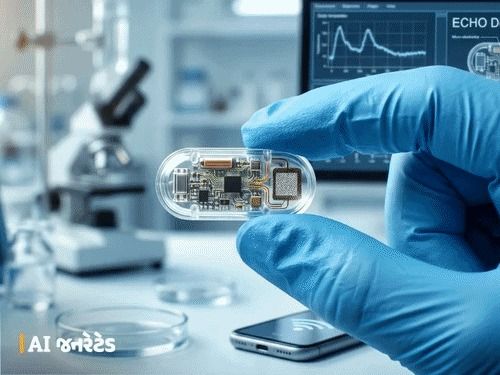
The wireless device, developed at the Swiss Federal Institute of Technology Zurich and named ECHO, is roughly the size of a USB stick and sits just beneath the skin. Martin Fussenegger led the research team.
The team detailed the system in the journal Science. It targets type 2 diabetes by removing excess sugar directly rather than stimulating the pancreas to produce more insulin.
The implant consists of a graphite wafer coated with gold nanoclusters studded with tiny platinum particles. When powered wirelessly at a medically approved frequency, the catalytic surface uses an electric current to convert excess blood glucose into gluconate.
A standard glucose monitor tracks blood sugar levels. When a spike occurs after a meal, a smartphone or smartwatch activates the implant.
The device shuts off automatically once blood glucose returns to a safe range to prevent dangerous crashes.
In experimental trials involving obese mice with type 2 diabetes, activating the implant brought blood glucose under control within an hour.
Researchers observed no inflammation, tissue damage, or scarring during the trials. A two-week automated test ran entirely without human intervention.
The team also tested the catalyst against five liters of glucose solution. That volume roughly matches the total blood volume in an adult human. The device cleared the sugar efficiently.
Medical specialists greeted the technology with interest.
The fact that blood glucose and blood lipids decrease in mice while their weight also decreases is interesting and important.
Michael Roden, scientific director of the German Diabetes Center
“However, it is questionable whether this device represents an alternative to the cost-effective inhibitors. Otherwise, I see this device more as a potential additional element in diabetes therapy, and certainly not as monotherapy, since the underlying insulin deficiency causing diabetes is not treated at all,” Siegfried Ussar told the Science Media Center.
Birkenfeld questioned how reliably the system would function over the long term. He also pointed out a fundamental scaling challenge.
The system’s performance depends on the surface area of the electrode. The amount of glucose that needs to be removed depends on body volume.
Siegfried Ussar told the Science Media Center that the authors use a device operating on a principle similar to SGLT2 inhibitors. It prevents glucose reabsorption or increases glucose excretion.
Fussenegger said, “If it’s possible to do this maybe every three months or up to a year, and then ‘I can forget my diabetes,’ I think people would be happy.”
Readers considering any new health technologies or approaches for managing metabolic conditions should consult qualified medical professionals for guidance tailored to individual health needs.