The $14BN Defense Network Facing a Sinking Reality
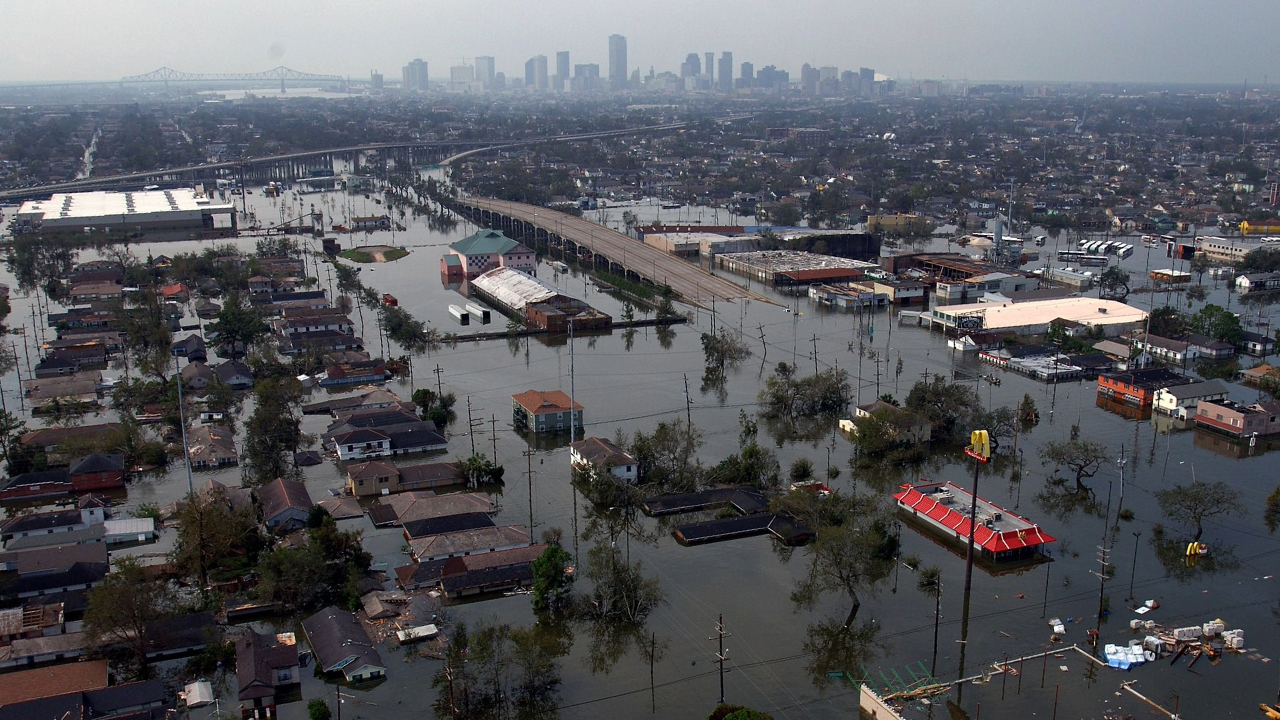
When Hurricane Katrina made landfall on August 29, 2005, the resulting catastrophe left most of New Orleans underwater, claiming roughly 1,400 lives and generating over $100 billion in damage. In the decades since, the federal government poured $14 billion into a massive, 350-mile-long flood defense network to protect the metropolitan area’s one million residents. Yet, a newly published report warns that the entire region is on borrowed time, arguing that the city needs to start planning a mass relocation now.
As reported by The B1M, the Hurricane and Storm Damage Risk Reduction System (HSDRRS) represents one of the largest civil engineering undertakings in the history of the US Army Corps of Engineers. Completed in 2018, the system includes the crown jewel known as the Lake Borgne Surge Barrier—locally dubbed the Great Wall of Louisiana.

Engineering Marvels Meet Subsidence Realities
While the system performed as intended when Hurricane Ida struck in 2021, the underlying geography of southeastern Louisiana presents a relentless challenge. The region loses an area of land equivalent to a football pitch to the sea every ninety minutes. Parts of the protective levee network are sinking into the soft soil much faster than engineers originally anticipated.
In 2019, just a year after finishing the initial project, the Army Corps warned that subsidence could cause parts of the system to drop below guaranteed safety levels within four years. Congress approved $5.3 billion in 2023 to fund a complex, multi-decade process of clearing, stepping, and rebuilding the levees with imported clay. Even so, the recent study insists that maintaining these barriers cannot indefinitely outpace rising sea levels.
Local Skepticism and the Weight of Relocation
Moving an entire metropolitan population remains an unprecedented logistical hurdle, though the state has small-scale experience with managed retreat. In 2016, the federal government granted $48 million to relocate roughly 100 residents from the disappearing coastal island of Isle de Jean Charles, where 98 percent of the landmass has vanished into the Gulf of Mexico over the last seventy years.
With the state legislature recently canceling a $3 billion wetland sediment restoration project due to cost, the immediate strategy relies entirely on shoring up existing walls and levees. Whether those multi-billion-dollar fixes can hold back the Gulf indefinitely remains the central, unresolved question for the Big Easy.