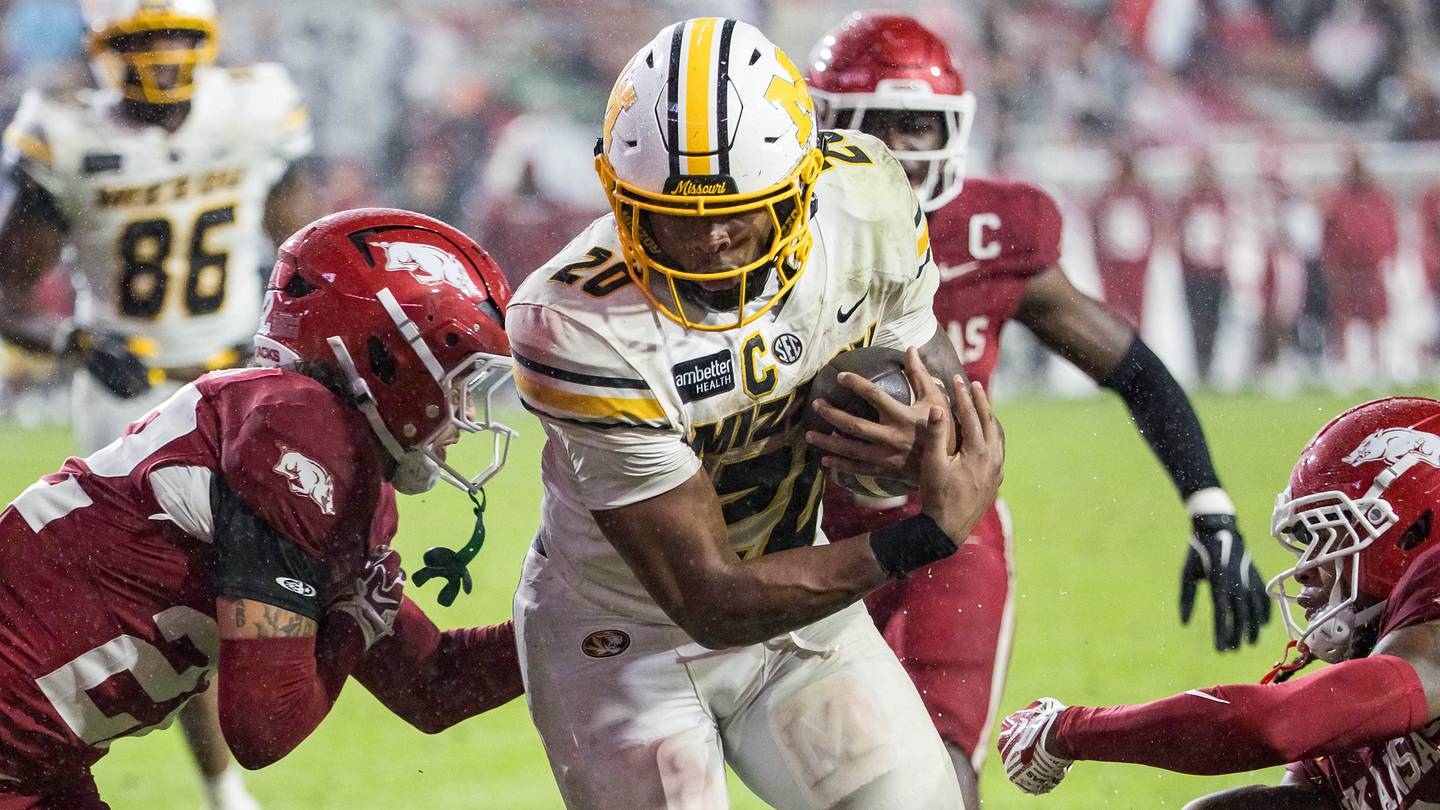
Following a 34-10 home loss to Missouri, Arkansas stands at 3-5 overall and 1-4 in SEC play, leaving fans questioning whether routine assurances of urgency can fix recurring execution breakdowns ahead of a Saturday matchup at Auburn.
The schedule says Auburn is next. For an Arkansas program grappling with the weight of a 3-5 record and a 1-4 mark in the Southeastern Conference, the more pressing question is whether anything else is actually going to change.
That is where a 34-10 home loss to Missouri leaves the Razorbacks. The team is not merely disappointed in the result, but uncertain about what another week of preparation is supposed to alter. Vanderbilt offered a breakthrough, and the subsequent bye offered time to build on it. Instead, Missouri exposed how much work remained and how quickly Arkansas could undo its own opportunities.
Now the Razorbacks travel to Auburn for an 11:45 a.m. kickoff Saturday. The Tigers enter the contest at 4-4 overall and 2-4 in conference play. Whether Arkansas is prepared to handle that assignment will require more convincing evidence than an assurance that everybody understands the urgency.
Why Treating the Next Opponent as the Entire Problem Fails
Auburn deserves preparation. So do Arkansas’ own recurring failures. The Razorbacks handed Missouri 24 points through four turnovers.

They committed five personal fouls and lost touchdowns to penalties. Those problems cannot be attributed entirely to an opponent’s quality. A different scouting report will not automatically correct them.
Arkansas needs to examine the decisions and execution that created each mistake. Was the ball exposed unnecessarily? Did a player misunderstand the assignment? Did the call ask the personnel to handle something they could not execute reliably? Those are different questions with different answers.
The staff should not settle for one broad declaration about taking care of the football. Everybody already knows turnovers are damaging. The useful work identifies exactly how the next one becomes less likely.
How the Ground Game Vanished Between Vanderbilt and Missouri
Arkansas rushed for 187 yards at Vanderbilt. Against Missouri, the ground game failed to reach 100 yards. That contrast does not mean the earlier performance was meaningless. Yet, this demonstrates that the Razorbacks have failed to prove they can secure those same advantages when facing an alternative defensive strategy.
Tim Cramsey needs more than a productive opening idea. If the opponent removes a preferred rushing opportunity, what comes next? Can Jackson receive a manageable passing assignment? Does the protection support it? Will another receiver become available when the first option disappears?
Jordan’s 106 receiving yards against Missouri demonstrated that Arkansas can find production outside one target. His fumble also illustrated why production alone does not complete the job.
The offense needs useful yards that remain useful. A successful play followed by a turnover or a drive-killing penalty does not build control. Auburn will have film showing where Missouri disrupted Arkansas. The Razorbacks should expect those weaknesses to be tested again.
What the Defense Must Do Beyond Waiting for a Rescue Play
The Vanderbilt victory included two consequential interceptions. Missouri presented a different examination. While the Razorbacks managed to stay competitive throughout the first two quarters, that level of play evaporated after the break.
Accumulating 211 yards on the ground, the Tigers swiftly turned a close contest into a comfortable advantage in the opening minutes of the third quarter. Arkansas needs a defense that can manage ordinary possessions more dependably.
That requires making solid tackles, staying disciplined in coverage, and restricting the running game that gives opposing teams endless strategic choices. Turnovers would help. They cannot be the entire plan. A defense is not required to be perfect after an offensive mistake. It is required to return with its responsibilities intact rather than allowing frustration to create another vulnerability. The same applies to the offense when the defense struggles. This team needs connected responses, not units waiting for somebody else to restore order.
What Ryan Silverfield Says the Preparation Requires
“We better show up tomorrow and ready for a tough opponent at Auburn next Saturday,” Silverfield said after the Missouri loss.
The urgency is appropriate. The preparation must be more detailed than the message. Arkansas must pinpoint which errors call for lineup adjustments, which necessitate simpler play-calling, and which stem from unacceptable choices that must stop immediately.
Accountability becomes useful when the players understand what it changes. Another week of promising effort would not be enough. The Razorbacks have produced enough competitive stretches to show that effort is not the only missing piece. They need dependable execution under circumstances the coaches have prepared them to recognize.
Why Another Loss Cannot Become the Expected Ending
At 3-5, Arkansas has little room to treat the remaining schedule as an extended development session. Improvement still matters. So does the next result.
Nobody can guarantee a victory at Auburn. Fans can anticipate a squad prepared by the coaching staff that avoids shooting itself in the foot with the same recurring errors.
That is a reasonable standard for a first-year coach. It is also a necessary one. The Razorbacks finally interrupted the losing at Vanderbilt. Missouri demonstrated how easily they could return to familiar habits. Auburn is next. Another loss should not feel like the only answer Arkansas knows how to provide.