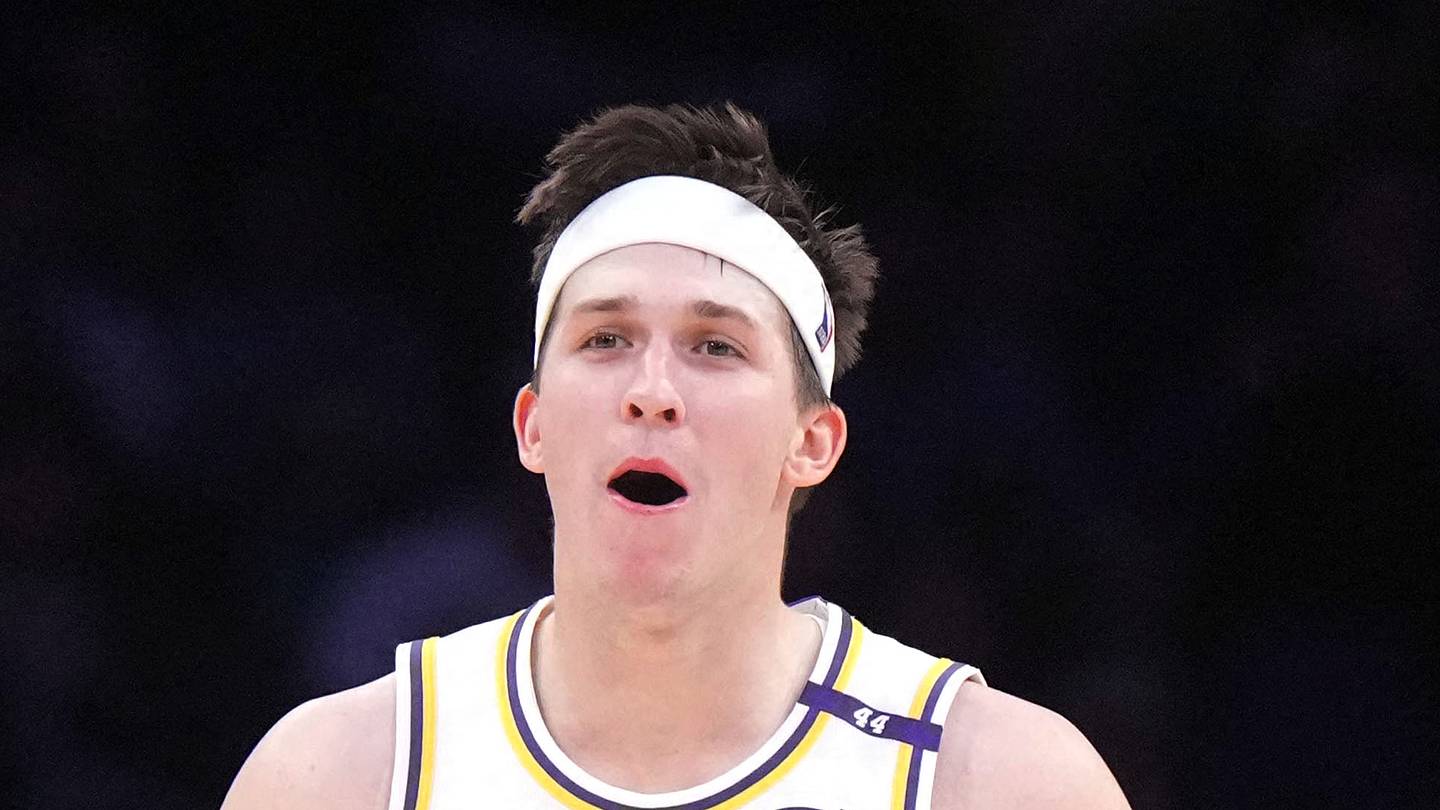
Austin Reaves finds himself at a career crossroads that every rising star eventually confronts: the transition from a complementary piece to an unquestioned engine of an NBA offense. After the Los Angeles Lakers secured his long-term future with a four-year, $184.7 million contract this summer, the expectations shifted. As Lakeshowlife.com reported, the franchise is no longer looking for a role player to support a veteran superstar; they are looking for a co-star capable of keeping the team afloat when Luka Doncic takes a seat.
The Growing Pains of a Primary Creator
The numbers through the first six games of the season paint a picture of a player performing at an All-Star level, yet struggling with the heavy burden of increased responsibility. Reaves is currently averaging 23.8 points, 5.3 assists, 3.5 rebounds, and 1.2 steals per game. However, the efficiency has been marred by a concerning spike in turnovers. Over his last two games alone, he has committed 16 giveaways, bringing his total to 26 turnovers across his first four contests against the Clippers and Warriors.
The stakes of this adjustment were on full display Friday night against Golden State. The Lakers entered the second quarter with a commanding 23-point lead, but as the second unit took the floor under Reaves’ guidance, the momentum evaporated. By the time Doncic was forced to return to the game 40 seconds earlier than planned, the lead had dwindled to 11. The Warriors’ strategy of blitzing Doncic becomes significantly more effective when the Lakers’ secondary creator fails to stabilize the offense in the interim.
Austin Reaves said one of the big things he learned from LeBron James was the work he put in to stay available. Related, Reaves will have a dedicated trainer this season, former Lakers strength coach Ed Streit, per sources.
A Different Kind of Mentorship
For five seasons, Reaves operated in the shadow of LeBron James, who departed for the 76ers this past offseason. According to the New York Post, Reaves credits James with teaching him the fundamental demands of professional longevity. “One of the biggest things I learned from LeBron was what he did every single day to give [himself] the opportunity to still play this game at the highest level,” Reaves said. “There’s a lot more that goes into it than the casual fan sees.”
That lesson in durability is now manifesting in his preparation. Reaves has reportedly hired Ed Streit, the former Lakers head strength and conditioning coach, to serve as his personal trainer. This commitment to physical maintenance is vital for a player coming off a 2025-26 campaign limited to 51 games due to calf and oblique injuries. While the physical foundation is being laid, the mental and tactical shift remains a work in progress. Without the safety net of James to stabilize the lineup, Reaves must now prove he can manage ball pressure and playmaking duties without the reckless giveaways that have hampered the Lakers’ start.
The Roster’s Thin Margin for Error
The pressure on Reaves is compounded by a roster that is notably light on secondary ball-handling. After Collin Sexton missed the entire preseason, the Lakers were forced to experiment with Bronny James, Jaden Hardy, and Chris Manon as potential shot creators—none of whom have provided a sustainable solution. The current reliance on a three-man core of Doncic, Reaves, and an inconsistent Sexton leaves the team vulnerable when the offense gets stuck in the mud.
Head coach JJ Redick faces the immediate challenge of reconfiguring the second-unit sets to alleviate the pressure on Reaves. Whether this requires more off-ball movement or a tactical shift in how the team initiates its sets, the status quo is not viable for a team with championship aspirations. The Lakers are built to thrive through their offensive output, but that system relies entirely on their primary creators protecting the rock. With 20 turnovers recorded by the team in their recent loss to the Warriors, the margin for error has effectively vanished. Reaves has the scoring talent to be a number-two option; his next step is mastering the discipline that keeps a championship-caliber team from beating itself.