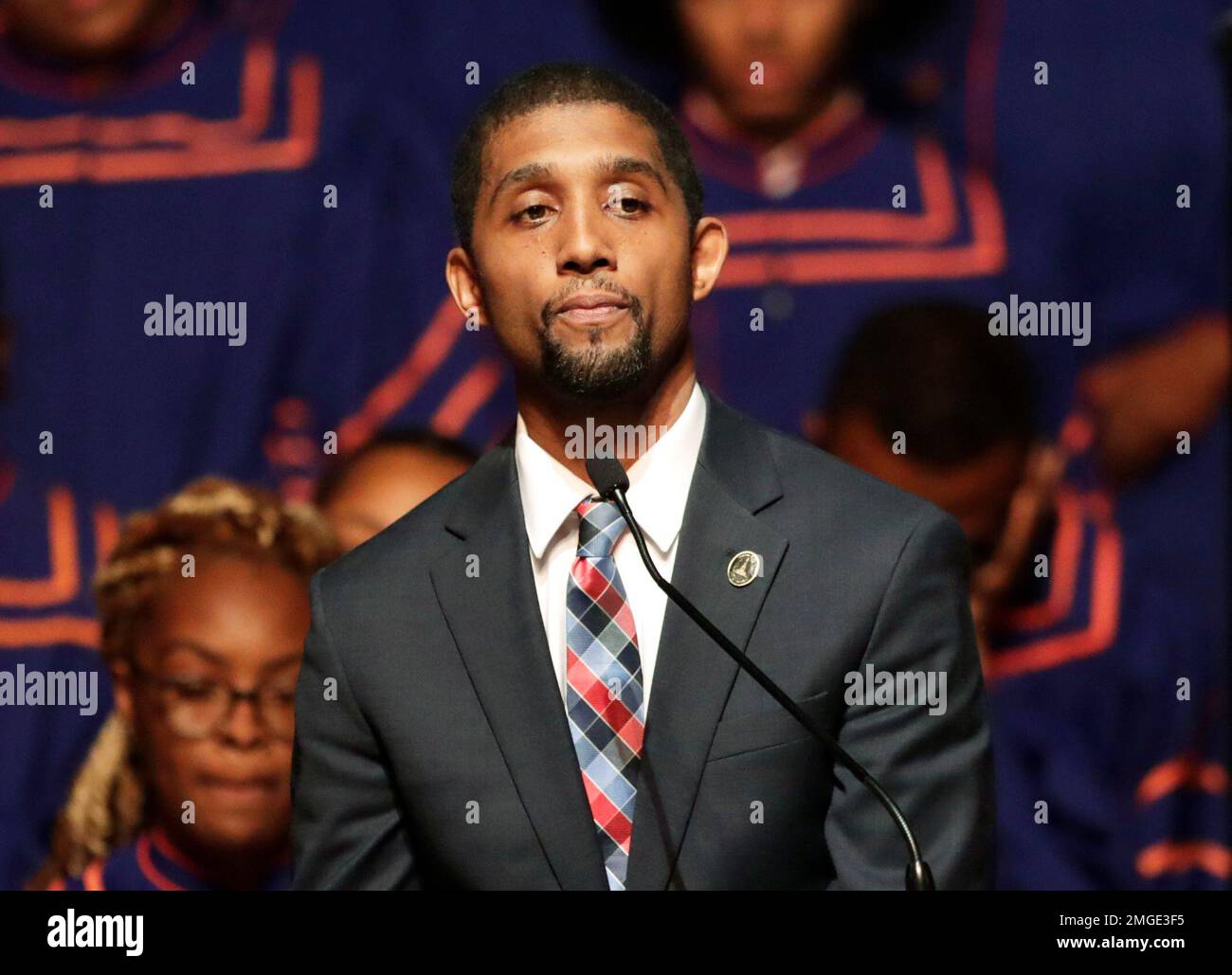
Baltimore Mayor Brandon Scott is attributing the city’s struggle with a negative public image to local media outlets and neighboring counties, even as polling reveals a deep-seated distrust of city government among the people who actually live there. Speaking with the Baltimore City Chamber of Commerce at Morgan State University, Scott argued that the narrative surrounding the city is being driven by “noise” from outside the city limits and biased reporting that ignores public safety gains.
The friction comes at a time when the city’s crime data presents a contradictory story. While overall homicides have dipped slightly, a recent string of mass shootings has kept the city in the headlines for the wrong reasons. For the residents and business owners trying to revitalize a downtown area that lost $1 billion in value to vacancies last year, the debate isn’t just about optics—it’s about whether the city is actually becoming safer or if the “progress” is merely a statistical fluke.
The Gap Between City Hall and the Street
Mayor Scott specifically called out The Baltimore Sun and Fox45, claiming these outlets actively work to convince people not to invest in the city. He suggested that while visitors from Philadelphia or D.C. express love for Baltimore, residents in Howard, Anne Arundel, and Baltimore counties maintain a condescending view that poisons the city’s reputation.
However, data from the University of Maryland, Baltimore County (UMBC) suggests the problem isn’t just external. In an April poll of 666 residents, 65% said they trust their local government “never” or “only some of the time.” In a striking contrast, 61% of those same residents expressed trust in local news organizations, viewing their coverage as fair and accurate.

The disconnect extends to the perception of safety. While the Mayor credits the Mayor’s Office of Neighborhood Safety and Engagement (MONSE) for reducing violence, only 21% of polled residents give MONSE and similar prevention programs the credit. A much larger group—44%—believe the drop in crime is a result of both violence prevention and tougher sentencing for repeat offenders. This is a point of political contention, as Scott has consistently pushed back against mandatory minimum sentences in favor of diversion programs.
The raw numbers provided by the Baltimore Police Department as of October 28 show a marginal improvement in the most extreme metric: 102 homicides compared to 108 by the same date last year. But that slight drop is offset by an increase in nonfatal shootings, which rose to 259 from 254 in 2025.
Trading Tax Revenue for Downtown Growth
Beyond the crime statistics, the administration is betting on aggressive tax incentives to stop the bleeding of downtown property values. Scott is utilizing Tax Increment Financing (TIF) in a way he claims is the first time any city or government has used TIF in a non-contiguous way, applying it to vacant buildings throughout neighborhoods rather than just a single concentrated district.
The strategy involves a high-stakes trade-off: giving away millions in potential property tax revenue to lure developers back to the city center. This is most evident in the proposed Payment in Lieu of Taxes (PILOT) agreement for Harborplace, which would grant developers a 25-year tax break.
While the Harborplace deal is still awaiting a decision from the Board of Estimates, a similar agreement for the West Lexington Corridor was approved last week. The deal facilitates a $160 million development project for the developers of University of Maryland, Baltimore’s North Quad. When questioned about the 25-year loss in tax revenue, Scott’s logic was blunt: the city is currently getting nothing from these properties, so a tax break is preferable to continued vacancy.
The stakes of these vacancies are immense. Since Scott took office, the city has reduced vacant properties from over 16,000 to just above 11,000. But for the 42% of Baltimore County residents who say improved public safety would encourage them to visit the city, tax breaks for developers don’t solve the immediate fear of visiting downtown.
The Perception Paradox
The tension in Baltimore is a classic struggle between “top-down” metrics and “bottom-up” experience. To the Mayor, a decrease in homicides is a win that should be celebrated. To a resident who sees a mass shooting on the news or feels the instability of their own block, that statistic feels irrelevant.
| Metric | 2025 (Same Period) | As of Oct 28 |
|---|---|---|
| Homicides | 108 | 102 |
| Nonfatal Shootings | 254 | 259 |
This divide is where the political risk lies. With 45% of residents believing the city is not progressing in the right direction, the administration is fighting a war on two fronts: one against the “noise” of the surrounding counties and another against the skepticism of its own constituents.
Ultimately, the Mayor is gambling that the physical transformation of the city—the filling of vacant lots and the rebuilding of the harbor—will eventually outpace the negative headlines. But as long as the trust gap between City Hall and the neighborhood remains, the “negative image” Scott blames on the media may actually be a reflection of the residents’ own lived reality.