Blue Origin Grounds New Washington Operations in Des Moines with 250,000-Square-Foot Facility
Jeff Bezos’ rocket company Blue Origin is expanding its footprint in Washington state, selecting Des Moines for a new 250,000-square-foot facility dedicated to a mix of laboratory work, development, and light production. The project will support hundreds of jobs once the site reaches full operational capacity.
The Kent-headquartered company staked its claim on Sept. 30 by filing a permit application with the state’s Department of Ecology for an 11-acre parcel located at 21202 24th Ave. S., according to KING 5.
“Their new facility means more quality jobs close to home for our residents, and more momentum for Des Moines as a place where innovative companies want to grow,” Des Moines City Manager Katherine Caffrey wrote in a statement on LinkedIn.
A Growing Aerospace Hub South of Seattle
Blue Origin arrives in Des Moines as the municipality attracts advanced defense and aerospace engineering. In September, defense tech company Shield AI announced it selected Des Moines as one of two new production sites for its X-Bat AI-piloted fighter jet.
“Des Moines has long been home to families contributing to aerospace technology and operations. We are uniquely positioned to support a talented workforce in a new, burgeoning aerospace sector,” said Des Moines Mayor Yoshiko Grace Matsui in a news release regarding Shield AI’s selection.
Balancing Pacific Northwest Growth With Texas and Florida Investments
While establishing new roots in Des Moines, Blue Origin has concurrently channeled capital into out-of-state operations. Earlier this month, the company announced plans to scale up its Hutto, Texas, presence via a 1.3 million-square-foot complex designed to build components for its Terawave satellite communications network and Quartz ground communications network.
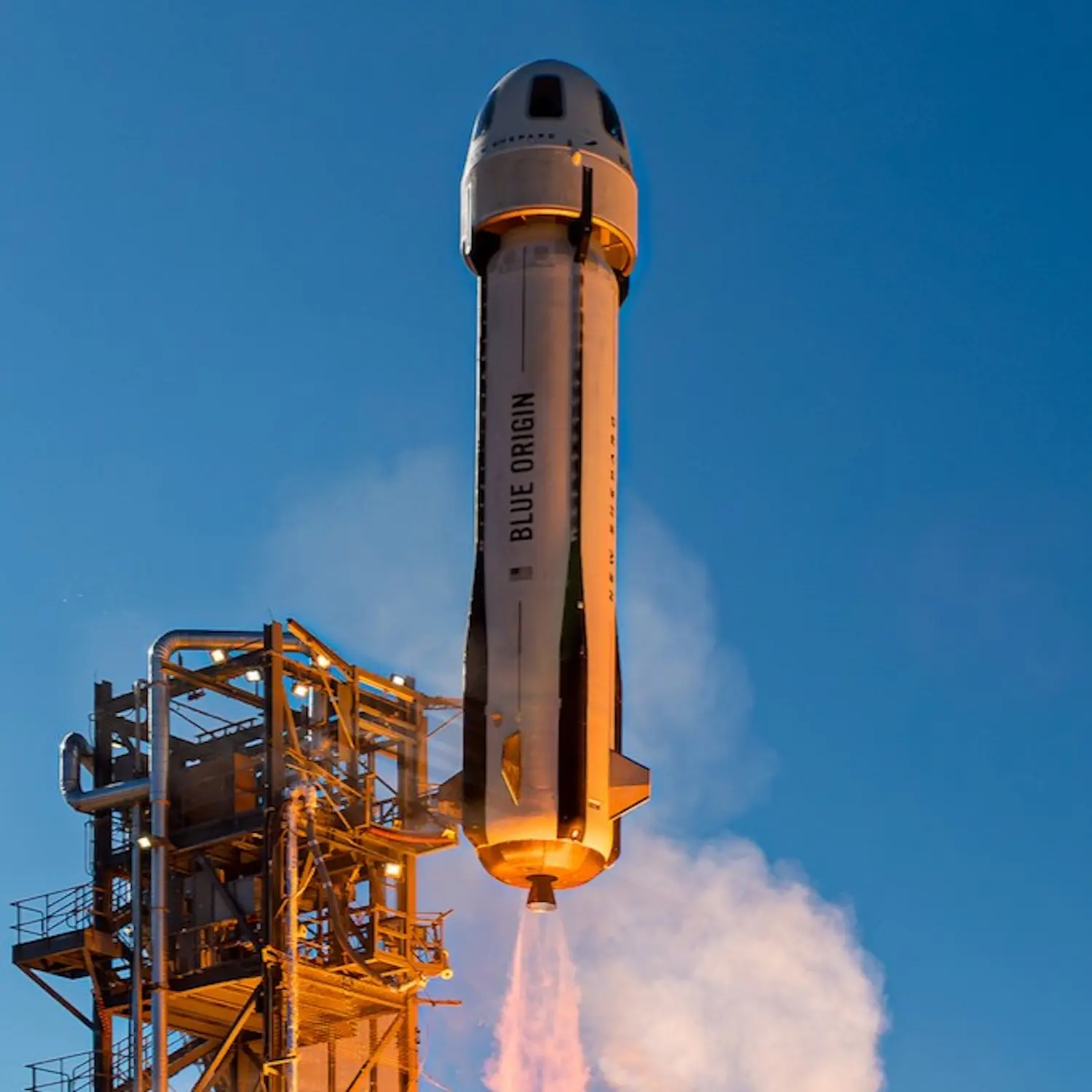
Concurrently, Blue Origin has more than doubled its manufacturing and operations footprint in Florida over the last couple of years. That southeastern expansion aims to support launch cadences for New Glenn, the company’s heavy-lift, reusable rocket, with targets set on achieving multiple flights per week by the end of the decade.
In February, Blue Origin announced a temporary pause for at least two years on flights for its smaller space-tourism vehicle, New Shepard, to redirect engineering resources toward New Glenn and upcoming NASA lunar missions.
The heavy-lift vehicle subsequently weathered a turbulent series of milestones. In April, a New Glenn upper-stage engine underperformed, placing a satellite into an incorrect orbit. Blue Origin nonetheless classified the flight as a success after recovering the reusable booster stage—marking the first time the company successfully used a recycled booster stage.
Just one month later, in May, a separate New Glenn vehicle suffered an explosion during a pre-launch test run on Cape Canaveral launchpad LC-36A, an incident traced back to a BE-4 booster engine anomaly. In response, Blue Origin initiated rebuilding efforts at launchpad LC-36A while constructing an adjacent pad, LC-36B, alongside a $330 million expansion at its Rocket Park manufacturing campus near NASA’s Kennedy Space Center to scale upper-stage production to 150 units annually.