The Tennessee Successor Riddle Waiting for Election Night
As Tennessee voters prepare to head to the ballot boxes on Tuesday, Nov. 3, Republican nominee Marsha Blackburn remains the clear frontrunner in the state’s gubernatorial race. If she wins the governor’s mansion, her victory will immediately spark a high-stakes political domino effect across Washington and Knoxville. That transition forces a looming decision over who will fill her vacant U.S. Senate seat, a post that several prominent Republicans are already eyeing. Yet, as wvlt.tv reported, there is a very practical, legislative reason why Blackburn might ultimately pass over U.S. Rep. Tim Burchett for the appointment.
Burchett sits on a short list of rumored frontrunners that also includes Pete Hegseth and former Knox County Mayor Glenn Jacobs. Burchett is not shy about his ambitions. His campaign manager, Thomas McAfee, confirmed to wvlt.tv that the congressman is “absolutely” planning a Senate run in 2028 regardless of whether he gets an early appointment.
Burchett told Punchbowl News that he believes his existing grassroots network across the state will carry him through an open contest, even suggesting he could serve as a vital mediator between the House and Senate GOP. But legislative mechanics in the nation’s capital complicate that ambition.
House Seat Vacancies Require Time Consuming Special Elections
The core hesitation centers on how congressional seats are refilled. While a Senate vacancy can be swiftly plugged by gubernatorial appointment, a House seat vacancy demands a special election. There are no temporary fill-ins allowed in the lower chamber.
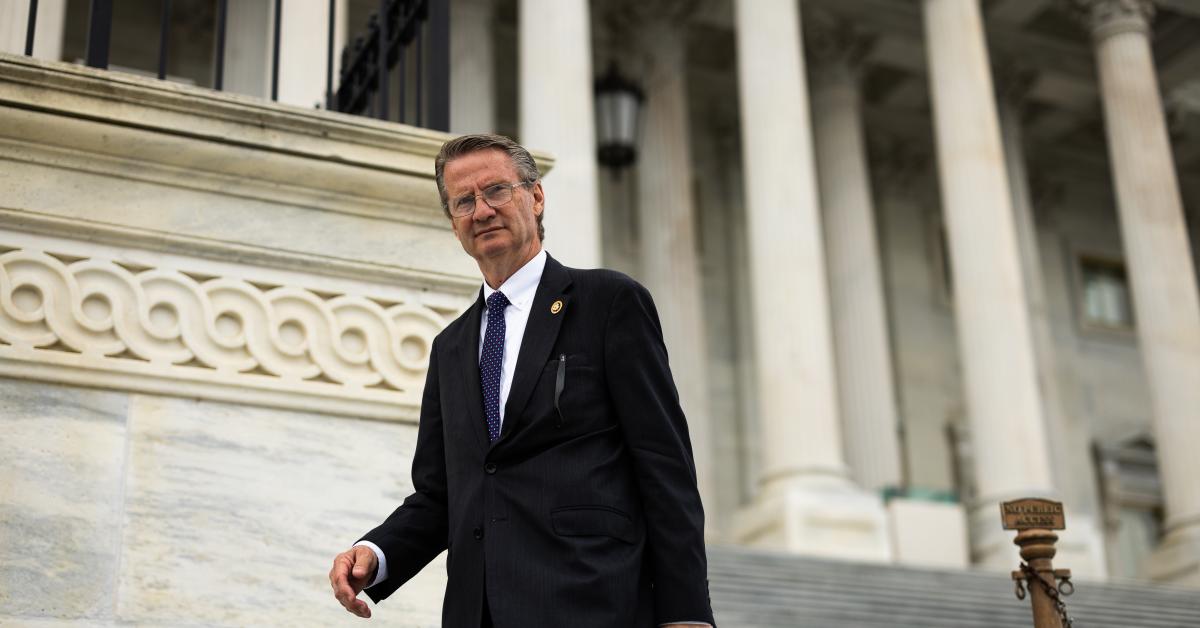
Dr. Andrew Busch, a professor at the University of Tennessee and associate director of the university’s Institute of American Civics, explained to wvlt.tv that conducting a vacancy election takes time. Even when scheduled as soon as practicable, the process leaves a congressional district unrepresented for one to two months.
“If Congressman Burchett is selected, there would be a vacancy election. There is no appointment of temporary members of the House. It’s all by election,” Dr. Busch said.
For a Republican leadership team fighting to maintain control of the U.S. House, losing a reliable vote for nearly two months is a precarious gamble. If the GOP holds only a razor-thin majority after the midterms, sacrificing a vote for even sixty days could temporarily paralyze party momentum on key legislative priorities.
Weighing the National Math Against Local Loyalty
Whether this vacancy risk actually materializes depends on a complicated series of political contingencies. First, Burchett has to win his own reelection bid on Nov. 3 against his Democratic opponent, Michaela Barnett. While his district boasts one of the longest unbroken streaks of single-party Republican representation in American history—dating back to the 1850s—an upset would remove the vacancy question entirely.
Assuming Burchett wins his House seat, the severity of the vacancy problem ties directly to the national balance of power. Historically, the president’s party suffers losses in midterm elections. Dr. Busch noted that since the late 1800s, the ruling party has gained seats in midterm cycles only three times. With Republicans holding a fragile four-seat majority, losing just two or three seats hands the majority to Democrats.
If Democrats flip the House anyway, the temporary vacancy of Burchett’s seat ceases to matter for party control. Speaker of the House dynamics would shift completely, rendering a short-term absence mathematically irrelevant to legislative outcomes.
The 2028 Horizon and Unresolved Ambitions
Burchett has made no secret of his long-term legislative targets. Aside from eyeing Blackburn’s potential Senate vacancy, he has voiced sharp frustrations with the upper chamber’s sluggishness in passing bills sent over from the House, positioning himself as a reformer eager to bridge that institutional divide.
Whether those ambitions align with the immediate math of congressional survival remains an open question for leadership. As the clock winds down toward Election Day on Tuesday, Nov. 3, the final composition of both the Tennessee governor’s office and the balance of power in Washington hangs in the balance, leaving the fate of the state’s potential Senate appointment wide open.