Bolting the Columbia River
A concrete dam looks like an unbroken cliff of stone until you get close enough to see the layers.
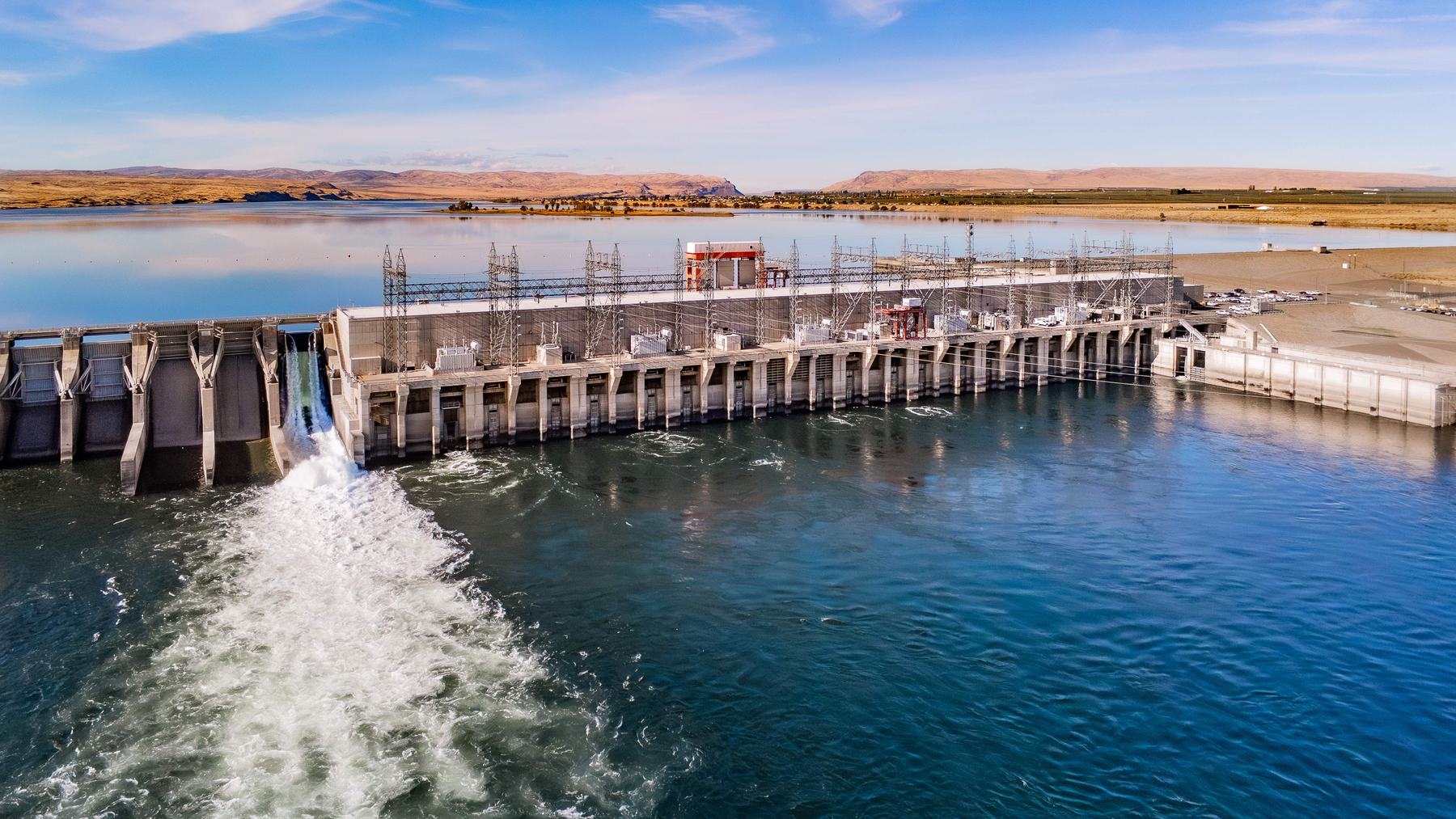
Priest Rapids Dam on the Columbia River in central Washington is built like a stack of pancakes, poured one horizontal lift at a time. When inspection drilling inside the spillway monoliths turned up unexpected leaks in March 2018, utility engineers traced the moisture to a disbonded lift joint where the concrete bond had simply given up.
To fix it, Grant County Public Utility District is drilling 38 holes down through the spillway into the bedrock beneath, strapping the massive concrete blocks down with tensioned anchors. The project returned to public view on November 6, when the Columbia Basin Herald reported that the utility’s proposed 2027 budget sets aside $33.7 million just for next year’s share of the construction.
Drilling Through a Working Dam
The engineering fix relies on a mechanical principle akin to a heavy-duty ratchet strap. Crews drill through the S-shaped ogee sections of the spillway monoliths and deep into the underlying rock, lower high-strength steel cables, and anchor the bottom ends with cement grout. Once the top ends are pulled tight, the anchors clamp the separated concrete layers together and pin the entire spillway directly to its foundation.

The joint venture handling the work, involving Kuney Construction and Nicholson Construction, secured the contract after submitting a $58.7 million bid. That figure came in under the utility’s $64 million engineer’s estimate, and Grant PUD commissioners formally approved the contract on December 9, 2025.
Doing this kind of surgery over a working river is a delicate proposition. The spillway sits directly in the current of the Columbia, requiring the joint venture to bring in specialized barges, cranes, and custom working platforms while the hydro plant keeps generating power.
Lessons From Wanapum
This is not entirely new territory for Grant PUD. Just upstream at Wanapum Dam, divers discovered a two-inch-wide crack running across a spillway monolith in February 2014, forcing an emergency reservoir drawdown. Crews repaired that structure using dozens of post-tensioned steel tendons stretching up to 260 feet long, alongside solid bar anchors.

The Priest Rapids project follows a similar philosophy, though engineers are dealing with a monitored joint rather than a fresh structural crack. Grant PUD stated back in 2018 that the leak never posed a public safety hazard, but leaving a separated joint to the management of sensors for decades was not a long-term solution.
Beyond closing the joint, the new anchors are designed to bring the mid-1950s dam up to modern seismic standards. Construction kicked off around April 1, 2026, and the utility’s schedule points toward a completion date by July 2028.