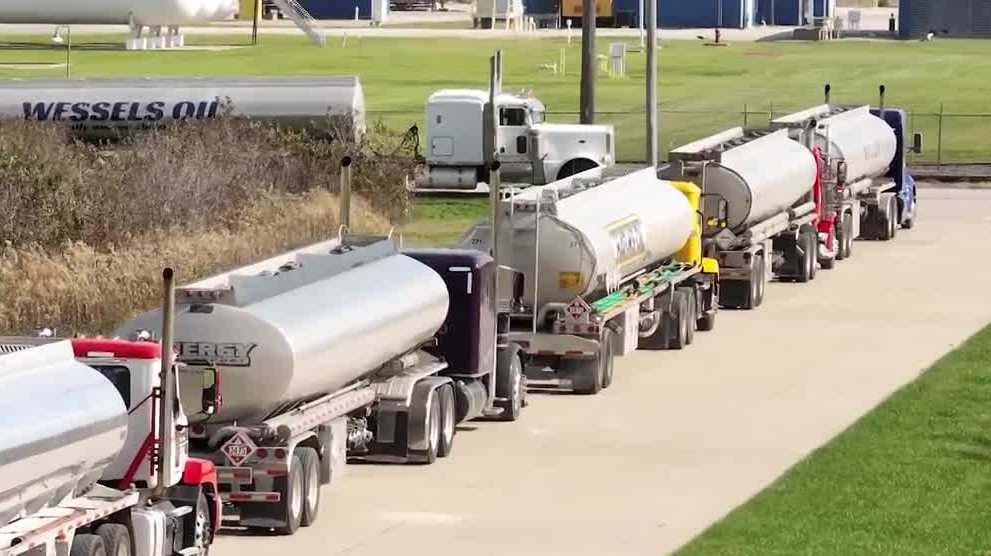
Truck drivers hauling diesel across central Iowa are spending hours idling in massive terminal queues, caught in a severe bottleneck that has disrupted regional fuel distribution just as agricultural demand peaks.
KCCI reported that the delays stem from supply lines struggling to keep pace with demand at Magellan terminals, which provide essential fuel for local gas stations and farming operations. Rather than an outright fuel shortage, industry experts explain that pipelines simply cannot move the product fast enough to satisfy the heavy seasonal draw.
Consolidation at Pleasant Hill Strains Daily Logistics
The operational strain intensified after Magellan closed multiple smaller terminals across Iowa, consolidating its fuel distribution into a single, larger hub located in Pleasant Hill. For commercial motor carriers, the shift has upended daily logistics.
Fuel haulers who normally manage four or five loads in a single day now find their productivity cut in half or worse, dropping to just one or two loads as lines stretch out around the clock. The delays ripple across the entire supply chain, hitting agricultural producers hard during a period of intense seasonal need.
ONEOK Responds to System Limitations
ONEOK, the parent company of Magellan, addressed the operational challenges in a written statement. The company noted that while it maintains the infrastructure to move fuel safely once it enters the system, broader supply constraints, system limitations, and strong regional demand have heavily impacted product availability at certain locations.
Governor Reynolds Issues Emergency Proclamation
To relieve the mounting pressure on drivers and agricultural operations, Iowa Gov. Kim Reynolds issued a disaster emergency proclamation. The executive order temporarily suspends regulatory provisions of Iowa Code pertaining to hours of service for commercial crews and drivers delivering diesel, gasoline or gasoline blends, ethanol, and biodiesel within the state.
The emergency declaration comes on the heels of earlier administrative measures, following a similar proclamation issued earlier in the year that addressed refinery and terminal maintenance strains. According to the governor’s office, commercial motor carriers have been forced to transport fuel from greater distances and wait significantly longer at terminals to meet regional requirements.
State Disaster Emergency Expires After Thirty Days
The current proclamation establishes specific safety guards alongside regulatory relief. Motor carriers remain bound by federal controlled substances and alcohol testing rules, commercial driver’s license mandates, and financial responsibility requirements. Carriers cannot require a fatigued or ill driver to operate a vehicle, and drivers requesting rest must be granted at least ten consecutive hours off duty.
The state of disaster emergency remains in effect for thirty days, scheduled to expire on November 28, 2026, at 11:59 p.m., unless extended or terminated earlier by executive order.