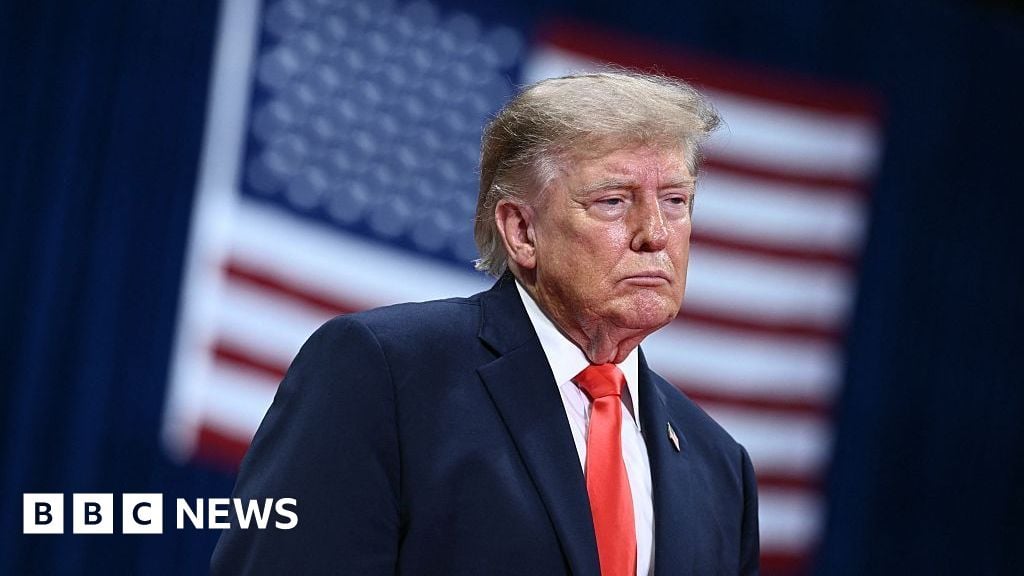
A federal judge on Tuesday allowed Donald Trump’s $10 billion defamation lawsuit against the BBC to proceed, rejecting the broadcaster’s bid to dismiss the case.
U.S. District Judge Jeffrey T. Kuntz, a Miami-based Trump appointee, ruled that the former president’s legal team had plausibly outlined claims of reputational harm and actual malice regarding the editing of a 2024 Panorama documentary, Trump: A Second Chance?
BBC Spliced Speech to Create False Impression
The lawsuit, filed in Florida in December 2025, centers on a twelve-second clip used in the documentary. The BBC spliced together two separate comments from the president’s January 6, 2021, speech at the Ellipse, creating the impression that he was calling for violence as the Capitol riot began.
In reality, the two statements were separated by nearly 55 minutes of speech. Trump’s complaint alleges that the BBC engaged in a “brazen” attempt to interfere in the 2024 U.S. presidential election, airing the documentary only one week before voters went to the polls.
Judge Kuntz’s 40-page ruling emphasized the nature of the editing, stating, This was not trimming around the edges but creating something different than what was stated in the speech.
The judge further noted that the BBC had previously admitted to the edit, confirming it produced a video that made it appear as though the president made a statement he never actually uttered.

While the BBC has apologized for the program, describing it as an error of judgment,
it has denied that the editing constitutes defamation, arguing that the documentary was not available in the United States.
Judge Kuntz Denies Dismissal of Defamation Claim
The BBC had sought to dismiss the case on multiple grounds, including a lack of personal jurisdiction and the argument that the lawsuit would have a chilling effect
on robust reporting. The broadcaster also challenged the venue, noting that the content was geoblocked in America.
However, Judge Kuntz pointed to evidence that the BBC emailed U.S. and Florida-based commenters with instructions on how to view the documentary, potentially undermining the jurisdictional challenge. While Kuntz allowed the defamation claim to proceed, he did grant a partial victory to the broadcaster by dismissing the claim that the BBC violated Florida’s Deceptive and Unfair Trade Practices Act, ruling that the documentary did not constitute commercial speech.
Parties Clash over Document Production During Discovery
The case is currently in the discovery phase, which has been marked by friction between the parties. The BBC has accused Trump’s legal team of failing to fulfill document production obligations, noting that while the broadcaster produced 9,371 documents totaling 114,266 pages, the plaintiff’s production was limited to 155 documents.
The BBC described the plaintiff’s output as material pulled from the internet or from the BBC’s own productions, stating that the lack of internal documentation strains credulity.
US Magistrate Judge Enjolique Lett has intervened in these disputes, ordering the former president to sit for a deposition by December 11 or risk having the lawsuit thrown out.

Trump had previously cancelled a scheduled October 16 deposition, citing matters of national importance,
though lawyers for the BBC noted in court that he had prioritized campaign appearances in Georgia on that day. Trump’s legal team has until November 23 to produce the remainder of the requested documents.
BBC Leadership Resigns Following Documentary Controversy
The controversy surrounding the documentary led to leadership changes at the BBC, including the resignations of Tim Davie and Deborah Turness. Rhodri Talfan-Davies, the broadcaster’s deputy director-general, recently addressed the broadcaster’s response, acknowledging that the initial reaction was marked by “sluggishness.”
We remain confident in our position and will continue to respond through the proper legal process.