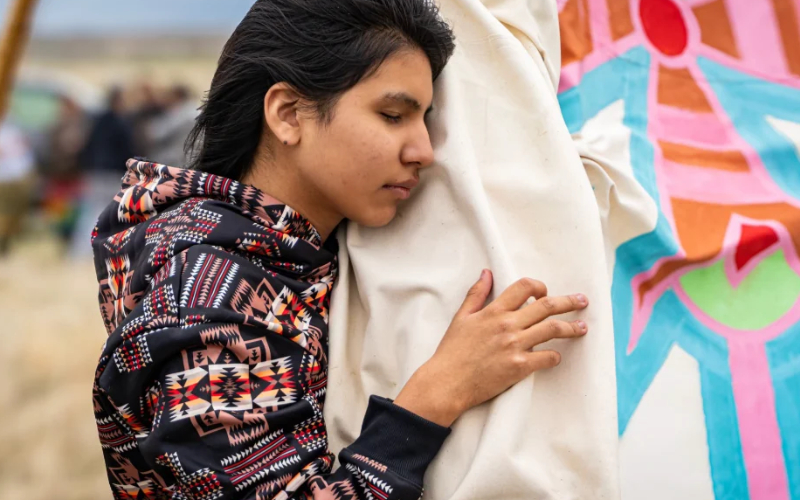
Native American teenagers in South Dakota face a suicide rate nearly eight times higher than that of their white peers, according to a stark new report released by the South Dakota Department of Health. The surveillance data, which tracks public health metrics from 2016 to 2025, shows a persistent national crisis where Native youth continue to experience the highest suicide rates of any racial or ethnic group in the United States.
The Cheyenne River Response to Generational Trauma
For Julie Garreau, who has spent nearly four decades working with children at the Cheyenne River Youth Project, the numbers reflect a devastating human toll she witnesses firsthand. For the young people that I’ve lost, whether it’s through suicide or not, I never forget them, ever,
Garreau told Native News Online. They stay with me.
Among Native Americans who died by suicide during the timeframe examined in the state report, 64% were between the ages of 10 and 29.
Public health experts and tribal advocates attribute these severe disparities to the enduring legacy of federal policies designed to dismantle Indigenous communities. The forced assimilation campaigns of the historic federal Indian boarding school system tore children away from their families, forbidding them from speaking their native languages or practicing their cultural traditions. Because those very cultural practices foster protective factors like community resilience and social connection, the historical disruption continues to impact mental health across generations.
Culture as the Foundation of Prevention
Rather than treating heritage as an optional supplement, programs on the ground are integrating language and tradition into daily operations. The Cheyenne River Youth Project was established in 1988 inside an old bar on the Cheyenne River Reservation. Today, it has expanded into a comprehensive community campus offering food sovereignty initiatives, job training, art programs, and healing camps to hundreds of kids every year.
Having safe spaces and opportunities to be with safe adults, in a place where you’re connecting to your culture and finding out where you come from and who you are, is probably one of the most important things that we can do for our young people.
That cultural grounding serves as a direct counterweight to contemporary stressors. I think living Lakota, living that balance of life, is how we thrive,
Garreau said. Our Lakota values will get us through any challenge that we have, if we let it.
State Report Combines Multiple Data Sources Despite Missing Federal Facility Records
The South Dakota Department of Health suicide surveillance report synthesized data from multiple authorities, incorporating national statistics from the Centers for Disease Control and Prevention, state vital statistics, and emergency room records via the South Dakota Association of Healthcare Organizations. However, state hospitalization tracking omitted visits to Indian Health Service and Veterans Affairs medical facilities, leaving a gap in complete clinical capture.
With youth mental health pressures mounting across the region, advocates emphasize that intervention must go beyond crisis response. The challenge remains building sustainable environments where young people are equipped to grow, make healthy choices, and envision futures where suicide is not a factor.