The 350th Anniversary of King Philip’s War Collides With Revolutionary Pageantry
Massachusetts is proud of its ties to the American Revolution.
King Philip, known as Metacom, was an Indigenous leader from the Pokanoket people.
For the Indigenous, the price of defeat was steep. The victorious English sold many into slavery and executed others on Boston Common.
Reflecting on a Forgotten Cataclysm
Today, the conflict continues to reverberate.
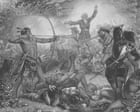
A lot of people believed that, Scott explains, viewing it as an almost undeniable and natural process. They do not remember how violent the war was for New England. When framed as a promised land, the removal and death of Indigenous people become preordained and expected.
Decades of Tensions Preceding the Bloodshed
The situation was much different in 17th-century New England. Metacom’s father, Massasoit or Ousamequin, held a powerful position as the sachem of the Pokanoket.
Yet the ensuing decades altered the geography. Pathogens brought by English and earlier European explorers decimated the Indigenous population.
Metacom’s older brother, Wamsutta, had been raised to succeed their father as sachem. Instead, shortly after assuming the role, Wamsutta mysteriously died after meeting with the colonists, leaving the less experienced Metacom to take over. The colonists soon compelled Metacom to accept a humiliating agreement that incensed the Pokanoket.
In June 1675, war erupted with an Indigenous attack on Swansea in southeastern Massachusetts.
The Course of the Conflict and Colonial Vengeance
Metacom’s forces were very successful at the outset. Bestselling author Michael Tougias, who co-wrote King Philip’s War with Schultz, explains that they quickly adapted hit-and-run tactics into ambushes while the English were reeling.
However, because many natives did not join, ending up with the English or wavering on the side, it eventually tipped the balance. When Metacom led a force into New York to seek an alliance with the Mohawk tribe, it backfired because the Mohawk preferred fur trading with English colonists and attacked Metacom’s men.
Another tribe, the Narragansett, joined Metacom’s alliance of New England tribes. Other tribes, such as the Mohegan and the Pequot, fought alongside colonists. Converted Indigenous people known as Praying Indians sided with the colonists, but their loyalty was doubted, leading colonial authorities to relocate them to Deer Island in Boston Harbor, where hundreds died in the winter.
Donald “Strong Turtle” Brown Jr., the official historian of the Pokanoket and a descendant of Metacom, describes the nature of the struggle.
“This is a war of attrition,” Brown says. “Indigenous people cannot sustain their warriors or plant in the field. They surrender because they’re starving, or dying from exposure to the elements.”
One colonial military leader, Benjamin Church, successfully adopted Indigenous military tactics. When an Indigenous man named John Alderman offered to locate Metacom, Church listened.
States Ignore Inquiries While Tangible Recognition Emerges Elsewhere
Metacom’s head was displayed on a stake outside Plymouth, and his wife and son were sold into slavery alongside many other Indigenous people. In Maine, the Wabanaki continued fighting until 1678 and managed to remain on their land.
Despite a lack of large-scale state events, tangible recognition has emerged elsewhere. Because the Pokanoket remember who they are and celebrate their history, Brown University returned 255 acres of ancestral land at Mount Hope in Bristol to the Pokanoket tribe in 2024. Rhode Island General Assembly Senate Resolution S1034 officially acknowledges the Pokanoket tribe as the ancient and ongoing stewards of their ancestral land.