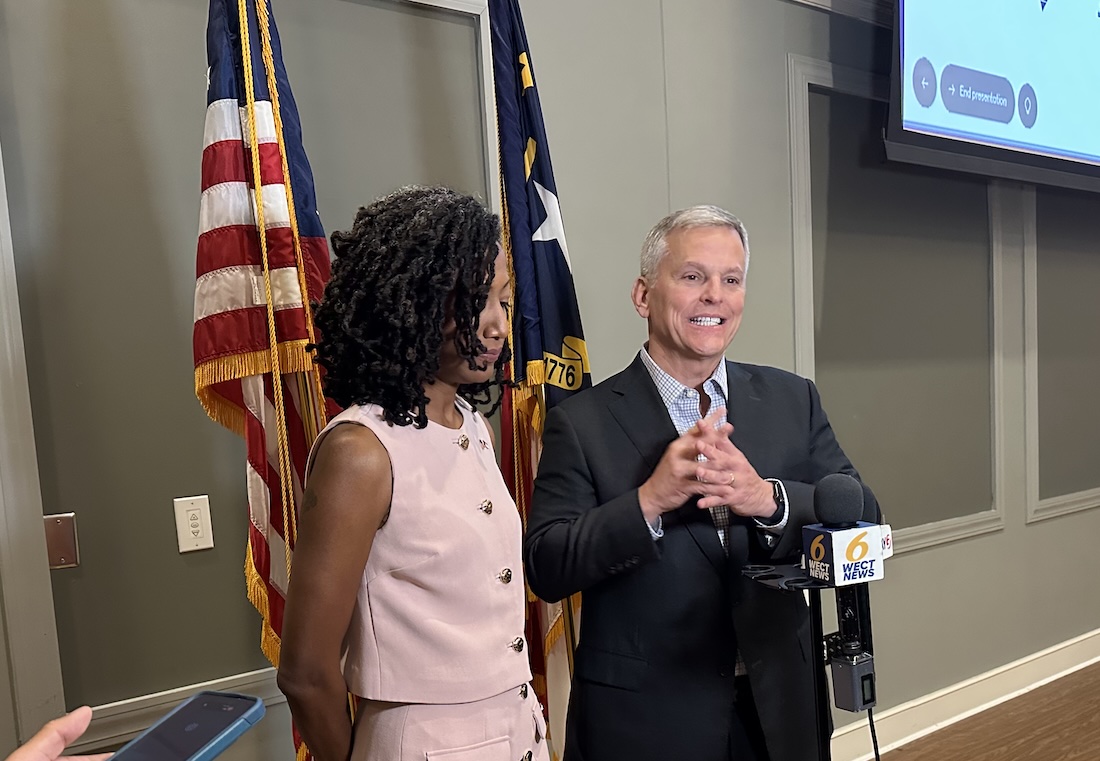
“Veterans have a unique skill set, you can’t really teach how to be punctual or professional,” NCDMVA Secretary Jocelyn Mitnaul Mallette told a crowd at UNCW’s Burney Center on Oct. 28. That sentiment served as the anchor for the conclusion of the Unlock the Veteran & MilSpouse Advantage Roadshow, a statewide initiative designed to bridge the gap between military talent and civilian employers, Port City Daily reported.
The program wrapped up its tour in Wilmington on Wednesday, having previously stopped in Durham, Asheville, Winston-Salem, Charlotte, and Greenville. While the event took place on the University of North Carolina Wilmington campus—which hosts over 2,000 military-affiliated students—the target audience wasn’t the students. Instead, the state focused on local business leaders, urging them to rethink how they recruit and retain military spouses and veterans.
The Employment Gap in Military Families
The push for this roadshow stems from a stark disparity in employment numbers. While North Carolina’s veteran unemployment rate sits at a relatively low 4% for those aged 18-64, the numbers for military spouses are far more troubling. Unemployment for spouses ranges between 20% and 24%.
This is a significant systemic issue given the scale of the military presence in the state. North Carolina is home to approximately 90,000 active duty personnel and 38,000 spouses, not to mention a veteran population of 600,000—the eighth largest in the nation. The state also hosts the world’s most populated Army base at Fort Bragg in Fayetteville.
The Wilmington stop was strategically chosen due to the proximity of Camp Lejeune in Jacksonville, located about 50 miles away. With nearly 40,000 active duty Marines stationed there, the regional labor pool is massive, yet often underutilized by the private sector.

Translating Combat Skills to Corporate Resumes
One of the primary hurdles identified by the North Carolina Department of Military and Veteran Affairs (NCDMVA) is a failure of translation. Secretary Mallette noted that many service members struggle to articulate how their military experience maps onto a civilian resume, which in turn leaves hiring managers unable to recognize the value of those skills.
“Sure, you might not hire an infantryman, but you hire people who are professional, punctual, work well under pressure, are good team members, and are mission oriented,” Mallette said. Secretary Jocelyn Mitnaul Mallette
The “so what” for local businesses is simple: there is a “ripe for the taking” talent pool of disciplined, mission-oriented workers available right now.
Some companies are already moving the needle. In 2025, 34 North Carolina companies earned the HIRE Vets Medallion Award from the Department of Labor for ensuring that 7% to 10% of their annual hires were veterans. However, state officials argue these numbers should be higher.
Beyond the Paycheck: Reducing Friction for Families
Governor Josh Stein, who attended the Wilmington event, framed the state’s commitment as more than just a job search. He argued that for North Carolina to become the best state in the nation for veterans, the government must remove the bureaucratic friction that plagues military families who move frequently.
Stein highlighted specific administrative hurdles, such as the difficulty of renewing driver’s licenses or enrolling children in public schools when a family is relocating to hubs like Fayetteville or Jacksonville but hasn’t physically arrived yet. The Governor’s goal is to shift these processes to remote systems, recognizing that military families operate on a global scale.
The economic logic is clear. North Carolina currently ranks as the 15th best state for veterans, a position bolstered by a strong overall economy and workforce building.
The Pushback on Specialized Hiring
The Roadshow attempted to counter this by showing employers that the “value” isn’t in the veteran status itself, but in the soft skills—punctuality, pressure management, and teamwork—that are ingrained in military service. Mallette shared an example of a business leader who attended an earlier session and realized his company’s existing efforts were insufficient, leading the firm to create a dedicated military spouse support program and add a specific indicator for spouses on their job applications.
The ultimate success of these roadshows will be measured by whether the 20% to 24% unemployment rate for military spouses in North Carolina begins to trend downward.