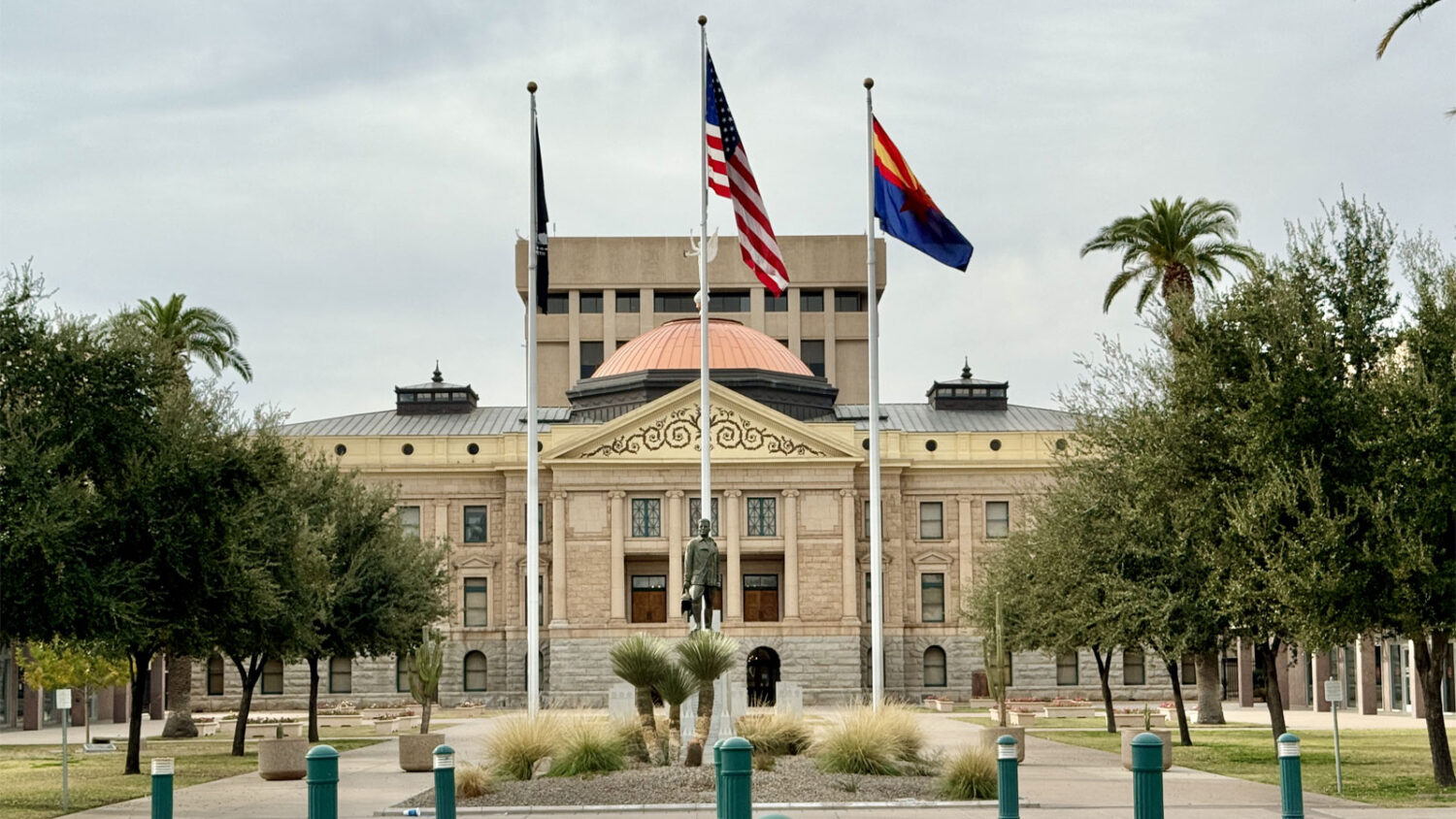
A Historic Shift in Arizona as Pollsters Project Democratic Gains Ahead of November 3
Arizona’s long-standing Republican legislative majority faces its most severe test in decades as midterm voting approaches. According to polling projections released by Phoenix-based Noble Predictive Insights and detailed by KTAR News 92.3 FM, the November 3 midterm elections could hand Democrats control of the state House, achieve an equal split in the Senate, and preserve the governor’s office.
For decades, legislative power in the Grand Canyon State has remained firmly anchored on the right. Since 1966, Democrats have emerged from an election cycle with a majority in the 60-member House on only three occasions—in 1974, 1976, and 1990. In the 30-member Senate, the party has never climbed higher than a 15-15 split. Recent election cycles have featured razor-thin margins. Republicans clung to single-seat majorities in the House following the 2018, 2020, and 2022 elections, while also securing one-seat advantages in the Senate in 2020 and 2022. The GOP managed to widen its margin slightly in 2024, operating with a 33-27 advantage in the House and a 17-13 lead in the Senate the past two years.
The Independent Voter Exodus and the Path to a Majority
The projected gains for Democrats stem largely from a dramatic erosion of Republican support among unaffiliated voters. Independents now constitute the single largest voting bloc in Arizona, and their shifting allegiances have fundamentally altered the state’s electoral math. A decade ago, independent voters favored Republican candidates by roughly 7 points. Today, polling data indicates that Republicans trail among this crucial group by approximately 30 points, creating an exceptionally difficult environment for conservative candidates down the ballot.
To capture either chamber, specific arithmetic thresholds must be met. Democrats need a net pickup of four seats to win the 60-member House and three seats to claim the 30-member Senate, with one fewer pickup required in each chamber to force a tie. Noble’s internal predictive models assign a 61 percent probability to Democrats winning the House, a 30 percent chance for Republicans to retain control, and a 9 percent likelihood of a tie. The outcome will likely hinge on roughly five highly competitive legislative districts.
“A couple of small races may decide a major change in public policy here in Arizona, which … has been very Republican-controlled for a long time. But you have a scenario where you could have a Democrat governor and possibly two Democrat chambers,” Mike Noble told KTAR News 92.3 FM.