
Federal Indictments Target Wichita Trafficking Networks
In a coordinated strike against violent crime in the Wichita area, federal authorities have unsealed indictments against 34 suspects following a two-month enforcement initiative. Known as “Operation Iron Sights,” the project ran from July 13 to September 16, 2026, and resulted in the recovery of 58 firearms and the seizure of approximately 6.75 kilograms of narcotics, according to the U.S. Attorney’s Office for the District of Kansas.
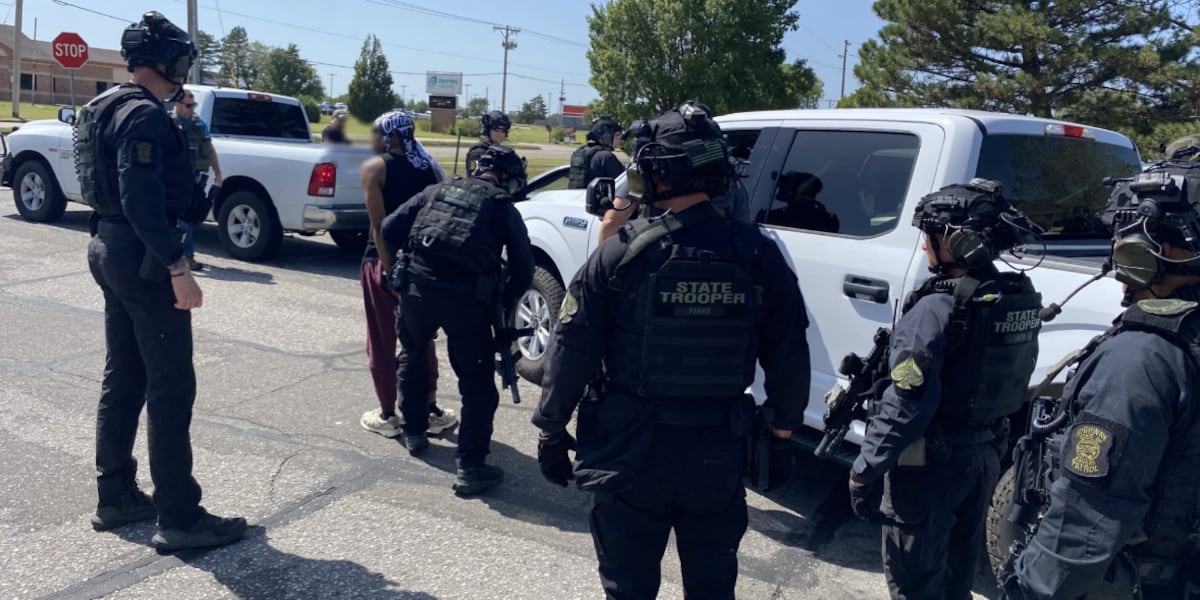
The operation, which focused on the intersection of drug trafficking and illegal firearm possession, culminated in 13 federal grand jury indictments. U.S. Attorney Ryan A. Kriegshauser and ATF Director Robert Cekada announced the results during a joint press conference on Friday, joined by representatives from the DEA, FBI, U.S. Marshals Service, Kansas Bureau of Investigation, Kansas Highway Patrol, Wichita Police Department, and the Sedgwick County Sheriff’s Office.
USAO-KS & ATF announces results of Operation Iron Sights, a collaborative effort among federal, state, and local law enforcement to investigate, apprehend, and prosecute dozens of defendants in the Wichita area accused of firearms and drug trafficking-related crimes. During this… pic.twitter.com/SRlJMJoqx8
The stakes of this operation go beyond the volume of contraband seized. For the communities of Sedgwick County, the arrests represent a direct attempt to disrupt what authorities describe as a lethal link between illicit drug enterprises and the prevalence of illegal weaponry. By utilizing federal charges, prosecutors aim to bypass some of the limitations of state-level sentencing guidelines.
“An advantage of securing federal indictments against defendants facing firearms and drug trafficking charges is that certain federal charges come with mandatory minimum sentences,” said U.S. Attorney Ryan A. Kriegshauser. “A mandatory minimum sentence assures that if individuals are convicted of these dangerous crimes, they will not be back out on the streets in no time.”
The Strategic Role of Crime Gun Intelligence
A notable aspect of this operation is the reliance on specialized investigative infrastructure. ATF Director Robert Cekada highlighted the use of “crime gun intelligence capabilities at Wichita State University,” a resource that allows federal agents to trace weapons and map criminal networks across the United States. This technological edge, paired with traditional surveillance, was instrumental in identifying the 34 individuals now facing charges that range from firearms trafficking to the illegal possession of machine guns and the distribution of fentanyl, methamphetamine, and cocaine.
The operation highlighted the risks faced by law enforcement. Among the individuals charged is a suspect accused of using a firearm to assault an ATF agent during the course of the investigation this past July. Officials were quick to emphasize that such threats would not deter the ongoing mission to dismantle trafficking rings in the region.
“These cases are about protecting people from armed, violent criminals and the devastation they leave behind,” Cekada noted during the briefing. “If you arm criminals, commit violent crimes, or poison our communities, we will find you and work relentlessly to put you behind bars.”
Collaborative Enforcement and Public Safety
The breadth of agencies involved—spanning from the local Wichita Police Department to the federal DEA—reflects a broader trend in how the Department of Justice is approaching urban violent crime. By pooling resources and legal authorities, agencies hope to create a more resilient deterrent against organized criminal activity. As noted by the Drug Enforcement Administration, the Midwest High Intensity Drug Trafficking Area (HIDTA) provided critical funding support for the initiative.
While officials celebrate the recovery of nearly 60 firearms and the removal of suspects from the streets, the long-term impact on crime rates in Sedgwick County remains the primary metric for success. Sedgwick County Sheriff Jeff Easter pointed to the necessity of these partnerships, noting that when federal, state, and local agencies function as a single unit, they are better equipped to handle the complexities of modern, networked criminal enterprises.
As the legal process moves forward, the focus shifts from the apprehension of suspects to the prosecution phase. With mandatory minimums in play for several of the federal charges, the defendants face a high threshold for potential release, setting the stage for a protracted legal battle that will test the strength of the evidence gathered over the summer months. Whether this surge in federal intervention will lead to a sustained reduction in local violent crime or merely displace these operations to neighboring jurisdictions remains the central, unresolved question for the region.


