The Fed’s Gradual Path Toward Higher Borrowing Costs
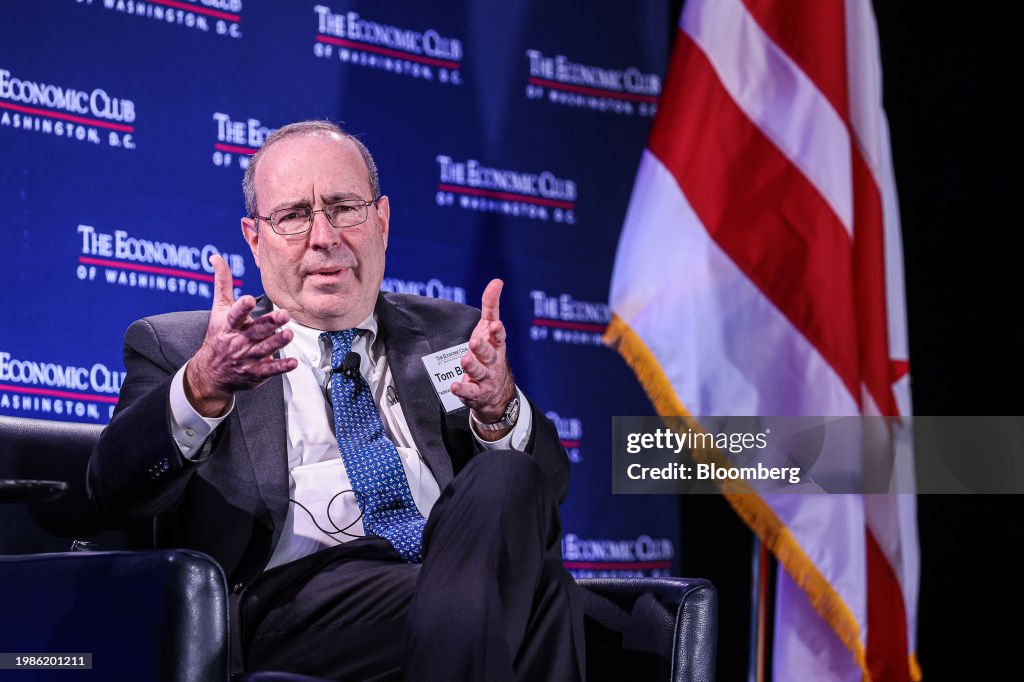
Richmond Federal Reserve President Thomas Barkin signaled this Thursday that the central bank remains on a trajectory for additional interest rate hikes, though he stopped short of committing to a specific timeline or magnitude. Speaking at the Richmond Fed’s 2026 CFO Summit, Barkin said that while the current economic climate is characterized by near-record low unemployment, inflation continues to run hotter than the committee would like. For those already dealing with a 3.75% to 4% benchmark borrowing rate, the takeaway is clear: the era of tightening credit is not yet in the rearview mirror.
Richmond Fed President Thomas Barkin said the central bank may need to raise interest rates to a higher level than previously anticipated should inflation keep running too fast for comfort https://t.co/voZMVnh3yH
The core of the challenge, as Barkin explained in an interview with CNBC, is balancing the need for price stability against the inherent uncertainty of global markets. He argued that a “gradual” approach remains the most logical path forward. By moving in smaller, measured steps, the Federal Open Market Committee (FOMC) can absorb incoming economic data before committing to the next move. This strategy allows policymakers to calibrate their response to inflation without inadvertently stifling the broader economy.
The Neutral Rate and Economic Reality
Barkin noted that the Fed is currently operating near a “neutral” rate—a theoretical point where monetary policy neither actively pushes for growth nor suppresses it. However, he suggested that current policy might still be slightly accommodative. This perspective suggests that until consumption patterns cool, the inflationary pressure—the Fed’s primary concern—will likely necessitate further action.
According to data from the CME Group’s FedWatch tool, the markets are already bracing for this reality. There is currently a better than 80% probability priced in for a rate hike this December, followed by one more move in 2027. This expectation aligns with the sentiment expressed by FOMC members in September, who largely reached a consensus that another increase would be likely before the end of 2026.
Barkin Warns Tech Debt Risks Contrast with Long Term AI Optimism
Beyond the immediate question of interest rates, Barkin addressed the long-term impact of artificial intelligence on the economy. While he acknowledged that AI is currently a source of price pressure, he expressed optimism that it will eventually boost production and help ease inflation in the years to come. This long-term view contrasts with the immediate, tangible risks he sees in the financial sector, specifically regarding the debt issuance tied to hyperscalers.

With debt issuance linked to these tech giants estimated this year at better than $500 billion, Barkin warned that the risk may not lie with the companies themselves, which generate significant cash flow, but rather with the intermediaries holding these assets.
“It’s more who are the intermediaries in this world who are taking on risks that you don’t know about. … You do wonder where in the intermediary sector is the biggest risk,” Barkin said during the summit.
The Road Ahead for Policy
The tension between maintaining growth and curbing inflation remains the defining feature of the current economic cycle. While Barkin is not a voting member of the FOMC now, he will gain a vote on the rate-setting committee in 2027. His commentary reflects a broader internal debate within the Federal Reserve, where the wait-and-see approach—what the FOMC officially calls the “accumulation of more information”—continues to dictate the pace of policy.
For now, the question of how many more hikes are needed remains unanswered. Policymakers are effectively walking a tightrope, attempting to cool the economy without triggering an unnecessary downturn. As the committee keeps the benchmark rate anchored at its current level, the focus shifts to the incoming economic indicators that will inevitably dictate whether the “gradual” path remains viable or if more aggressive intervention is required to bring inflation back to target levels.