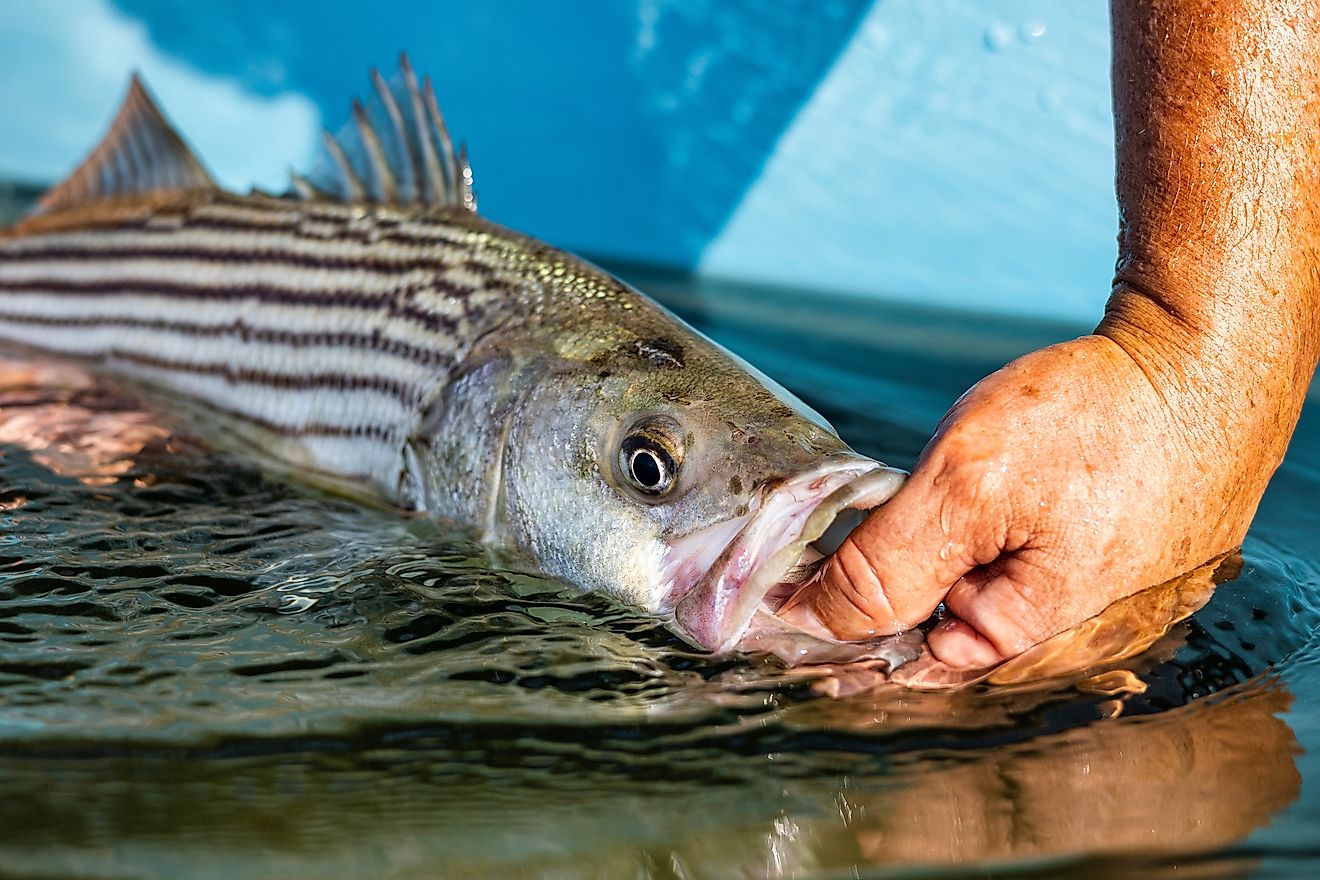
A striped bass is an ocean fish, yet you can catch one almost 280 miles from the sea. On major river systems, mature stripers undertake annual migrations upstream every spring, driven by a biological necessity: their eggs only survive while a current keeps them moving.
The geography of these journeys highlights major rivers where striped bass travel far upstream. While dams and natural waterfalls block the migration on most waterways, a select few river systems allow these fish to push deep inland, creating unique fisheries far above the tidal line.
The Delaware River Migration
Most of the Delaware River’s striped bass spawn in the tidal fresh water surrounding Philadelphia and Trenton, where the tide ends roughly 133 miles above the mouth of Delaware Bay. While stripers once spawned throughout the nontidal portions of the river as well, very little spawning activity takes place above Trenton today. Even so, large adult fish still head well upstream against the current.
Because there are no dams on the main stem of the Delaware to block their path, these fish travel deep into the upper reaches. Summer stripers weighing in the 40-pound range have been documented by fishermen around Easton, situated roughly 184 miles from the bay where the Lehigh River meets the Delaware. Weekly shad-run updates from New Jersey’s Division of Fish and Wildlife in late May 2004 indicated that striper fishing activity was extending upriver through the Delaware Water Gap. The farthest records originate from above the mouth of the Lackawaxen River, approximately 277 river miles from the bay and more than 140 miles past the head of tide.

Angler Lands Record Female Striped Bass in Newburgh Bay
Further north, the Hudson River rises and falls four to five feet with the tide near Albany, and striped bass follow that tidal push all the way to the Federal Dam at Troy, located about 150 river miles above New York City.
Between mid-April and Memorial Day, mature stripers move up the valley alongside river herring. The largest females—fish past 40 inches and heavier than 30 pounds—appear in concentrated numbers for only a week or two each season. On May 14, 2014, an angler in Newburgh Bay landed a 60-pound female measuring 53.4 inches, setting New York’s inland striped bass record.
Regulating the Roanoke River Run
Weldon bears the title of Rockfish Capital of the World down in North Carolina, with rockfish serving as the local term for striped bass. Spawning grounds near the town—situated roughly 130 miles up the Roanoke River from Albemarle Sound—are reached by adult stripers, which encounter a rising riverbed of rapids leading toward the Roanoke Rapids Dam established in 1955.
Ideal conditions for spawning, according to state biologists, involve water flows of 6,000 to 8,000 cubic feet per second released from the dam. However, spawning success has been poor over the past eight years. Consequently, the North Carolina Wildlife Resources Commission suspended the spring harvest season in 2025 and again in 2026. Every striper caught in the Roanoke River Management Area during those seasons had to be released.
Anglers Report Small Stripers on the Potomac River
Most spring seasons bring a migration of smaller stripers to the Fletcher’s Cove region in northwest Washington, D.C., on the Potomac River, and May 2025 brought reports from fishermen detailing schools of fish measuring 18 to 25 inches spanning from the cove up to Chain Bridge. Spawning occurs in the fresh upper sections of the tidal river, which stretches 108 miles downward to the Chesapeake Bay, with certain specimens migrating all the way to the fall line.
Meanwhile, the Connecticut River sees stripers travel as far as the Holyoke Dam in Massachusetts, sitting 87 miles above Long Island Sound. Out of the total count, 518 stripers utilized the Holyoke fishway in 2025 as recorded by the U.S. Fish and Wildlife Service, ascending via the lift alongside 324,172 shad. A five-pound female can release as many as 250,000 eggs in a single season, each needing two or three days of moving current before it hatches.